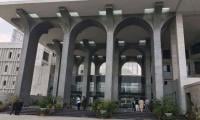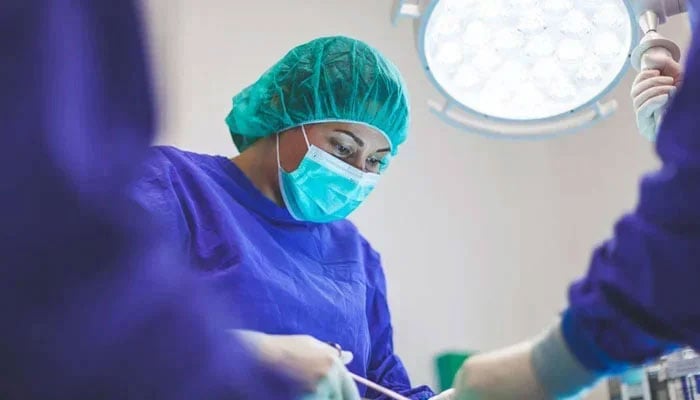
ISLAMABAD: Pakistan has taken a significant step towards advanced cancer and liver care as surgeons at the Pakistan Kidney and Liver Institute and Research Centre (PKLI&RC), Lahore have successfully performed the country’s first-ever ‘Robotic Whipple Surgery’, a highly complex procedure used to treat pancreatic and bile duct cancers, officials said on Sunday.
The landmark surgery, along with Pakistan’s first robotic right hemi-hepatectomy, reflects the growing capacity of public-sector healthcare institutions to offer sophisticated, minimally invasive procedures that were previously available only abroad, Dean PKLI&RC Dr Faisal Saud Dar said.
He said PKLI&RC Lahore has now completed around 500 robotic surgeries across multiple specialties, indicating the rapid maturation of robotic surgical services in Pakistan. “These procedures mark a turning point in the evolution of minimally invasive surgery in the country. Complex pancreatic and liver surgeries can now be safely performed locally,” Dr Dar said.
The Whipple procedure, medically known as pancreaticoduodenectomy, is one of the most demanding abdominal surgeries and is commonly performed for cancers of the pancreas, bile duct and surrounding areas. It involves removal of the head of the pancreas along with parts of the small intestine, bile duct and sometimes part of the stomach, followed by reconstruction of the digestive tract.
Traditionally carried out through large open incisions, the surgical procedure is associated with significant risks, prolonged hospital stays and lengthy recovery periods.
By contrast, the robotic approach allows surgeons to operate through small keyhole incisions using robotic arms controlled from a console, providing high-definition, three-dimensional views and greater precision in delicate surgical movements.
“Robotic systems give us enhanced dexterity in confined spaces, which is particularly important in pancreatic and liver surgery,” Dr Dar said. “For patients, this can translate into less blood loss, fewer complications and faster recovery.”
PKLI also successfully carried out a robotic right hemi-hepatectomy, a technically demanding liver operation involving removal of the right side of the liver, usually performed for liver tumours or advanced liver disease.
Dr Dar acknowledged the consistent support of the Punjab government in strengthening PKLI’s infrastructure, technology and service delivery, saying sustained public-sector backing had enabled the institute to invest in advanced robotic systems, specialised training and modern patient care facilities.
The Punjab government, he added, is also considering adopting PKLI’s governance and management model for upcoming healthcare institutions to improve transparency, efficiency and quality of care.
The breakthroughs coincided with the PKLI International Symposium 2026, held in Lahore on February 13 and 14, which drew more than 3,000 national and international delegates. More than 800 participants attended pre-conference hands-on workshops at PKLI, receiving practical training in advanced surgical techniques and robotic systems.
The symposium featured 45 international faculty members from the United States, the United Kingdom, Singapore, Europe, Turkey and the Middle East, along with experts associated with the World Health OrganiSation and over 100 senior Pakistani faculty members. Dr Dar said the strong participation of young doctors and nurses was particularly encouraging.