ISLAMABAD: Pakistan Tehreek-e-Insaf’s (PTI) call for a nationwide wheel-jam and shutter-down strike received a largely muted response across much of the country on Sunday, with routine life continuing in Islamabad, Rawalpindi and several districts of Punjab, Sindh, Khyber-Pakhtunkhwa and Balochistan. However, parts of Sindh, KP and Balochistan witnessed partial to complete shutdowns, accompanied by opposition-led protests against alleged election rigging.
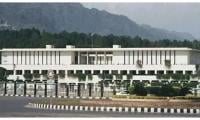
In Islamabad and Rawalpindi, normal life continued as markets, business centres and transport services remained fully operational, reflecting the failure of PTI’s wheel-jam and shutter-down call to gain traction. Traffic moved freely, while law enforcement agencies maintained heightened security around sensitive areas, including the Red Zone and Diplomatic Enclave. Police reported a peaceful situation throughout the day, with only a brief, small-scale protest attempt near Faisal Masjid that dispersed without arrests.
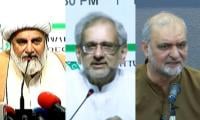
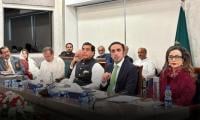
Several opposition leaders participated in the ‘Black Day’ and wheel-jam protests across the country, while in Islamabad the rally outside Faisal Masjid was attended by Leader of the Opposition in the Senate Allama Raja Nasir Abbas and former senator Mustafa Nawaz Khokhar, both vice-chairmen of Tehreek-e-Tahaffuz-e-Aiyeen Pakistan (TTAP).
Responding to questions about the absence of opposition alliance chief Mehmood Khan Achakzai, alliance spokesman Akhunzada Hussain told The News that Achakzai had prior commitments in Lahore, where he attended the Asma Jahangir Conference as chief guest, an engagement confirmed more than a month earlier.
Federal Minister for Information and Broadcasting Attaullah Tarar, commenting on the strike call, said the opposition alliance’s wheel-jam and shutter-down strike call failed to resonate with the public, claiming that “for the first time, the wheel jam itself has become jammed”. In a social media post, he said the people had rejected what he described as politics of hatred, chaos and division, adding that normal activity and commercial bustle continued across the country despite it being a Sunday.
Reacting to the strike, Pakistan Peoples Party (PPP) Secretary General Muhammad Humayun Khan termed it a complete failure, saying the public had rejected what he described as politics of chaos and coercion. In a statement, he said the uninterrupted functioning of business centres and daily life across the country showed that people now prioritise stability, economic recovery and public welfare over political disruption.
Meanwhile, residents of Lahore remained engaged in Basant festivities on Sunday, though PTI claimed its wheel-jam and shutter-down call received a strong nationwide response, congratulating the public and party workers for what it described as a historic and peaceful protest.
In a press release, the PTI leadership thanked citizens, workers and organisational office-bearers for participating in the February 8 protest, saying it reflected public unity in support of the restoration of what it termed the party’s “stolen mandate,” release of political prisoners, judicial independence and constitutional supremacy. The party also acknowledged the support of various segments of society, including traders, lawyers, students and labourers, and pledged to continue its political struggle.
However, ground reports presented a mixed picture. In Punjab’s Chiniot district, traders and residents rejected the strike call, with markets remaining open in Chiniot, Bhowana and Lalian tehsils and traffic flowing smoothly. Trader leaders said political shutdowns were not in the national interest, stressing the need for stability and uninterrupted economic activity.
Separately, PTI Sindh President Haleem Adil Sheikh described the February 8 shutter-down and wheel-jam strike as a “peaceful public referendum” against alleged rigging in the 2024 general election, claiming closures across major commercial hubs in Karachi, Hyderabad, Sukkur, Larkana and Mirpurkhas. He said intercity transport from Karachi was suspended but insisted the protest was voluntary and non-violent.
Ground reports, however, indicated a mixed response across Sindh. In Dadu district, markets in Dadu city, Mehar, Johi and Khairpur Nathan Shah operated partially, while traffic was reduced on main roads and the Sindh-Balochistan Indus Highway. In Jamshoro district, shutter-down strikes were observed in Kotri and Jamshoro, though traffic largely continued.
Opposition parties staged rallies in Sukkur and Khairpur, where members of the Functional Muslim League, Grand Democratic Alliance (GDA), PTI and Sindh United Party condemned alleged election rigging and fraudulent Form-47 results, terming the resulting assembly “illegitimate”. Leaders also criticised the PPP’s 17-year rule in Sindh, highlighting collapsing infrastructure, failing education and healthcare, water and electricity shortages and widespread misgovernance.
Protesters further alleged arrests of political workers under fabricated cases and rejected the 26th and 27th constitutional amendments, demanding fair elections and restoration of public’s “stolen mandate.”
Despite these demonstrations, authorities reported no major violence, with law-and-order conditions remaining largely under control. The strike underscored regional contrasts, with normalcy in Islamabad and Punjab, and selective disruption and political mobilisation in parts of Sindh.
Meanwhile, Shafiullah Jan, Special Assistant to the Chief Minister, described the nationwide wheel-jam and shutter-down strike as a “public referendum” against alleged mandate-stealing governments. He said the 2024 elections gave a clear PTI mandate, which was allegedly stolen, and praised party workers, traders and transporters for participating in peaceful protests. Jan criticised Punjab’s official Basant celebrations as insensitive and accused the provincial and federal governments of economic mismanagement, neglecting farmers and misusing public funds. He reiterated that only a government formed by elected representatives can address public hardships and said PTI leader Imran Khan remains popular despite imprisonment.
Also, PTI’s call for a province-wide shutter-down and wheel-jam strike in Khyber Pakhtunkhwa on Sunday saw limited impact, with most markets, shops and transport services continuing to operate normally across the province. While some trade centres and PTI workers in Peshawar, Shangla, Mansehra and other districts staged rallies or partially observed the strike, major cities including Mardan, Lower Dir, Abbottabad, Karak and Chitral largely rejected the call, keeping businesses open.
Heavy police deployment was reported in urban centres to maintain law and order, with a few isolated incidents of road blockades and tyre burning by PTI supporters. Traders and citizens cited economic losses and longstanding public grievances, stating that shutdowns would not resolve the real issues.
Federal Minister and PMLN KP President Amir Muqam said the strike call was widely rejected, accusing PTI of misleading the public with a narrative focused solely on its imprisoned leader, Imran Khan. Addressing a large gathering in Peshawar, he emphasized the need for development, law and order, and public welfare, pledging that the PMLN would implement Punjab-style development projects in the province. He also praised the public’s support for national institutions and condemned PTI’s attempt to disrupt economic activity.
Overall, the day reflected mixed responses: minor participation by PTI supporters in some areas contrasted with widespread rejection by traders, citizens and public institutions, leaving Khyber Pakhtunkhwa largely unaffected by the strike call.
Meanwhile, a province-wide wheel-jam and shutter-down strike on Sunday disrupted daily life across Balochistan, including major cities such as Quetta, Pishin, Qila Saifullah, Zhob, Khuzdar, Mastung and Gwadar. The strike marked two years since the February 8, 2024 general election, which opposition parties allege were rigged.
In Quetta, protesters blocked major roads including Airport Road and the eastern, western and Nawan Killi bypasses, burning tyres at several locations. Police used baton charges and tear gas to disperse the crowds, resulting in around 215 arrests and injuries to at least five political workers. Small and large commercial centres, plazas and shops largely remained closed, while mobile internet services were suspended and Section 144 enforced across the province to prevent gatherings.
TTAP leaders called the strike a ‘Black Day’ and alleged manipulation of election results through Form-47, warning of further protests if detainees were not released. Traders and business representatives supported the protest, citing financial losses from government policies and border delays, while PPP and other officials disputed claims of widespread participation, noting that many markets and roads remained open.
The strike highlighted the ongoing political tensions in Balochistan over the 2024 election results, with clashes and selective closures affecting daily life across the province.