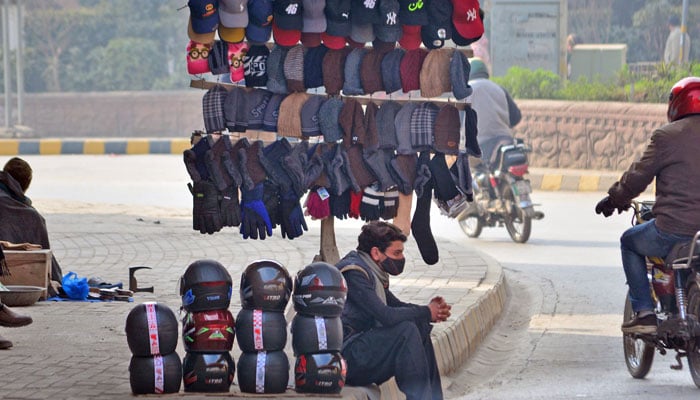
Street vending represents a unique form of business in which the vendor’s day begins and ends on the street. Vendors typically toil from dawn until late at night, yet many continue to remain economically vulnerable. Poor economic conditions compel individuals them to take up street vending of various goods as a means of survival.
“Today, Rawalpindi is home to countless vendors accounting for a good percentage of urban informal employment. Recognizing their contribution to the urban economy the government should protect livelihood of street vendors safeguarding their rights,” says Mohsan Naqvi.
“A street vendor is a person engaged in the vending of goods, articles, wares, food items, and merchandise of everyday use, or in offering services to the general public in a street, lane, sidewalk, footpath, pavement, public park, or any other public place. Sale items also include food, juices, women’s bags, jewelry, shoes, sunglasses, watches etc. Such vending from a temporary built-up structure or by moving from place to place using a cart or similar means take place,” says Abid Hussain.
Unfortunately, the police forcibly evict street vendors. The poor vendors cannot approach the court, asserting their right to livelihood. Their reinstatement at the same location is only through paying to the concerned official,” says Ali Arman.
“A vending committee should exist across all zones in Rawalpindi, and a comprehensive enumeration of street vendors should be undertaken. Vendors should have an identity card, specifying the area and space within which their vending work is permitted to function,” says Asghar Ali.
“Vendors frequently face raids by authorities and police, often facing eviction, and a high percentage not recovering their confiscated goods. According to a media, a huge percentage of vendors operate without a license, leaving them legally vulnerable. Majority of street vendors live below the poverty line, with many facing acute vulnerability,” says Meraj Hussain.
“Vendors pay bribes to police and local authorities to avoid eviction. Many vendors have operated in the same spot for decades, yet they are a nuisance in the eyes of police. The lack of legal framework, combined with elite pressure to clear public spaces, keeps vendors in a constant state of insecurity,” say media reports.
“Street vendors working in twin cities shows that lack of formal education and unemployment inclined individuals to choose street vending business as a profession. Auto rickshaw stands occupy roadside and corner spaces. The civic authorities must clarify the rationale for exempting auto stands,” says Nusrat Zaidi.