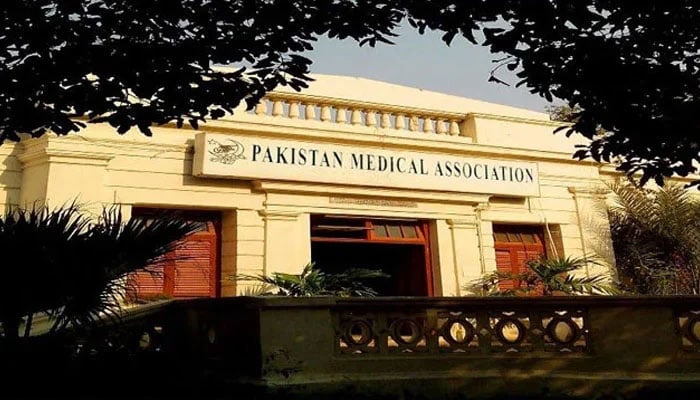
ISLAMABAD: The Pakistan Medical Association (PMA) has opposed a recent proposal by the registrar of a public sector university to lower minimum admission percentage thresholds for medical colleges, warning that any relaxation in entry standards could undermine the quality of medical education and patient safety.
In a statement, the PMA expressed concern over what it described as an attempt to dilute merit-based admissions, saying that medicine is a profession where competence at the entry level has long-term implications for healthcare outcomes.
The association said lowering admission criteria to accommodate institutional or commercial considerations would have serious consequences for the quality of future doctors.
“Medicine is a field where there is little room for error. Any compromise on merit at the point of entry can have a direct impact on the quality of healthcare delivery,” the PMA said.
While acknowledging that the Medical and Dental College Admission Test (MDCAT) serves as a screening mechanism, the PMA said it alone could not compensate for weaknesses in earlier stages of education.
The association pointed to long-standing issues in primary and secondary education, including governance and quality concerns, arguing that meaningful improvement in medical education outcomes requires strengthening the school system and examination boards.
The PMA also rejected the argument that Pakistan faces a shortage of medical graduates, saying the more pressing issue is the continued emigration of trained doctors.
The association said a large number of young doctors leave the country every year due to low salaries, limited opportunities for postgraduate training and career progression, security concerns and workplace pressures.
Calling on the Pakistan Medical and Dental Council (PMDC) and provincial governments to intervene, the PMA urged regulators to maintain uniform, merit-based admission policies across public and private medical colleges.
It also called for measures to retain doctors in the country by improving working conditions, ensuring safety at workplaces and offering competitive remuneration and training opportunities.
The association said that expanding the number of medical graduates without addressing quality and retention issues would not strengthen the health system and stressed the need for reforms that focus on both standards of medical education and the professional environment for doctors.