LAHORE: Pakistan and Bangladesh are moving towards a more constructive relationship, providing an opportune moment for Pakistani policymakers to seek guidance from Bangladeshi planners who reduced poverty and improved human development even during periods when its GDP growth was modest.
The same low growth Pakistan is experiencing today.Until barely a decade ago, Bangladesh was routinely ranked among the poorest countries in the world. Yet even then, Bangladeshis enjoyed a longer life expectancy than Pakistanis and lived nearly four years longer than Indians. This was despite the fact that Bangladesh’s per capita income was barely half that of India and around 70 per cent of Pakistan’s. These outcomes challenge the commonly held belief that rapid economic growth is a prerequisite for social progress.
The obvious question is: what did Bangladesh do differently? How did it achieve lower infant mortality, higher school enrolment, and better health indicators than both Pakistan and India — despite a weak private sector and a government often perceived as corrupt and inefficient?
In Pakistan poverty remained widespread even during the high-growth years of the Musharraf era. The excuse that floods have derailed Pakistan’s development over the past few years sounds increasingly hollow when viewed against Bangladesh’s experience. The Ganges and Brahmaputra rivers have devastated Bangladesh regularly for decades, yet the country continues to make steady gains in human development.
Bangladesh represents a rare but instructive case of economic modesty combined with social ambition. One of the most decisive factors behind its success has been sustained investment in women. Microfinance programmes were deliberately targeted at women. Family planning initiatives were pursued with seriousness and scale, resulting not only in reduced fertility rates but also in greater autonomy for women, who gained control over decisions about family size.
Pakistan, by contrast, has largely paid lip service to gender equality. Its population growth rate remains the highest in the region, undermining gains from economic growth and stretching already limited public resources.
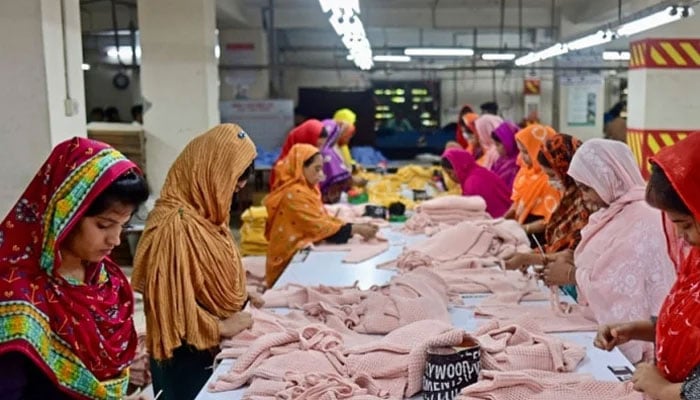
The rise of Bangladesh’s textile and garment industry after the 1990s further strengthened women’s economic role. Today, nearly 80 per cent of workers in this sector are women. This transformation elevated their social status and household bargaining power. Evidence consistently shows that women in Bangladesh are more likely than men to spend income on children’s health, education and nutrition — leading to substantial improvements in child welfare. In Pakistan, household spending patterns tend to favour men’s preferences, often at the expense of long-term human development.
Bangladeshi planners gave equal importance to rural and urban development. While supporting labour-intensive textile industries in cities, they also successfully pursued a green revolution in rural areas, improving agricultural productivity and rural incomes. Meanwhile, remittances from Bangladeshi expatriates reached levels comparable to those sent by Pakistani workers, further stabilising household consumption.
Bangladesh owes its success to consistent commitment on social spending. Regardless of whether governments were civilian or military — and despite bitter political rivalries — there was broad consensus on maintaining basic expenditure on health, education, and population welfare. Pakistan, on the other hand, has historically treated social spending as discretionary, cutting it whenever fiscal pressures emerge.
The large, professional non-governmental organisations in Bangladesh managed to scale up nationally while retaining their grassroots ethos. Had they been excluded, public spending might well have been wasted or siphoned off, as has happened in many developing countries. In Pakistan, the largest poverty alleviation programmes — such as the Benazir Income Support Programme and the Pakistan Poverty Alleviation Fund — are overwhelmingly state-run, making them more vulnerable to political interference and inefficiency.
Bangladesh’s experience clearly shows that while growth is important, countries need not wait for rapid expansion to invest in people. Social sector reforms undertaken during low-growth periods can yield transformative results — and would deliver even greater dividends if growth accelerates later.
Today, Bangladesh is enjoying the rewards of those early investments and has entered a phase of sustained economic growth; proving that income alone in not enough, but it is the commitment of planners and the integrity of implementation. Pakistan would do well to absorb this lesson before another decade slips away.