ISLAMABAD: Chairman of the ISSI Board, Ambassador Khalid Mahmood has said that United Nations Security Council (UNSC) resolutions regarding Kashmir dispute remain valid until implemented and rejected the Indian claims that they have lapsed.
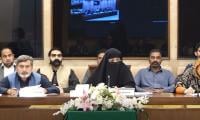
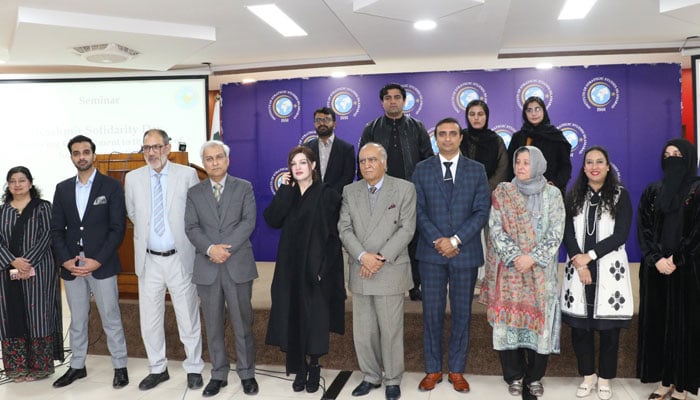
To commemorate ‘Kashmir Solidarity Day’, the India Study Centre (ISC) at the Institute of Strategic Studies Islamabad (ISSI) organised a seminar entitled “Kashmir Solidarity Day: Renewing Commitment to the Right of Self-determination”.
The event underscored the plight of Kashmiris under illegal Indian occupation and reaffirmed Pakistan’s resolve to pursue the Kashmir cause through renewed efforts. Fatiha was offered for the former president of Azad Jammu and Kashmir, Sultan Mehmood Chaudhry, and a rich tributes were paid to his lifelong services and steadfast commitment to the Kashmir dispute.
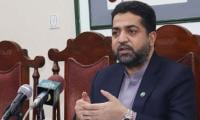
While presenting the dispute through a multidimensional lens, Ambassador Khalid Mahmood emphasised that UNSC resolutions remain valid until applied and rejected Indian claims that these resolutions lapse with time. He underscored the humanitarian aspects by pointing towards the brutal oppression and terror faced by Kashmiris under the illegal Indian occupation. Reaffirming Pakistan’s efforts and commitment to resolving this dispute through bilateral negotiations and other peaceful means, he described how India’s dismissal of international human rights missions has stalled this process. He emphasised the significance of the right to self-determination, describing it as the most fundamental right under all UN declarations, conventions, and General Assembly resolutions.
Chief Guest Mushaal Hussein Mullick stressed that Kashmir is not merely a dispute on paper but a nuclear flashpoint and a human tragedy. Sharing her experience as a “half-widow”, she reiterated her personal connection to the dispute. She highlighted the peaceful struggles of unarmed Kashmiris despite decades of brutal torture by Indian occupation forces. Mentioning prisoners including Asia Andarabi, Musarat Alam, her husband Yaseen Malik, and countless others, she described how they are being denied the most basic human rights. She called for an international board of peace for Kashmir and extraordinary measures to protect political prisoners, including her husband.
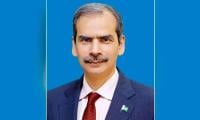
She further expressed hope that Kashmir would emerge as a beacon of peace and urged the international community to take collective action. The guest of honour, Ambassador Tahir Andarabi, addressed the legal technicalities and anomalies of the Jammu and Kashmir dispute. He underscored that Pakistan’s argument is grounded in strong international legal principles. Rejecting prevailing anomalies, he reiterated that UN Security Council resolutions on Jammu and Kashmir remain applicable until replaced or implemented. Drawing attention to documented human rights violations in IIOJK, he reaffirmed Pakistan’s legal, diplomatic, and humanitarian support and commitment to resolving the issue through UN resolutions and dialogue.
In his introductory remarks, Dr Khurram Abbas, Director of the India Study Centre, emphasised the need for special attention from the international community to resolve this dispute, given its tremendous escalation potential and the risks it poses to international peace. In her presentation, “Pathways to Peace: Dialogue and Resolution of the Jammu and Kashmir Dispute”, Dr Maria Effendi presented the dispute as a multi-level conflict, elaborating that Kashmir is both an international and a bilateral issue and how it has been internalised by India. She stressed that the revocation of Articles 370 and 35-A has altered the demographic and political landscape of IIOJK, undermining prospects for a free and fair plebiscite.
Mrs Shamim Shawl highlighted the unwavering determination and resilience of the Kashmiri people, particularly women, who have stood firm against a powerful occupying state. She briefed the audience on the efforts of the APHC and Pakistan to present the struggles of women as “half-widows” or “widows” at international forums.