ISLAMABAD: Deputy Prime Minister and Foreign Minister (DPM/FM) Ishaq Dar is expected to lead Pakistan’s delegation to Istanbul on Friday to participate in resumption of Iran-US talks.
The discussions are expected to give diplomacy a chance, help prevent further escalation, and avert risk of war in the region.
Pakistan received the Turkish invitation early Tuesday morning. While details are still being finalised, Islamabad hopes a possible nuclear deal between Washington and Tehran could be reached. The final format of the talks is still being worked out.
“Pakistan has formally accepted an invitation from Türkiye to participate in Friday’s talks between US and Iran. It is expected the deputy prime minister will participate. Pakistan sincerely hopes peace and diplomacy will prevail,” Foreign Office Spokesperson Tahir Andrabi told The News.
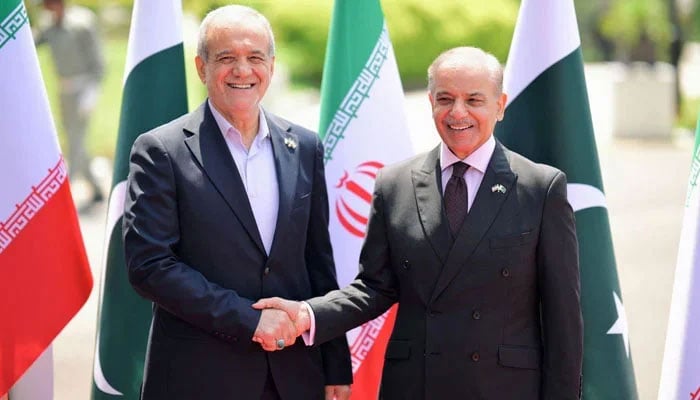
Dar has held several telephonic conversations with his Iranian counterpart Seyed Abbas Araghchi, including one last week to discuss the current situation in Iran and the wider region.
The DPM/ FM expressed the hope for peace and stability, and both sides agreed to continue bilateral consultations on matters of mutual interest.
Pakistan shares a 909-kilometre border with Iran, separating Pakistan’s province of Balochistan from Iran’s Sistan and Baluchistan province.
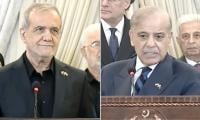
Several Islamic states, including Pakistan, have played a significant role in bringing Iran and the US to negotiating table after Iranian President Masoud Pezeshkian announced: “I have instructed my minister of foreign affairs, provided that a suitable environment exists — one free from threats and unreasonable expectations — to pursue fair and equitable negotiations. The talks will be held within framework of our national interests.”
One report mentioned Pakistan, Qatar, Saudi Arabia, the UAE, Egypt and Oman among the participants. On the eve of Istanbul talks, UAE Presidential Adviser Anwar Gargash commented: “I think the region has gone through various calamitous confrontations. I don’t think we need another one, but I would like to see direct Iranian-American negotiations leading to understandings so that we don’t have these issues every other day.”
According to media reports, White House envoy Steve Witkoff will hold talks with Iranian FM Araghchi on Friday.
In addition to Pakistan, several Arab and Muslim countries are heading to Istanbul in the hope of a possible nuclear deal between the US and Iran. Tehran has also demanded lifting of decades-old sanctions that have severely crippled its economy.
When asked about the significance of Pakistan’s invitation to participate in the US-Iran talks, the spokesperson said: “This shows importance and relevance of Pakistan on regional issues. Pakistan’s voice carries significant weight. The Istanbul talks align with Pakistan’s stated position, enabling us to play a role as a bridge-builder and promoter of peace.”
A US official said Istanbul summit will focus on assembling a package deal aimed at preventing war, stressing the Trump administration hopes Iran will arrive prepared to make necessary compromises. President Donald Trump warned that “bad things” will happen if Iran fails to reach a deal with the United States. “Right now we’re talking to them, we’re talking to Iran, and if we can work something out that’d be great. And if we can’t, probably bad things would happen,” Trump told reporters in the White House.
Despite the warning, however, Trump has maintained he is hopeful that Washington will “work something out.” With tensions flaring, Trump declined to discuss any possible military action against Iran, but reiterated that the “tremendous force,” including an aircraft carrier he has dispatched to the Middle East, was arriving in the region soon.
Meanwhile, Iran is demanding that talks with the US this week be held in Oman not Turkey, and that the scope be narrowed to two-way talks on nuclear issues only, a regional source said on Tuesday, casting doubt on whether the meeting will go ahead as planned.
“They want to change the format, they want to change the scope,” said the regional diplomat with knowledge of Iran’s demands.
“They only want to discuss the nuclear file with the Americans while the US wants to include other topics such as the (ballistic) missiles and the activities of Iran’s proxies in the region.”
Iran’s effort to change the venue and agenda for the talks, currently scheduled for Friday in Istanbul, came amid heightened tensions as the US builds up forces in the Middle East.
The US military on Tuesday shot down an Iranian drone that “aggressively” approached the Abraham Lincoln aircraft carrier in the Arabian Sea, the US military said, in an incident first reported by Reuters.
After the Iranian drone was shot down, White House Press Secretary Karoline Leavitt told Fox News on Tuesday that talks with Iran were still scheduled to take place later this week.
A source familiar with the situation said on Tuesday that Trump’s son-in-law Jared Kushner was due to take part in the talks, along with US Special Envoy Steve Witkoff and Iranian Foreign Minister Abbas Araghchi.
An Iranian diplomatic source said earlier that Tehran’s view of the talks is neither optimistic nor pessimistic, adding that the Islamic Republic’s defensive capabilities are non-negotiable and that it is ready for any scenario. “It remains to be seen whether the United States also intends to conduct serious, results-oriented negotiations or not,” the source said.
Meanwhile, Israeli Prime Minister Benjamin Netanyahu was scheduled to meet US Special Envoy Steve Witkoff on Tuesday amid efforts to revive diplomacy over Iran’s nuclear programme.
The meeting was scheduled for 1430 GMT and would include the director of Israel’s Mossad spy agency David Barnea, Israeli Defense Minister Israel Katz, and Israeli Military Chief of Staff Eyal Zamir, two Israeli officials told Reuters.