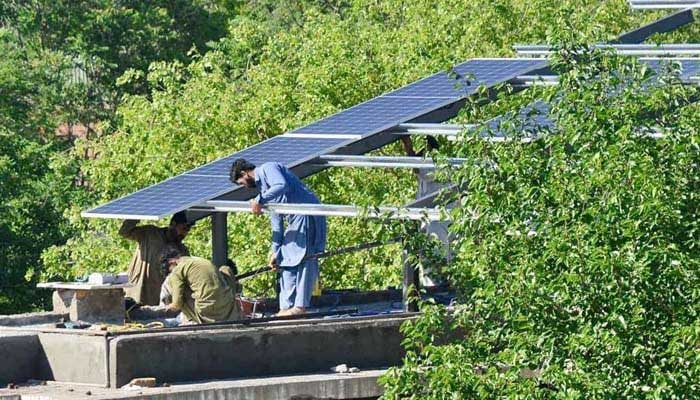
ISLAMABAD: Pakistan is moving to dismantle its net metering regime and replace it with a net billing and gross metering system, a policy shift that could sharply reduce returns for rooftop solar users and slow the pace of private investment in distributed energy.
Under the proposed Prosumer Regulations 2025, future solar consumers will no longer be able to offset exported electricity one-for-one against imports. Instead, power drawn from the grid will be billed at the full national tariff, while surplus solar electricity sold back to distribution companies will be credited at a much lower fixed rate.
Pakistan’s power regulator, the National Electric Power Regulatory Authority (Nepra), will hold a public hearing on Feb. 6 to gather views from consumers, government departments and industry stakeholders before finalising the new framework.
The government and power distribution companies say the reforms are necessary to recover grid infrastructure costs and address revenue losses attributed to net metering. Critics argue the move penalises early adopters who invested private capital to ease pressure on the national power system and reduce dependence on expensive fossil fuel generation.
Nepra last month formally recommended shifting from net metering to gross metering for future solar consumers, citing a growing financial burden on conventional grid users. Under the draft regulations, new solar users will sell all generated electricity to Discos at a proposed buyback tariff of Rs11.30 per unit and purchase electricity separately at retail rates.
Existing consumers with valid seven-year contracts will continue to sell surplus electricity at around Rs26 per unit until their agreements expire, after which they will also fall under the new regime. New contracts will be issued for five years, down from the current seven.
Stakeholders have strongly criticised the proposals, calling them unjustified and economically damaging. They argue Discos sell electricity at Rs55 to Rs60 per unit but will buy solar power at barely Rs11, widening the financial gap at the expense of prosumers.
The draft rules also propose cutting the allowable size of solar systems from 150pc of sanctioned load to 100pc, a move stakeholders say discourages efficient system design and weakens investment incentives. They warn the changes could extend payback periods from about two years to up to five years. Nepra says the reforms are aimed at creating a “balanced and sustainable” prosumer framework as it prepares to repeal the 2015 net metering regulations.