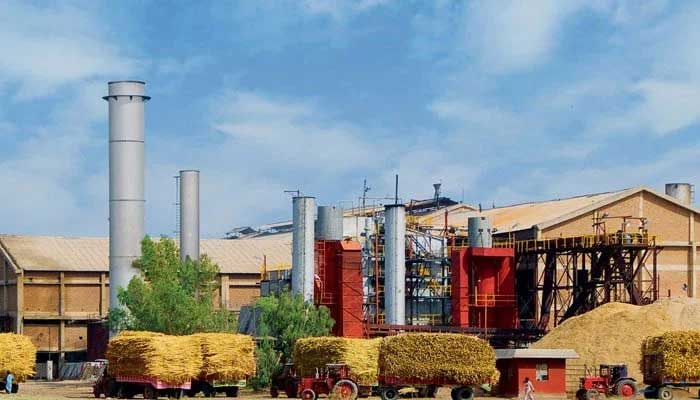
PESHAWAR: The sugar industry, the second-largest agriculture-based industry in the country after textiles, is facing several challenges that are affecting its profitability, a senior expert said on Friday.
“The sugarcane crop is an important cash crop and is grown over a large area of the country. However, it faces several challenges, including the cyclical nature of sugar production influenced by weather conditions, fluctuating sugarcane prices, and inconsistent government policies,” said Khan Faraz, a noted agriculture expert and former secretary of the Pakistan Tobacco Board, while talking to The News.
He explained that outdated technology and inefficient production processes limit the industry’s global competitiveness, especially as international markets increasingly adopt sugar substitutes and alternatives.
The expert said that approximately 80 per cent of the world’s sugar is produced from sugarcane in tropical and subtropical climates, while the remaining 20 per cent is derived from sugar beet, which is mostly grown in temperate zones of the northern hemisphere.
Recalling the time of Partition, he said that only four sugar mills were operating in Pakistan.
“The number of sugar mills has now risen to about 90. Sugar is manufactured in these mills from sugarcane grown in the country. In addition, a portion of the crop is used for the production of gur (jaggery), especially in Khyber Pakhtunkhwa. The sugar industry is the second-largest agriculture-based industry after textiles. The sugar mills have the capacity not only to meet domestic consumption but also to produce surplus for export,” Khan Faraz pointed out.
He said the sugar industry is a significant contributor to Pakistan’s economy, providing employment, supporting rural development, and enhancing agricultural output. Pakistan ranks among the top ten sugar producers globally, with most of the industry concentrated in Punjab and Sindh.
“The country has about 90 sugar mills, all in the private sector, which not only produce refined and raw sugar but also generate by-products such as molasses, bagasse and beet pulp, used in various industries, as well as ethyl alcohol, which is mostly exported,” he added.
Regarding sugarcane production, he said: “Minimum support prices have increased from Rs180 to as high as Rs400 per 40 kg since 2013, motivating farmers to grow more sugarcane and encouraging them to abandon other crops such as cotton, pulses and oilseeds.”
Khan Faraz said these three crops are worth highlighting because their abandonment is costing the country precious water, land and labour, along with significant revenue losses.
“Over the years, the area under sugarcane cultivation has expanded at the expense of cotton in southern Punjab. Farmers were often paid above the minimum support price, further tilting incentives towards sugarcane and away from cotton. This shift has intensified pressure on the country’s scarce resources. As a result, Pakistan’s cotton industry has plunged into crisis. Pulses are another sore point in Pakistan’s agricultural landscape,” he said.
Despite being a staple of the Pakistani diet, he said pulse production has declined significantly.
Oilseed crops, he added, are another neglected category, costing Pakistan $3 billion to $4 billion annually in imports, while over 85 percent of domestic consumption is met through imports.