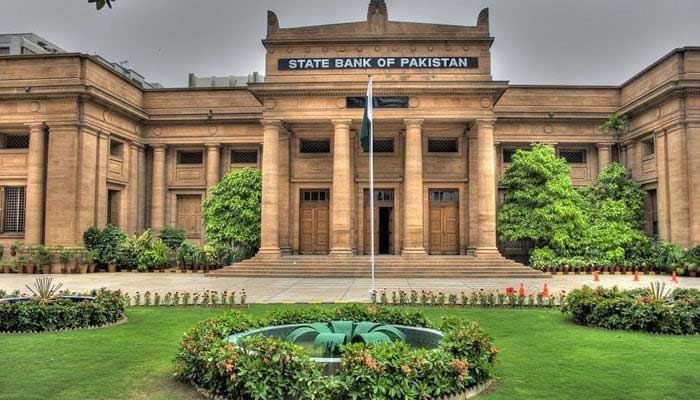
The State Bank of Pakistan’s decision to keep the policy rate unchanged at 10.5 per cent once again underscores a deeper and more troubling contradiction in Pakistan’s economic management.
While the decision has been framed as ‘prudent’ and ‘forward-looking’, the reality suggests a familiar pattern: monetary policy remains tilted in favour of the banking lobby, even as macroeconomic conditions offer clear space for relief.
Inflation, by most credible projections, is unlikely to exceed 7.0 per cent over the next 12 months. In such an environment, maintaining a real interest rate above 3.0 per cent is difficult to justify on economic grounds. Historically and globally, excessively high real rates are associated not with stability, but with growth suppression, fiscal stress and wealth transfer from the public sector to financial intermediaries.
The central bank’s recurring justification is ‘import pressure’. Yet this argument reflects either a narrow understanding of policy tools or a convenient intellectual shortcut. Imports are not managed solely through interest rates.
In fact, countries far larger and more complex than Pakistan – India being a prime example – routinely use non-tariff barriers, regulatory controls and administrative measures to manage import demand without strangling domestic economic activity through punitive borrowing costs.
By continuing to rely almost exclusively on interest rates to address external pressures, monetary policy ends up penalising the entire economy: industry, employment, investment and ultimately government finances. The outcome is predictable. With policy rates kept artificially high, the government’s debt-servicing bill continues to balloon. This year, nearly Rs8 trillion – an amount more than three times the defence budget of roughly Rs2.5 trillion – will be transferred from taxpayers to banks in the form of interest payments.
This is the real irony of Pakistan’s fiscal structure. Public debate often focuses on marginal rate cuts – 50 basis points here, 100 basis points there – while ignoring the fundamental issue of intent. The question is not whether rates are cut incrementally; it is whether there is a genuine willingness to break the cycle in which taxpayer money systematically finances bank profits via debt servicing.
The Monetary Policy Committee, populated by highly credentialed economists, cannot plausibly claim ignorance of these dynamics. When alternative tools exist but are persistently ignored, the credibility of the policy framework itself comes into question. Whether this reflects institutional inertia, excessive caution or the quiet influence of vested interests is open to interpretation but the economic outcome remains the same.
Pakistan today does not suffer from excess demand-driven inflation; rather, it is cost-push. It suffers from structural inefficiencies, fiscal rigidity and an over-reliance on interest rates as a blunt policy instrument. Until this mindset changes, stability will remain cosmetic, growth will remain subdued and the burden of adjustment will continue to fall not on inefficiency, but on the taxpayer.
The writer is a chief investment officer in the LSM sector and teaches financial markets in Pakistan. He can be reached at: [email protected]