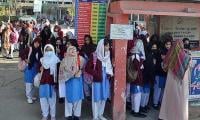
At dawn, before the city is fully awake, a quiet choreography is already in motion. Kettles whistle in narrow kitchens, school uniforms are pressed and lunchboxes are packed with care.
The streets will soon fill with horns and urgency, but this early labour goes unseen, unnamed. By the time offices open and meetings begin, the work that made the day possible has already been done and quietly forgotten.
This forgetting is not accidental. It is built in.
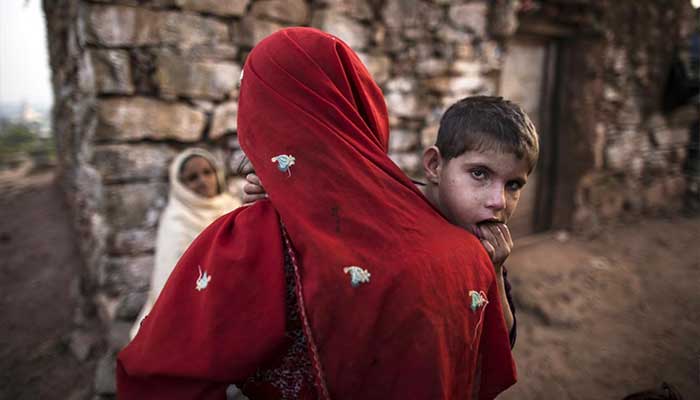
In South Asia, particularly in Pakistan, daily life rests on layers of invisible labour performed mostly by women. Mothers, daughters, wives and sisters move through their days carrying households, emotions, traditions and survival on their backs.
Yet the systems that define success, money, power, authority and recognition rarely count this labour as work. According to Pakistan’s Labour Force Survey, women make up less than a quarter of the formal workforce, despite working longer total hours when unpaid domestic labour is included. Men step into public life already supported by a foundation they did not build alone, but one they will later be praised for standing on.
This is where the idea that men exploiting systems directly exploits women begins to feel less abstract. The system does not always look violent or dramatic. More often, it looks ordinary. It looks like a man leaving for work while his sister stays back because ‘someone has to look after the house’.
It looks like a woman with a degree who is asked to pause her career after marriage because childcare is considered her responsibility by default, school pickups, homework, sick days, while her husband’s job remains ‘non-negotiable’.
The system rewards men for showing up. Women are applauded for stepping aside.
Pakistan’s economy, like much of the region, quietly depends on women’s unpaid labour. World Bank estimates show that if unpaid care work were monetised, it would add billions to national GDPs across South Asia. A man can stay late at the office, travel for work or pursue promotions because someone else is managing the home, the children and the family's emotional climate. That someone is almost always a woman.
When men benefit from this arrangement without questioning why the burden falls so unevenly, they become part of a system that exploits women, even when they believe they are simply fulfilling social roles.
Politics and law follow the same pattern. Women’s bodies, mobility and choices remain closely regulated by legislation, by custom, and by the idea of honour. Men dominate decision-making spaces, shaping laws and policies that rarely reflect women’s lived realities. When these spaces remain male by default, women are governed rather than represented. Power circulates comfortably among men, while women remain managed.
Culture reinforces this imbalance in softer, more persuasive ways. Pakistani dramas and films routinely celebrate women who suffer quietly, the endlessly patient wife, the self-sacrificing mother, the daughter who gives up everything ‘for the family’. Her silence is framed as strength; her endurance as virtue.
Men, meanwhile, are often written as decision-makers, strugglers, heroes of their own stories. When these narratives are consumed night after night, they begin to feel natural. Authority looks masculine. Sacrifice looks feminine.
What makes this exploitation difficult to name is that it often hides behind affection and good intentions. A father may believe he is protecting his daughter by restricting her movement. A husband may consider himself progressive for ‘allowing’ his wife to work. But the language of permission gives the game away. When one person grants freedom, and the other must receive it, equality is already lost.
This argument is not about turning men into villains. It is about recognising a structure in which men’s progress is often enabled by women’s restraint. When a system lifts one group by quietly pressing down another, participation – active or passive – becomes complicity.
In Pakistan, where women navigate faith, class, culture and patriarchy all at once, the cost of this imbalance is especially high. Women are often expected to be everything: educated but obedient, ambitious but self-erasing, strong but silent. Men, by contrast, are rarely asked to interrogate what they inherit. Comfort arrives early, unquestioned.
Questioning this system does not mean rejecting culture or tradition. It simply means asking who these traditions serve, and at whose expense. Because, as long as men continue to rise through systems that require women to shrink, exploitation will not always announce itself as injustice. Sometimes, it will look like a perfectly ordinary morning, held together by a woman no one thought to notice.
The writer is a literature graduate whose work centres on cultural critique and social realities.