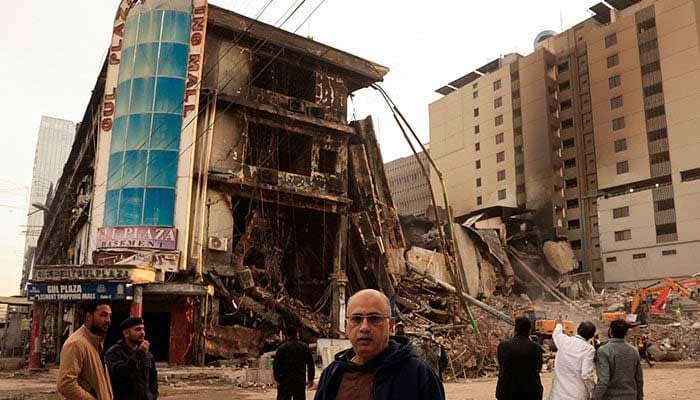
ISLAMABAD: Pakistan’s existing laws clearly allow criminal prosecution of public servants whose negligence results in loss of life or property, but non-enforcement of these laws continues to lead to major tragedies such as Karachi’s Gul Plaza fire and Lahore manhole incident.
Official sources point out that under the Pakistan Penal Code (PPC) and Civil Servants Act, 1973, public servants do not enjoy immunity where deaths are caused or property is damaged due to negligence or failure to perform statutory duties. Under the Pakistan Penal Code, causing death by a rash or negligent act is a criminal offence punishable with imprisonment, or fine, or both, a source said, adding that these legal provisions apply to any person including public servants, if it is established that their omission, failure or negligence directly contributed to deaths or loss of property.
“The law does not distinguish between a private individual and a government servant where criminal negligence leads to death,” the source said, while lamenting that such laws are rarely applied and, in most cases, the officers concerned are merely suspended for administrative inquiry purposes.
It was explained that the PPC may also apply in cases where a public servant knowingly disobeys the law or facilitates an illegal act, leading to injury or death. Under the Civil Servants Act, 1973, according to these sources, civil servants are subject to all laws of the land, and departmental proceedings do not bar criminal action. Similarly, the Government Servants (Conduct) Rules, 1964, require every government servant to maintain integrity, devotion to duty and to do nothing unbecoming of a public servant. Failure to enforce building safety laws, ignoring violations or allowing unsafe occupancy may, therefore, constitute both misconduct under service rules and a criminal offence under the PPC, the sources said. It was further clarified that departmental action and criminal trials are separate processes and can run simultaneously.
Additionally, the Supreme Court, in multiple judgments, has held that disciplinary proceedings do not bar criminal prosecution where the ingredients of a criminal offence are established.
This means that officials responsible for inspections, approvals, renewals or enforcement may face suspension, dismissal and criminal trial simultaneously, depending on the findings of investigations. Initial information suggests that the Gul Plaza lacked adequate fire exits, alarm systems and emergency preparedness — violations that fall under municipal laws and building control regulations.
The sources said failure to enforce these mandatory requirements could amount to criminal negligence, particularly where repeated inspections or public complaints were ignored.
The Lahore manhole incident is also being viewed as a case of criminal negligence, warranting both criminal and administrative proceedings.