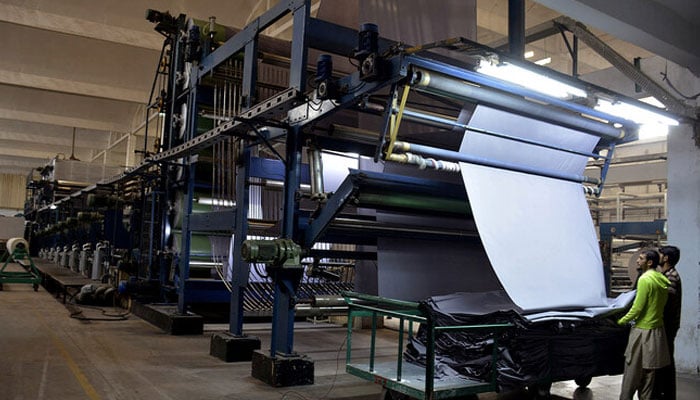
MULTAN: Hundreds of thousands of powerlooms in Multan are facing a severe crisis as soaring electricity tariffs have sharply increased production costs, rendering operations financially unviable, it has been learnt.
The workers associated with the powerloom sector said the continued rise in electricity tariffs has dealt a serious blow to the cottage industry. More than 500,000 workers are linked with an estimated 100,000 to 150,000 powerlooms in Multan. Over the past two years, high energy costs have forced the closure of more than 20,000 powerlooms in the city, pushing many owners into bankruptcy and compelling them to sell machinery as scrap. The powerloom workers said that the current electricity tariff has significantly eroded the industry’s competitiveness, as it is almost double compared to regional competitors such as India, Bangladesh, and Vietnam. This disparity has made it difficult for exporters to compete in international markets, resulting in an estimated export loss of $4-5 billion. The closure of powerlooms has triggered widespread unemployment, raising fears of social unrest, as the industry remains a major source of livelihood for low-skilled workers in the region.
The industry experienced temporary relief in late 2025 when electricity tariffs were reduced by over Rs9 per unit to approximately Rs39.64, following improved economic indicators and the renegotiation of Independent Power Producer (IPP) agreements. Meanwhile, the All Pakistan Powerlooms Association (APPLA) has warned of strong protest action if the government fails to immediately withdraw what it termed “anti-industry policies.” This warning was issued by Central President Abdul Khaliq Qandil Ansari while presiding over an important meeting of the association. The meeting strongly condemned measures including the ban on electricity connections up to B1 (8 kW), the closure of net-metering connections, restrictions on load enhancement, and the refusal to increase transformer loads under the B2 category. Ansari said these policies were creating severe difficulties for the powerloom sector, particularly for small industrialists.
He described the abolition of export units due to a marginal increase of one kilowatt in MD1 as unjust, noting that many industrialists had received electricity bills running into millions of rupees instead of thousands.
He added that investments worth crores of rupees were now at risk, while policies were simultaneously wasting millions of electricity units and generating billions of rupees for the department, calling it “the height of injustice.” The meeting demanded that the government immediately end anti-industry measures, lift restrictions on load enhancement and net metering, and provide urgent relief to the powerloom sector.
Participants also urged the Prime Minister of Pakistan to meet directly with industry stakeholders to understand ground realities instead of relying solely on official reports. The meeting was attended by Chairman Haji Bashir Ahmed Pehlwan, Vice Chairman Irshad Ahmed Qadri, General Secretary Saeed Ahmed, and other senior members including Haji Abdul Rashid, Haji Abdul Razzaq, Mubarak Ali, Sabir Ali Ansari, Babu Abdul Haq, Abdul Wahid, Sanaullah Ansari, Liaquat Ali Ansari, Muhammad Latif, Sikandar Ramadan, Jani Maqbool Ahmed Chaudhry, Abdul Ghafoor, Sadaqat Munir Ansari, Muhammad Bashir, Imran Waris, Mukhtar Ahmed Bau, Akram, Raja Aslam Pehlwan and others. The participants unanimously resolved that if the issues facing the powerloom industry were not addressed immediately, the All Pakistan Powerlooms Association would launch a vigorous protest movement.