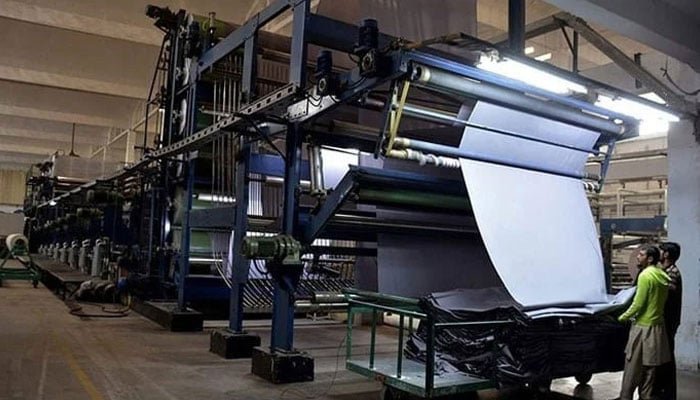
ISLAMABAD: Pakistan’s textile sector has issued an SOS (Save Our Soul) call to the government for its survival and has asked the government to slash the cost of electricity, gas and the tax burden to make them competitive and viable in the export market.
Prime Minister Shehbaz Sharif had constituted different committee for the revival of economic activities but so far neither the recommendations were finalised nor the minister for finance kick-started negotiations with the IMF for securing their assent. This has led to frustration among the businessmen and textile sector.
In this context, Federal Minister for Finance and Revenue Muhammad Aurangzeb, along with Federal Minister for Petroleum Ali Pervaiz Malik, held a meeting on Wednesday at the Finance Division with a delegation of All Pakistan Textile Mills Association (Aptma) and assured the industry of the government’s continued engagement to address key challenges facing the textile sector. It was emphasised that efforts were underway to address genuine concerns of compliant sectors, while advancing structural reforms through consultation and institutional processes.
The finance minister acknowledged the concerns raised by the delegation and stated that the government was actively reviewing various issues affecting the cost of doing business for export-oriented industries. He noted that energy affordability and reliability remain important priorities and that relevant options are being examined in consultation with concerned ministries and stakeholders to improve efficiency and competitiveness, while ensuring fiscal responsibility and system sustainability. Aurangzeb underlined that reforms in the energy sector are being pursued in a balanced manner to support industrial productivity and protect the long-term interests of the national economy. He noted that immediate issues requiring attention are being reviewed on priority, while broader policy matters would be taken forward through established budgetary and reform mechanisms.
Earlier, the Aptma delegation briefed the ministers on the prevailing situation of the textile sector and highlighted the pressures being faced by exporters in an increasingly competitive global environment. The delegation noted that changing international market dynamics and rising input costs have created challenges for the sector and underscored the need for a supportive and stable operating framework to sustain export growth and employment. The delegation also drew attention to issues related to energy costs, regulatory compliance and taxation, noting that cumulative cost pressures affect competitiveness in export markets. The need for consistency in policies, timely resolution of operational issues and continued dialogue with the government was emphasised to enable the industry to plan and invest with confidence.