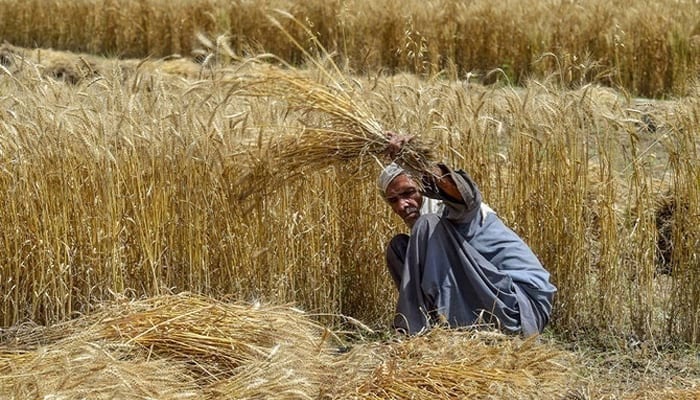
LAHORE: The Punjab government’s new wheat policy has drawn criticism from flour mill owners, who argue that it imposes stricter regulations and departs from earlier-announced free-market principles, countering the stated goal of deregulating the wheat sector.
Describing the policy as a step towards “re-regulating a deregulated industry,” major flour mill brands see the move as fostering a monopolistic market controlled by a handful of government-elected private players.
While the provincial government describes the move as a transition to a private-sector-led system, industry leaders argue that the policy is, in fact, a strategic retreat from liberalisation. In a detailed critique, Muhammad Khaleeque Arshad, chairperson of the PFMG, and Majid Abdullah, the group’s president, warned that the new regulations actually deepen state control rather than dismantling the administrative hurdles that have long plagued the wheat sector.
Arshad expressed profound disappointment, stating that “the current wheat policy represents a series of clear U-turns”. He argued that the original intent of de-regularisation was to dismantle quota systems and reduce administrative oversight to allow market forces to operate freely. However, he contends that “instead, the new wheat policy introduces even greater government intervention and oversight”. A primary point of concern is the scale of the strategic reserve.
Arshad noted that while reserves should typically mitigate supply shocks, “under the current policy, the so-called strategic reserve functions more as a controlling reserve of 3 million tons operated through aggregators”. He emphasised that from procurement to storage and final release, the entire system remains centrally monitored, and the government’s “obsession with maintaining a Rs14 roti risks pushing the system further into a controlled economy”.
Adding to the industry’s concerns, Abdullah highlighted the economic contradictions inherent in the government’s dual objectives of high support prices and low retail rates. He noted that in the event of a bumper crop, “the consumer will be deprived of the benefits of abundant supply at the time of harvest in the shape of low Atta/Roti prices” because of the fixed price floor. Conversely, in a poor harvest, he questioned how aggregators could possibly procure three million tonnes at a fixed price that includes their assured profits. Abdullah suggested that “a more balanced approach would have been to maintain a true strategic reserve of one million tonnes” for emergencies, rather than an oversized reserve that distorts the market. He argued that instead of over-protecting the consumer through price caps, the state should “focus on protecting the farmer by easing input costs and enabling higher production”, as increased supply would naturally lower prices for everyone.
The PFMG leadership believes the new policy merely repackages the old system under a different name. Arshad pointed out that “the previous system of food procurement and the current policy’s proposed third-party intervention doesn’t have anything different in nature,” as targets, issuance prices, and quotas remain the same. He warned that “just changing and merging department names won’t be able to make the wheat market free, as advised by the donors”.
By requiring millers to obtain government-discretionary permits and allowing the state to control the release of wheat through aggregators, the policy effectively sidelines traditional processors. Abdullah concluded that the administration’s actions seem to contradict the very essence of a free-market framework, leading the PFMG to ask the ultimate question: Is the government regularising the de-regularisation of wheat? Both leaders stressed that assuring a support price while subsidising consumer products simultaneously is an administrative impossibility that will continue to stifle the industry’s growth and food security.
When contacted, Salma Butt, special assistant to chief minister of Punjab, asserted that the Wheat Policy 2026 is not a move towards greater control; it is a completion of deregulation. The policy places procurement, financing and stockholding squarely in private hands, while the government performs only a limited regulatory and food-security oversight function.
“The Punjab government feels that the present policy direction represents a durable, market-oriented framework that safeguards farmers, protects consumers, and enables the flour milling and grain trade sectors to grow within a competitive and predictable environment,” she added.