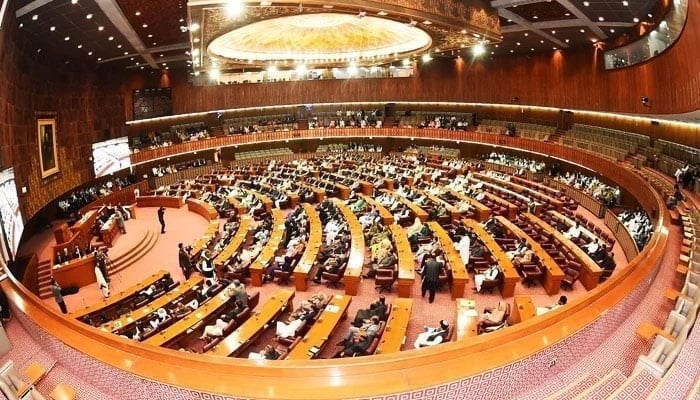
Most would agree that their elected officials should make their financial details public, especially in a country with persistent corruption and transparency issues. But what should be the extent of this disclosure and should there be any limits on what the public can know about the finances of their leaders? This is the main question that the Elections Amendment Bill, 2026 brings forth. Passed by the National Assembly on Wednesday, the bill seeks to restrict public access to parliamentarians’ asset and liability disclosures on grounds of security concerns. Under the amended law, public disclosure of assets and liabilities of lawmakers and their family members will be subject to the approval of the National Assembly speaker and Senate chair. While the ECP will continue to publish assets and liabilities in the official gazette, the scope of the information to be disclosed will be determined in light of public interest and good governance principles, with particular focus on protecting personal privacy and security. The bill further provides that details of lawmakers’ assets may be obtained through written requests, and that no publication of such details will take place without the approval of the NA speaker or Senate chairman. It is important not to jeopardise the safety of lawmakers and, in a country with a significant terror problem, these concerns must never be taken lightly. Lawmakers’ private conversations and videos have also been leaked in the past. However, it does seem that lawmakers are seeking greater control over what the people can and cannot know about them.
This raises serious concerns about credibility and transparency. What safeguards are there to ensure that lawmakers will not use their control to protect their own reputations and prevent inconvenient information from becoming public – or even use this control in a manner that harms their opposition? It also does not help that this legislation comes about a week after the ECP suspended the membership of 159 lawmakers for failure to submit their asset and liability statements on time, though the membership of at least 110 lawmakers has been restored after they submitted their wealth statements. Too many of our politicians treat the requirements of public accountability as an encumbrance under the status quo and it is impossible for people to ignore this fact when they ask for more control over public disclosure. The legislation also seems to be another in a line of policies that seek to place new restrictions on people’s access to information due to security concerns. But while it seems the people’s right to know is steadily being subjected to more limitations, our politicians are not exactly becoming more forthcoming about the right to information.
Ultimately, for a democracy to work, its citizens must know exactly what is going on when it comes to governance. Making things more opaque will only create a vacuum that can be filled by conspiracies and misinformation, making the climate more unstable in the long run. And this is not an argument in favour of rejecting this bill. But the privacy and security lines have to be spelt out clearly, with as little accountability as possible and applied impartially. Pakistani lawmakers do not exactly have a lot of credibility to bank on and any whiff of controversy will undermine this bill’s attempts to deal with valid security and privacy concerns.