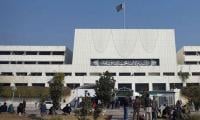
For much of the past year, Pakistan’s parliament resembled a machine missing a crucial cog. Bills were introduced, speeches delivered and tempers flared, yet one of the organising principles of parliamentary democracy was conspicuously absent. Without formally recognised leaders of the opposition in either House, the legislature functioned, but only in a diminished form.
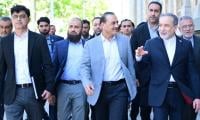
Dissent existed, but without coherence; scrutiny occurred, but without authority. A parliament without opposition leadership is not merely incomplete – it is structurally weakened. That deficiency has now been corrected. With Mehmood Khan Achakzai appointed leader of the opposition in the National Assembly and Allama Raja Nasir Abbas assuming the same role in the Senate, two missing pillars of parliamentary life have been restored. On paper, this is a routine procedural step. In reality, it carries implications that go far beyond parliamentary seating plans. It speaks to a deeper question confronting Pakistan’s democracy: whether politics will be mediated through institutions or managed through selective exclusion.
The prolonged delay in making these appointments had already exposed an uncomfortable truth. The rules governing opposition leadership are clear, as are the constitutional principles that underpin them. Yet for months, procedural resets, legal ambiguities and repeated assurances substituted for action. In a robust democracy, such an anomaly would be swiftly corrected. In Pakistan, it lingered – not because the law was unclear, but because political will was tentative. This hesitation reflects a familiar contradiction in Pakistan’s political life. Political actors are quick to invoke the supremacy of parliament when challenged by unelected forces, yet less inclined to uphold that principle when it constrains their own advantage.
Parliament is defended in theory, but diluted in practice. The result is an institution that survives, but rarely commands sustained public confidence. The restoration of opposition leadership therefore deserves acknowledgement – cautiously. Both the government and opposition parties showed a measure of restraint in allowing the process to conclude. In their inaugural speeches, Achakzai and Abbas adopted a conciliatory tone, urging dialogue and calling for politics to be run by politicians rather than intermediaries. In a political climate accustomed to denunciation, such language felt almost anomalous. Yet the real significance of this moment lies not in rhetoric, but in function.
Opposition is not an indulgence granted by governments; it is the organising principle of parliamentary democracy. It exists to question executive authority, test legislation, expose weak reasoning and articulate alternatives. Where opposition functions well, governance improves or at least it is supposed to be so. Where it is marginalised or delegitimised, power grows brittle, resentful and ultimately unstable; well, in most cases.
Pakistan’s recent experience offers a reminder of this dynamic. During the previous government led by Imran Khan, opposition was treated less as a constitutional necessity than as a moral aberration. Parliamentary critics were portrayed as conspirators; dissent was equated with disloyalty; institutional checks were dismissed as obstacles to reform. The language of accountability was frequently weaponised, narrowing political space rather than strengthening governance.
This approach was not unprecedented. Nor was it unique to one party. Pakistan’s political history is replete with episodes in which opposition was viewed as a problem to be neutralised rather than a partner in governance. What distinguished the recent period was the intensity with which this logic was pursued, often under the banner of moral renewal and frequently with encouragement from unelected centres of power.
Pakistan’s democracy has rarely been allowed to evolve organically. Instead, it has been repeatedly shaped, nudged or derailed by actors who operate outside the electoral arena but wield decisive influence within it. Their interventions have not been ideologically consistent. Rather, they have been opportunistic – aligning with one civilian force at one moment, only to undermine it later when calculations change. The 1990s offer the clearest illustration of this pattern. That decade witnessed a revolving door of elected governments, each dismissed before completing its term, often through presidential decrees later upheld – and sometimes later regretted – by the judiciary.
Between 1988 and 1999, no elected prime minister completed a full term; none has done as yet. This was not coincidence. In 1990, the first government of Benazir Bhutto was dismissed by president Ghulam Ishaq Khan, ostensibly on grounds of corruption and misgovernance. In reality, the dismissal followed a sustained campaign of political destabilisation, bureaucratic sabotage and institutional hostility. Two years later, in 1993, the same president dismissed the government of Nawaz Sharif, again invoking constitutional powers that allowed the head of state to remove an elected executive.
The crisis escalated to such an extent that both the prime minister and the president were forced to resign under pressure widely understood to originate beyond civilian institutions. In 1996, president Farooq Leghari, himself once a close ally of Benazir Bhutto, dismissed her second government – a move later validated by the courts but politically devastating in its consequences. These repeated dismissals were justified at the time as necessary correctives to civilian incompetence. In retrospect, they appear as textbook examples of managed democracy.
Undemocratic intervention did not abolish parliament but rendered it contingent. Governments ruled, but only conditionally. The cost of this interference was immense. Political parties learned to treat each other not as rivals within a shared system, but as existential threats. Instead of strengthening institutions, parties sought protection from unelected patrons. Democracy survived, but in a stunted form. That pattern did not end with the 1990s. It merely evolved. Interventions became less overt; judicial and bureaucratic instruments grew more prominent.
The language shifted from coups to ‘hybrid arrangements’, but the underlying impulse remained the same: to manage civilian politics by choosing favourites, disciplining dissenters and engineering outcomes. It is against this backdrop that the current moment must be understood. When unelected institutions align themselves with particular parties, they corrode the legitimacy of the entire system. The irony is that such interventions rarely produce the stability they promise. Instead, they deepen polarisation and weaken the very civilian actors they seek to control.
This brings the discussion back to the present opposition, particularly the PTI. Despite its recent record and its own flirtation with institutional favour, it remains a major political force. Excluding it from parliamentary life would repeat the mistakes of the past under a different banner. Accountability matters. But when legal processes appear selective, justice begins to resemble strategy. No democracy thrives by criminalising politics itself.
Strong systems punish crime while protecting competition. Weak ones blur the distinction, eroding trust in both law and politics. Pakistan’s challenge is not to abandon accountability, but to apply it evenly. The presence of recognised opposition leaders helps in this regard. It institutionalises dissent, shifting it from the streets to the chamber, from slogans to scrutiny. Parliamentary committees function better when opposition has leadership. Legislation improves when challenged by organised critics. Even governments benefit, spared the illusion that unanimity equals legitimacy.
Pakistan’s political class has long behaved as if losing power were a form of annihilation. That fear fuels zero-sum thinking and invites extra-constitutional arbiters into the arena. The antidote lies not in grand declarations, but in habit: repeated acts of parliamentary normalcy that make defeat survivable and opposition respectable. This is why the seemingly modest act of appointing opposition leaders matters. It signals, tentatively, a recognition that the country cannot be governed through exclusion alone. The gulf between rhetoric and practice has swallowed many previous attempts at reconciliation. Yet democracies are rebuilt incrementally, not theatrically.
The writer is dean of the faculty of liberal arts at a private university in Karachi. He tweets/posts @NaazirMahmood and can be reached at: [email protected]