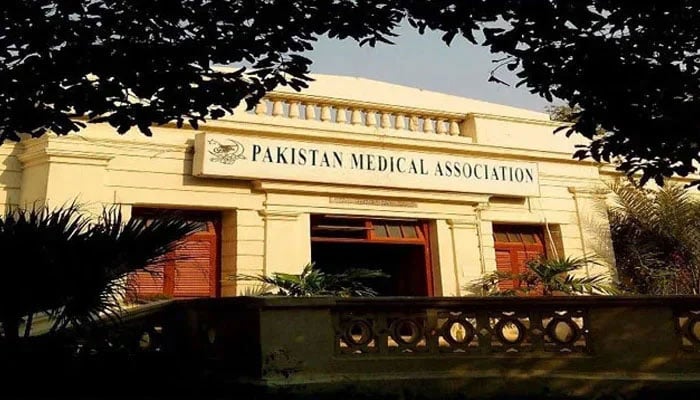
Questioning how billions of rupees in public and donor funding failed to prevent children from being infected with HIV, the Pakistan Medical Association (PMA) has voiced concerns over the surge in paediatric HIV cases in Sindh, with more than 100 new infections reported in Karachi in 2025 alone, and the total number of registered HIV-positive children in the province rising to over 4,000.
Calling it a clear failure of governance, oversight and infection control, rather than a medical mystery, the PMA questioned the performance and accountability of the Sindh AIDS Control Programme and the provincial health department, demanding an immediate and transparent audit of all institutions responsible for HIV prevention and control.
The PMA asked the government to explain how years of international support and large financial allocations failed to stop children from being exposed to the virus through unsafe healthcare practices, despite the lessons learned from the 2019 Ratodero outbreak.
The PMA warned that the crisis is rapidly turning into a wider socio-economic emergency, saying families affected by paediatric HIV are being pushed into long-term poverty due to lifelong treatment costs, repeated hospital visits and loss of income.
The PMA said stigma and discrimination are compounding the damage, with reports of children being denied school admissions, and families being dehumanised, driving infections underground and undermining public health responses.
The PMA’s warning comes as doctors and federal health officials confirm a fresh rise in HIV infections among children in Karachi, raising fears of a repeat of Ratodero. An official at the Sindh Infectious Diseases Hospital said dozens of new HIV patients, including children, were admitted in 2025, and cautioned that the confirmed cases are likely only the tip of the iceberg. “These are the children who reached us. Many more may never come forward for testing.”
Senior infectious diseases specialist Naseem Salahuddin, former head of infectious diseases at the Indus Hospital, said the surge is not limited to children, as adult men and women are also being diagnosed in growing numbers.
Naseem said infectious disease specialists are deeply concerned by the pattern, particularly the increasing detection of HIV among children whose parents tested negative, and among married women whose husbands were HIV-negative, which clearly points to widespread failures in infection prevention and control, rather than household or behavioural transmission.
Government data compiled by federal health authorities shows that the newly identified paediatric cases include infants, toddlers, school-going children and adolescents, with boys and girls affected almost equally.
Health officials say the near equal gender distribution further rules out behavioural factors, and reinforces concerns that children of both sexes are being exposed through unsafe injections, reuse of syringes, unsterilised medical instruments and poorly screened blood products.
Most of the affected children belong to densely populated and underserved areas of Karachi, including Keamari, Machhar Colony, Orangi Town, Pathan Colony, Baldia, Korangi and the adjoining industrial localities, where informal clinics, illegal practitioners and unsafe medical waste disposal remain common.
Doctors treating these children say several were diagnosed late, and died after reaching advanced stages of the disease, often after a history of repeated injections or intravenous drips at unregulated facilities.
Physicians at major hospitals, including the National Institute of Child Health and the Aga Khan University Hospital, have reported a steady flow of new HIV cases, and expanded screening due to the unexplained rise in infections among children.
The PMA has called for the strict enforcement of the laws against quackery, the immediate closure of illegal clinics and unregistered blood banks, zero tolerance for syringe reuse, proper regulation of hospital waste disposal, and province-wide monitoring of barbers and hair salons to enforce bans on reusing blades.
The PMA has also demanded complete implementation of the Sindh HIV & AIDS Control, Treatment & Protection Act to end discrimination in schools and workplaces, along with criminal prosecution of individuals and facility owners whose negligence or illegal practices contribute to the spread of HIV.
Warning that Pakistan now has the second fastest growing HIV epidemic in the Asia-Pacific region, a concern also reflected in estimates by UNAIDS, the PMA said silence and administrative apathy are options no longer. The PMA cautioned that failure to act decisively now would leave the country facing an unmanageable social and economic burden in the years ahead.