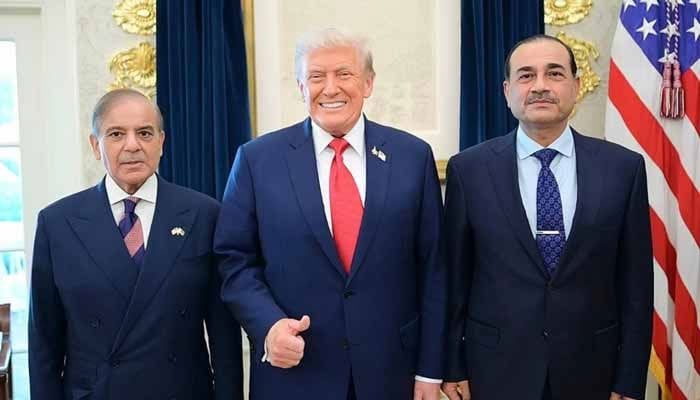
For more than seven decades, relations between the US and Pakistan have oscillated between close cooperation and mutual frustration. At critical moments from the early cold war to the Soviet invasion of Afghanistan and the post-9/11 counterterrorism campaign, Pakistan has been a central partner for Washington.
Yet the relationship has largely remained transactional and need-based, driven by short-term crises rather than long-term strategic alignment. This approach has repeatedly produced trust deficit, policy drift, and missed opportunities.
As the global order shifts and West Asia faces persistent instability, it is time for Washington to reassess. A durable, forward-looking strategic partnership with Pakistan would advance US interests in regional stability, counterterrorism, energy security and great power competition while offering Pakistan a predictable framework for cooperation beyond episodic bargaining.
Pakistan’s geography alone makes it indispensable. Situated at the crossroads of South Asia, Central Asia and West Asia, Pakistan borders Iran, Afghanistan, China and India, while enjoying direct access to the Arabian Sea through critical sea lanes near the Strait of Hormuz. Few countries sit astride as many strategic fault lines.
For US policymakers concerned about stability in West Asia, Pakistan offers something Washington increasingly lacks: a capable regional partner embedded within a Muslim-majority political and cultural context. This matters. Pakistan maintains longstanding diplomatic, military and people-to-people ties across the Middle East, from Gulf states to Iran and Turkiye. Pakistan’s armed forces have trained Gulf militaries for decades and millions of Pakistani expatriates live and work across West Asia, forming deep economic and social linkages.
In an era where legitimacy and local understanding are often as important as military capability, Pakistan’s regional embeddedness gives it leverage that distant powers cannot easily replicate.
Since Pakistan’s creation in 1947, Washington and Islamabad have partnered repeatedly. Pakistan joined US-led security arrangements during the cold war; it served as a frontline state against Soviet expansion in the 1980s; and it became a key ally in counterterrorism after 2001. Each phase, however, followed a familiar pattern: intense engagement during crisis, followed by disengagement once immediate US objectives were met.
This episodic approach has carried costs. For Pakistan, it reinforced perceptions of abandonment and unfair burden-sharing. For the US, it weakened influence and policy continuity, often forcing Washington to rebuild trust from scratch during the next emergency.
A strategic partnership rather than a purely transactional one would mean institutionalised cooperation across diplomacy, defence, economics and technology, insulated as much as possible from political mood swings in either capital.
The US drawdown from Afghanistan and its reduced military footprint in parts of West Asia have not produced stability. Instead, the region faces a volatile mix of unresolved conflicts, militant networks, proxy competition and economic fragility. At the same time, China and Russia are expanding their diplomatic and economic presence, often filling vacuums left by US disengagement.
Pakistan, which continues to confront the spillover of regional instability, particularly militancy and refugee flows, has a direct stake in preventing West Asia from sliding further into chaos. Its intelligence capabilities, counterterrorism experience and regional relationships can complement US objectives without requiring large American deployments.
A long-term US-Pakistan partnership could focus on intelligence cooperation against transnational militant groups, maritime security in the Arabian Sea, stabilisation initiatives tied to economic connectivity and diplomatic coordination on conflict de-escalation.
Strategic partnerships endure when they deliver tangible economic gains. Pakistan sits at the junction of emerging trade and energy corridors linking Central Asia, West Asia and South Asia. With targeted US investment and policy support, Pakistan could become a hub for regional connectivity rather than a chokepoint of instability.
American firms, in particular, could benefit from partnerships in energy transition, agriculture, information technology and logistics. For Washington, deeper economic engagement would also diversify Pakistan’s external partnerships, reducing overdependence on any single power and reinforcing strategic balance in a competitive global environment.
A realistic partnership must acknowledge differences. Washington has concerns regarding governance, economic reform and regional tensions; Islamabad has concerns about sovereignty, conditionality and policy inconsistency. These issues are not insurmountable, but they require sustained dialogue rather than episodic pressure.
Importantly, Pakistan has demonstrated resilience. Despite economic and security challenges, it remains a cohesive state with functioning institutions, a professional military, and a large, youthful population. Betting against Pakistan has repeatedly proven shortsighted. Investing in its stability, by contrast, aligns with long-term US interests.
The choice before Washington is not whether to engage Pakistan, but how. Continuing a narrow, transactional relationship will perpetuate cycles of disappointment. A long-term strategic partnership, grounded in mutual interests, regional realism and institutional continuity, offers a better path. If the US seeks a reliable partner in West Asia that combines geography, capability and regional legitimacy, Pakistan remains uniquely positioned.
The question is whether Washington is ready to move beyond short-term expediency and finally treat Pakistan not as a problem to be managed, but as a partner to be built.
The writer is an associate professor at the Area Study Centre for Africa, North and South America, Quaid-i-Azam University, Islamabad.