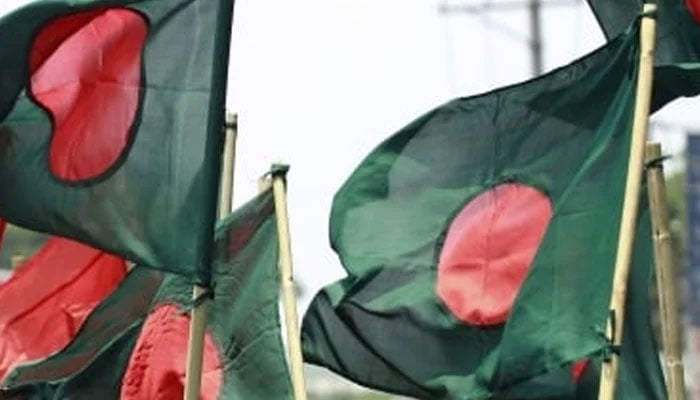
Following the massive popular uprising in the summer of 2024 leading to regime change, Bangladesh’s seismic political shift is unprecedented since its emergence as an independent state in 1971.
Termed as a political earthquake, the surge of right-wing Islamic groups, the banning of Awami League and anti-Indian rhetoric led to a seismic shift in Bangladesh, which cannot be ruled out as an ordinary change.
The shift became noticeable after the monsoon revolution of August 2024 when the Awami League lost its power. The house of the founder of Bangladesh, Sheikh Mujibur Rehman, was vandalised and his statues demolished. The Jamaat-e-Islami and its student wing Islamic Chatra Shibbir, which bore the brunt during Sheikh Hasina’s rule, were unbanned by the caretaker government. The seismic shift in Bangladesh since August 2024 also means the electoral victory of Shibbir in the union elections of major Bangladeshi universities.
The death of former Prime Minister Khaleda Zia and the return of her son Tariq Zia from long exile also reflected a paradigm shift in Bangladeshi politics. The possible alliance of religious parties, including the Jamaat, having the support of the student-led National Citizens’ Party (NCP), will confront the Bangladesh Nationalist Party (BNP). Since the Awami League is banned, it will not be able to contest the February elections, but the BNP is trying to secure the League’s electoral support to perform better than the alliance of religious parties. The caretaker government and the army tend to consider the BNP as a better option than the Islamic parties. India’s RAW also has a soft spot for the BNP, calculating that its coming to power will, at some stage, be beneficial for the Awami League.
With less than a month left before the general elections and the referendum on constitutional changes, it is time to analyse how the shift in Bangladeshi politics will affect relations with India and Pakistan, and what the future of the Awami League will be if the BNP comes to power. Will elections be free, fair and peaceful, and will the election results be acceptable to political parties contesting the polls?
As narrated in ‘South Asian Voices’ dated December 19, 2024: “On August 5 of this year, Bangladesh’s political landscape underwent a seismic shift as student protests that initially started as a call for quota reforms erupted into a nationwide movement against corruption, authoritarianism and economic mismanagement. This eventually led to the unexpected resignation and departure of former Prime Minister Sheikh Hasina, who led the Awami League Party and had been prime minister for over a decade”.
In an article, ‘Nation Sees Tectonic Shifts in Politics’ by Wasim Bin Habib and Mohammad Al-Masum Molla, published in the December 30, 2024 issue of the ‘Daily Star’, it is stated that “The student protests began like faint trickles leaking through a sturdy dam that held for years. There was no indication of a strong current on the other side. What began in July as a few hundred students protesting against government job quotas on a handful of university campuses, expected to fizzle out within a few weeks, if not days, turned into a deluge that would sweep away the dam. The peaceful protests quickly gathered momentum to morph into a nationwide movement that forced Sheikh Hasina to flee Bangladesh....”
What is amazing in this shift is the non-existence of an anti-Pakistan narrative, which for long was exploited by the Awami League. It seems that 1971 is not an issue anymore, as the youth, who constitute more than 50 per cent of the Bangladeshi population, are not interested in Pakistan-bashing. In a report, ‘A Defining Crossroads: Bangladesh’s Journey Through 2025’, published on December 31, 2025, it is stated that: “Bangladesh bade farewell to 2025 standing at a crossroads, expecting to lead the South Asian nation to a new political and social transition against the backdrop of renewed public expectations. The year unfolded amid post-July Uprising realities, with governance reforms, electoral preparedness and democratic accountability dominating the national discourse.
“The outgoing year heralded youth as vocal stakeholders in shaping the nation’s future, which many describe as a demographic dividend for the country in terms of population ratio as well. This development particularly made 2025 a year of reckoning and reorientation for Bangladesh, expecting to set the tone for the path ahead”.
On July 17, 2025 the famous ‘July Charter’ was signed by major political parties and the National Consensus Commission, which will result in major constitutional changes like two terms for the prime minister and the restoration of a caretaker government before general elections. The contents of the July Charter will be put to voters in a referendum, held on the same day as elections. Although the BNP signed the July Charter, it expressed its reservations on restricting the office of the prime minister to two terms. It is yet to be seen how the caretaker government and the army will ensure the peaceful, free and fair holding of general elections and the referendum.
One needs to analyse these changes in Bangladeshi politics from three angles. First, the surge of anti-Indian sentiments, particularly after the killing of Osman Hadi, leader of the cultural group Inqilab Mancha. His supporters blamed India for his killing. Hostility against India following the July monsoon revolution surged because of India’s refusal to hand over Sheikh Hasina to Bangladesh despite an extradition treaty and several requests made by Dhaka. India’s restriction on the transhipment of Bangladeshi goods and the killing of Bangladeshis on the border led to restrictions on the imposition of visas. The lynching of a Hindu garment worker by a Bangladeshi mob on alleged charges of blasphemy also led to large-scale demonstrations in India.
Those observing the current state of Dhaka’s antagonism towards Delhi are amazed that, never in Bangladesh’s history, has there been such anti-Indian rhetoric. That has to do with anger held by a section of Bangladeshi society over Indian support for the regime of Sheikh Hasina, despite her ruthless mode of governance. Second, it is yet to be seen how the BNP will detach from its past, particularly its involvement in corruption and nepotism. The silent majority of Bangladeshi voters is not in favour of the BNP but perhaps wants to give Tariq Zia a chance as a candidate for prime minister.
The advantage of Islamic parties, particularly the Jamaat-e-Islami, is their clean record. With better organisational skills and non-involvement in corruption, the Jamaat has been able to enhance its vote bank. But unlike the BNP, which has Tariq Zia as a strong candidate for prime minister, the Jamaat lacks leadership that can rule the country after elections.
Third, despite the Awami League’s marginalisation following the post-monsoon revolution, the League is not a dead horse and has a sufficient vote bank, which the BNP is trying to lure to its side. It is strange that the Awami League has not sought legal recourse against its banning and the award of the death sentence to Sheikh Hasina before the superior courts. It seems voters, particularly the youth, will support candidates with a clean record so that Bangladesh is not again plunged into the vicious cycle of family fiefdom, corruption, nepotism and bad governance.
The writer is a meritorious professor of International Relations and a former dean of the Faculty of Social Sciences, University of Karachi. He can be reached at: [email protected]