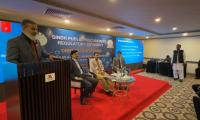
Pakistani authorities have failed to fully bring to justice killers of at least 98 murdered journalists since 1992. Provincial and federal governments must do more to end the culture of impunity and ensure safety of working journalists. This was highlighted in an investigative report launched by Safe Journalism at the Center of Excellence in Journalism (CEJ), IBA Karachi, on Wednesday.
The report titled Truth Denied: How Pakistani Authorities Built an Unsolvable Case is published under a global initiative led by Free Press Unlimited (FPU) in collaboration with the Committee to Protect Journalists (CPJ) and Reporters Without Borders (RSF).
The report traces the flaws in the murder investigation of Zakir Hussain Dahar – known as Shan Dahar – killed in District Larkana, Sindh, on New Year’s Eve in 2014. It documents procedural flaws, omissions, and inconsistencies in the official police investigation. The findings support grave allegations from the Dahar family regarding incompetence, complacency, and possible willful negligence on the part of investigating authorities.
Speaking on a panel, Barrister Salahuddin Ahmed pointed out that Pakistan has a low conviction rate of approximately 16 percent. According to him, the effective rate should be around 70–80 percent, showing that the country takes investigations seriously, but also has space to acquit the innocent.
“At every stage, we have faced local pressures, police shortcomings and judicial obstacles,” said human rights lawyer Salahuddin Panhwar, who has experience of pursuing justice for slain journalists in Sindh. He stressed the need for convictions in cases involving serious human rights violations.
Highlighting the need for journalists to stand up for their own and to build alliances with the legal fraternity, Director CEJ Shahzeb Jillani said, “We as a community are also guilty of forgetting our colleagues who have died in the line of duty. Our first duty is that we must not forget them. If we don’t speak up for them, who will?”
IBA faculty and journalist Shahzeb Ahmed said the definition of who is a journalist needs to be updated. “The first question when a journalist is attacked is often: is he even a journalist? In our eyes, it is anyone who is transmitting information. We can’t discriminate against someone sitting in a remote area like Barkhan, just because they never had the opportunity to join the mainstream media.”
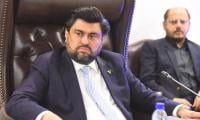
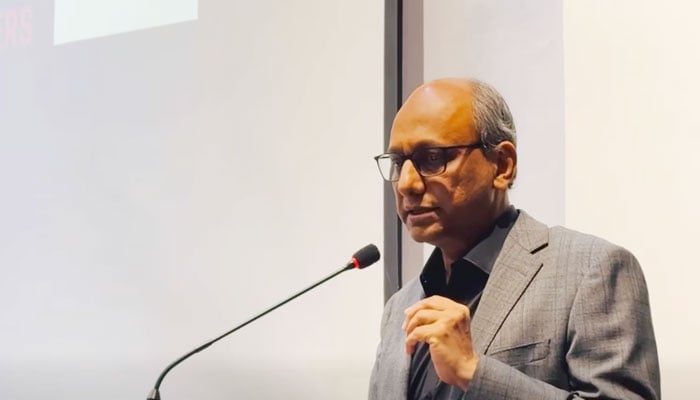
Earlier, in his keynote address, Sindh minister Saeed Ghani appreciated the research behind the report. “If there are flaws in police investigations, we must identify them clearly. Only then can we begin to fix what’s broken,” he said.
The minister also said that the PPP government is sometimes wrongly blamed when crimes are committed. He insisted that the party leadership has a strict policy of not supporting any parliamentarian facing criminal allegations.
In his opening remarks, Executive Director IBA Karachi Dr. S. Akbar Zaidi lauded the bravery of Pakistani journalists, saying their contribution and sacrifices deserve as much recognition as the soldiers who lay down their lives for a stronger and better Pakistan.
Leading journalists from across Pakistan, lawyers and families of some of the high-profile slain journalists attended the event.