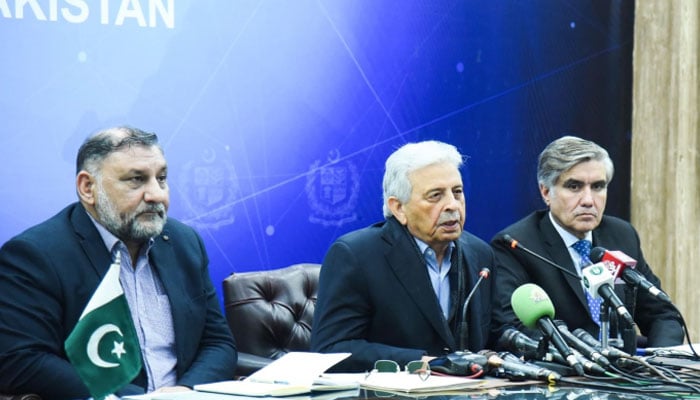
ISLAMABAD: Pakistan and China have signed 79 investment agreements worth about $4.5 billion in agriculture and food-related businesses, marking one of the largest foreign investment commitments in Pakistan’s farm sector and raising hopes for jobs, modern farming and cheaper food.
The Memoranda of Understanding (MoUs) cover 10 major areas, including food processing, farm technology, seeds, livestock and dairy, meat and poultry, fruits and vegetables, fisheries, animal feed, post-harvest storage and agricultural inputs.
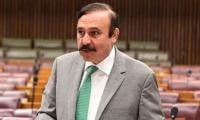
The minister said the $4.5 billion investment will contribute to economic growth, expand industries linked to agriculture and increase exports of processed food and agricultural products. He added that stronger local processing will reduce reliance on imports and make Pakistan more competitive in regional and global markets.
Meanwhile, Pakistan and the Islamic Development Bank (IsDB) on Tuesday signed three loan agreements of $603 million, including the construction of one portion of the motorway and two social sector projects.
According to an official announcement made by the Economic Affairs Division, the IsDB will provide three loans of about $603 million to finance the M-6 Sukkur-Hyderabad Motorway Project, Poverty Graduation of Extremely Poor and Flood Affected Households Project (PGEP) for selected poorest districts and flood affected areas and the Out-of-School Children project for the Azad Jammu and Kashmir. On the other hand, the International Monetary Fund (IMF) has revised downward Pakistan’s GDP growth projection for the current financial year 2026 to 3.2 percent from its earlier projection of 3.6 percent, reflecting that a structural weakness continues to persist on the economic horizon of the country. However, the Fund has projected that the GDP growth will improve to 4.1 percent in the next fiscal year (FY27). According to the World Economic Outlook update released by the IMF from its headquarters in Washington, DC, the Fund has lowered Pakistan’s GDP growth projection by 0.4 percent, bringing it down to 3.2 percent for FY26 from the earlier projection of 3.6 percent projected in October last. The IMF has upgraded GDP growth in India by 0.2 percent and projected that the growth would remain at 6.4 percent for FY26.
After achieving higher growth rate in the first quarter and rebound of Large Scale Manufacturing (LSM), the Ministry of Finance is projecting that the country’s growth rate might reach closer to 4 percent for the current fiscal year. This revised projection will only determine once the second quarter (Oct-Dec) period is finalised by the NAC with a time lag of almost two months. According to the IMF’s updated report, the global growth is projected at 3.3 percent for 2026 and 3.2 percent for 2027, revised slightly up since the October 2025 World Economic Outlook. Technology investment, fiscal and monetary support, accommodative financial conditions and private sector adaptability offset trade policy shifts. Global inflation is expected to fall, but US inflation will return to target more gradually. Key downside risks are reevaluation of technology expectations and escalation of geopolitical tensions. Policymakers should restore fiscal buffers, preserve price and financial stability, reduce uncertainty and implement structural reforms.