ISLAMABAD: The government informed the National Assembly on Wednesday that Pakistan was making efforts for de-escalating the situation in the region following attacks on Iran and neither it would jump into the war nor would put its weight on any side.
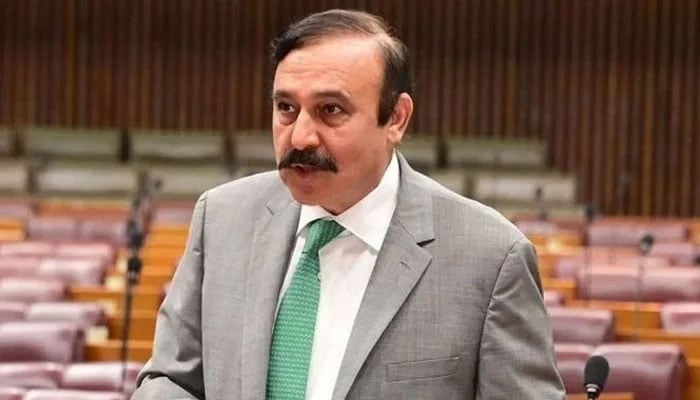
Minister for Parliamentary Affairs Dr Tariq Fazal Chaudhry, speaking on the floor of lower house of parliament, said that Pakistan was playing its role as a responsible state in the present tense situation and would continue to do so. “Neither will we jump into the war nor will we put our weight on any side. It has been our effort to end the conflict and to de-escalate the highly tense situation in the region,” the minister said.
Tariq Chaudhry said that Pakistan, as a peace-loving country and a good neighbour, desired peace in the region. “We want de-escalation while conveying the message of peace to all the countries,” he said, adding that the ongoing war was also having highly negative impacts on the economy and the coming days could be more challenging. He reiterated that Iran is a Muslim brotherly country and Pakistan strongly condemned Israel’s attack, which later was also joined by the United States. He recalled that Pakistan also strongly condemned the martyrdom of supreme leader Ali Hosseini Khamenei and 40 other Iranian leaders. “We are also concerned over attacks on the Gulf states and desire immediate de-escalation,” he said.
He said the prime minister chaired an in-camera meeting here on Wednesday to discuss the volatile situation in the region. Deputy Prime Minister Ishaq Dar, who also holds the portfolio of Foreign Affairs, also briefed the meeting while all parliamentary and political leaders also expressed their views.
He regretted the absence of opposition leaders in the National Assembly and the Senate from the in-camera meeting despite the fact that they were extended invitations. He pointed out that the in-camera meeting was convened basically to decide future national policy and Pakistan strategy.
“We also needed input from the opposition on our relations with Muslim countries. They should understand that today we need unity in our ranks,” he said.
Talking about operation ‘Ghazab Lil Haq’, the minister said that Pakistani forces launched the decisive operation against the Afghan Taliban, which would continue till achieving all the objectives.
“The operation will continue till achieving the ultimate objective which is to make Pakistan’s border safe, stop infiltration from Afghanistan and attacks on civilian population,” he said and reiterated that the operation would continue till the Afghan regime takes solid measures to stop infiltration inside Pakistan.
“We ask the Afghan regime to stop terrorism originating from Afghanistan,” he said. Pakistan’s deputy prime minister also visited Afghanistan three times but to no avail due to non-cooperative attitude of the Afghan regime. He said that since 2022, over 8,000 civilians and personnel of security forces and law enforcement agencies had been martyred as a result of terror activities originating from Afghanistan. The Pakistan government continued to inform the Afghan regime of the situation but no action was taken by them.
He said the Pakistan government, during talks with the Afghan Taliban in Doha, expressed its readiness to provide Rs10 billion to them for re-settling the TTP away from the Pak-Afghan border but they (Afghan regime) refused to give any guarantee.
He said all the terror attacks in Pakistan, including the suicide attack on Imambargah in Tarlai, suicide attacks in Bannu and Bajaur and martyrdom of a senior Pak Army officer, originated from Afghanistan. “There was an Indian hand in all these terror acts,” he said.
The minister said that Pakistan always desired peace even with India which imposed aggression against the neighbouring country on May 6-7 last year, which was responded with full force.
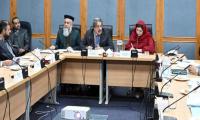
PTI parliamentarian Ali Muhammad Khan strongly condemned the attack on Iran, saying that it was not an attack on Shia Islam but an aggression against Islam regardless of any sectarian divide. He said that he would also tell Prime Minister Shehbaz Sharif that a person (Trump) who murdered a great Muslim leader could never be a messenger of peace. “I will also ask Afghanistan not to play into the hands of India,” he said.
JUIF parliamentarian Naeema Kishwar asked the Pakistan government to play a wise role in the present situation and try to find a peaceful solution. PTI MNA Iqbal Afridi alleged that Pakistan’s policy towards Iran clashes with the public opinion. “Our government wants that an assassin and terrorist should get the Nobel Peace Prize,” he said.
The MQM parliamentary leader, Dr Farooq Sattar, said that Prime Minister Shehbaz Sharif and Field Marshal Asim Munir could also talk to the US leadership. He said that as per well-planned conspiracy, other Muslim countries were also being dragged into the war without any reason.
He said that a proposal was floated in an in-camera meeting chaired by the prime minister that joint sitting of parliament be convened so that those who could not get the opportunity express their views could do so.
The MQM parliamentarians walked out of the proceedings after deputy speaker Ghulam Mustafa Shah refused to give extra time to Farooq Sattar to express his views.
PMLN parliamentarian Shaikh Aftab Ahmad said that Pakistan, while playing a leading role among the Muslim countries, was making efforts for a permanent ceasefire. Expressing grief over the martyrdom of Iranian supreme leader, other leaders and civilians, he said that tragic events have reminded of the historic ‘Karbala event’ and sacrifices of Ahle Bait.
PPP parliamentarian M Shahida Rehman said that the dream of Israel for regime change in Iran could not materialise. She said those who attacked Iran were not expecting such a strong reply from the Iranian leadership and its forces.
Shabbir Bijarani of PPP also paid tributes to the martyred Iranian leader who waged a long struggle throughout his life. He said the whole Pakistani leadership, regardless of political affiliations, was standing with Iran at a difficult juncture of its history.