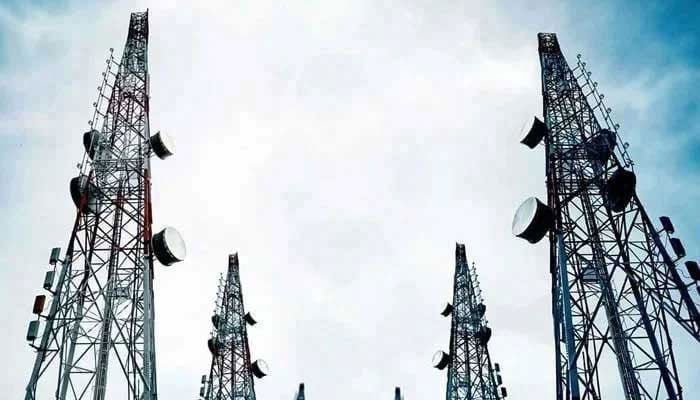
Pakistan is once again at a turning point in its digital future. The government has formally moved towards a 5G spectrum auction, and the regulator has issued the framework that will govern it.
The industry’s viewpoint has valid concerns. Some argue the country cannot afford to delay any further. Others insist the economics do not work for operators. Both views contain truth. Neither offers a complete answer.
What is beyond dispute is that the absence of 5G is increasingly a disadvantage. In today’s world, fast and reliable connectivity is no longer a premium service. It is an essential input into productivity, learning, exports and participation in the global economy. Countries that treat advanced connectivity as optional infrastructure risk falling behind. These costs manifest later as lost competitiveness and weaker growth.
Pakistan already sees this pressure. A growing share of economic activity now depends on stable, high-capacity internet. We have freelancers, software developers, remote service workers, small businesses serving international clients and students in technical education. For these groups, network congestion and inconsistent speeds constrain income and output.
In parallel, the financial stress in the telecom sector is real. According to the Pakistan Telecommunication Authority, mobile average revenue per user (ARPU) is around Rs302 per month. This places Pakistan among the lowest globally. Total sector revenues were roughly Rs803 billion in the last fiscal year, 16 per cent year-on-year decline. This headline number masks the reality of a very large prepaid base generating very little revenue per user. Returns on equity have thus weakened. Fresh capital investment carries real risk to further distort returns.
Ignoring this reality would be irresponsible and unfair. Forcing operators into large-scale capex without regard for returns is unlikely to produce a strong network. It may get some compliance-driven investment and defensive behaviour. That outcome helps no one.
The mistake lies in framing the issue as a choice between progress and profitability. That is a false choice. Other low-income and emerging markets have faced similar conditions. They did not wait for ARPU to rise on its own. They changed how next-generation connectivity was deployed and monetised. Africa has about 54 million 5G connections, India, Nepal and Bhutan have about 394 million such connections – and growing.
One of the most important facts in Pakistan’s case is device affordability. Industry estimates suggest that only a very small fraction of mobile users currently own 5G-capable handsets. Industry estimates entry-level 5G phones cost close to Rs90,000. For most households, this is out of reach. A network rollout that assumes rapid mass handset replacement will fail.
This does not mean 5G should be postponed. It means it should be sequenced correctly. Infrastructure does not appear everywhere at once. Roads are built where traffic exists. Electricity grids expand as demand grows. Broadband follows the same logic. You build first for users who can utilise the capacity and sustain the economics. You expand as costs fall and demand broadens.
For Pakistan, these points clearly point towards a targeted approach. The country already has a sizeable cohort whose income depends on digital connectivity. This cohort earns foreign exchange. It contributes to exports. It has formal income streams. They justify higher revenue per connection. Pakistan’s ICT services exports have grown rapidly and now rival traditional sectors such as rice and bedwear. This segment has and will afford to pay the correct cost for 5G connectivity on the go.
The policy challenge is to connect this demand to a viable rollout model. One part of the answer lies in fixed wireless access. Delivering high-speed home and small office broadband over 5G allows operators to serve households and businesses without waiting for universal smartphone upgrades and deploying extensive VDSL infrastructure. It also improves unit economics because broadband connections generate higher and more stable revenue than prepaid mobile usage.
Another part lies in financing. Blanket subsidies are neither affordable nor desirable. Targeted financing for qualified users is different. Professionals. Freelancers. Students in accredited programmes. Small businesses with verifiable income streams. Financing devices or connectivity for these groups is productivity support with yields in the short term. It mirrors how states already treat export-oriented sectors.
Government involvement does not need to mean open-ended subsidy. Limited first-loss guarantees can catalyse private financing while keeping commercial discipline intact. Exposure can be capped with measurable performance. Schemes with a clear sunset date can be introduced. This is not at all a permanent risk transfer measure. More like a market unlocking mechanism that would otherwise stay frozen.
The supply side also needs flexibility. If the government mandates rollout targets, then it must also allow business models that reduce duplication and protect returns. Network sharing. Neutral host arrangements. Even single-access network approaches in defined geographies. These are some of the more pragmatic responses to low ARPU environments that enable viable connectivity.
Auction design matters as well. A spectrum policy that prioritises short-term fiscal extraction over long-term investment will ultimately weaken the sector. Pakistan has already approved base pricing for the upcoming auction. The next step is to ensure that payment terms and obligations support the rollout rather than discourage it.
None of this requires choosing between national interest and commercial viability. It requires recognising that 5G is no longer a discretionary consumer upgrade. It is essential economic infrastructure. And infrastructure works best when the state enables and the market innovates.
The greatest risk now is a delay born of stalemate. Each year without progress compounds Pakistan’s digital disadvantage. Freelancers lose contracts. Small exporters lose competitiveness. These losses do not appear in a single budget line. They compound rapidly over time.
Pakistan does not need to rush blindly into 5G. But it cannot afford to stand still. A balanced approach is possible – one that treats 5G as essential infrastructure; allows telcos to earn a return; and expands the market rather than shrinks it. That is the path worth choosing.
The writer studied at Cambridge and held senior roles in investment banking before founding and leading ventures in healthcare and technology. He now serves on corporate boards in healthcare and finance.