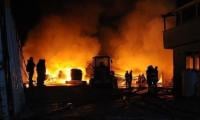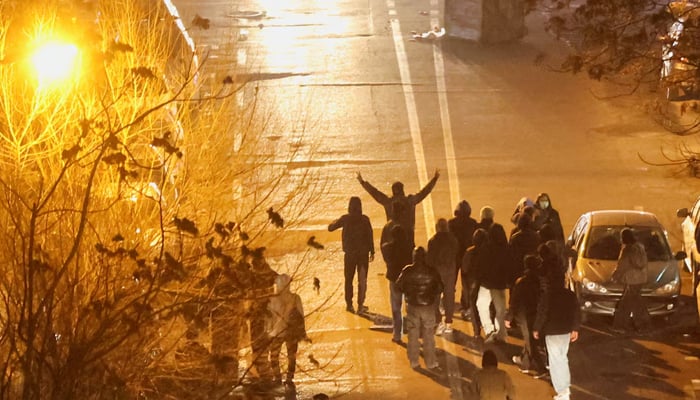
The United States on Thursday imposed sanctions on Iranian security officials and financial networks, accusing them of orchestrating a violent crackdown on peaceful protests and laundering billions in oil revenues.
Treasury Secretary Scott Bessent announced the measures in the wake of the biggest anti-government protests in the history of the Islamic republic, although the demonstrations appear to have diminished over the last few days in the face of repression and an almost week-long internet blackout.
"The United States stands firmly behind the Iranian people in their call for freedom and justice," Treasury Secretary Scott Bessent said in a statement, adding that the action was taken at President Donald Trump's direction.
Among those sanctioned is Ali Larijani, secretary of Iran's Supreme Council for National Security, whom Washington accused of coordinating the crackdown and calling for force against protesters.
Four regional commanders of Iran's Law Enforcement Forces and Revolutionary Guard were also sanctioned for their roles in the crackdown in Lorestan and Fars provinces.
Security forces in Fars "have killed countless peaceful demonstrators" with hospitals "so inundated with gunshot wound patients that no other types of patients can be admitted," the Treasury said.
The Treasury additionally designated 18 individuals and entities accused of operating "shadow banking" networks that launder proceeds from Iranian oil sales through front companies in the UAE, Singapore and Britain.
These networks funnel billions of dollars annually using cover companies and exchange houses, as Iranian citizens face economic hardship, according to the Treasury.
The sanctions freeze any US assets of those designated and prohibit Americans from doing business with them. Foreign financial institutions risk secondary sanctions for transactions with the designated entities.
The action builds on the Trump administration's "maximum pressure" campaign against Iran. In 2025, the Treasury sanctioned more than 875 persons, vessels and aircraft as part of this effort, it said.
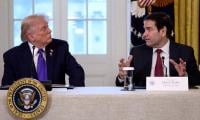
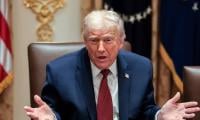
Separately, Trump — in an exclusive Reuters interview in the Oval Office — said that Iranian opposition figure Reza Pahlavi "seems very nice" but expressed uncertainty over whether Pahlavi would be able to muster support within Iran to eventually take over.
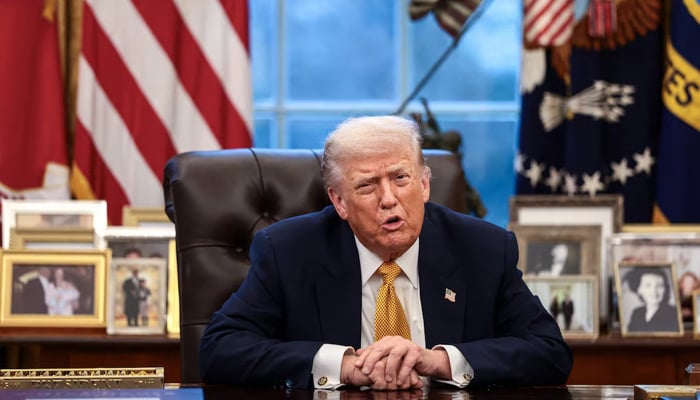
"He seems very nice, but I don't know how he'd play within his own country," Trump said. "And we really aren't up to that point yet.
"I don't know whether or not his country would accept his leadership, and certainly if they would, that would be fine with me."
Trump's comments went further in questioning Pahlavi's ability to lead Iran, after he said last week that he had no plans to meet with him.
The US-based Pahlavi, 65, has lived outside Iran since before his father was toppled in the 1979 Islamic Revolution and has become a prominent voice in the protests.
Echoing Trump's caution, Sanam Vakil, deputy director of Chatham House's Middle East and North Africa Program, said Pahlavi had gained prominence among some protesters and had helped mobilise them to some extent. "But I wouldn't overstate it. It's very hard to see how much support he has or how much support any figure has in Iran," she said.
Trump said it is possible the government in Tehran could fall due to the protests but that in truth "any regime can fail."
"Whether or not it falls or not, it's going to be an interesting period of time," he said.