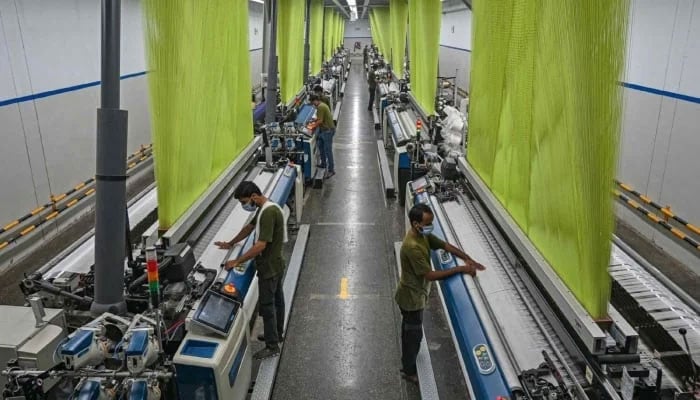
Small and medium-sized enterprises (SMEs) are businesses that generate revenue, provide employment and generate income streams by making finished goods and/or services available to the consumer market at prices that are reasonable for all. SMEs are widely recognised as a primary driver of national economic development and gross domestic product (GDP).
According to Pakistan’s government-led Small and Medium Enterprises Development Authority (SMEDA), SMEs are the backbone of the economy, comprising over 90 per cent of businesses, driving 40 per cent of GDP, providing jobs to millions and contributing to exports. SMEs in Pakistan face challenges, but these vary by local context. The major issue has always been access to affordable finance, whether the SME operates in Balochistan, Khyber Pakhtunkhwa, Punjab, Gilgit-Baltistan, AJK or Sindh.
SMEs in Sindh primarily face limited access to sustainable financing, business information, legal support, marketing, pricing strategies, packaging techniques, networking and linkages with relevant industries. SMEs in Sindh are reluctant to register with the Federal Board of Revenue (FBR) because they believe it would impose additional burdens and hinder business growth. A lack of awareness also persists among SMEs.
Sindh needs to devise a clear SME growth and expansion policy that is practical and holistic in its approach. The cluster approach would be better here. For example, in Tharparkar, the government needs to map the current capacity of SMEs in terms of annual turnover, number of employees, types of goods and services provided, number of SMEs with industry linkages and the type of financing accessed. The same should apply across Sindh. Working on this strategy will create new opportunities for the Sindh government to put necessary programmes in the pipeline and enable SMEs to expand capacity and scale faster.
The current status of Sindh’s SMEs indicates a need for tailored support to build the necessary capacity to generate income and contribute to local livelihoods and national GDP. Tailored support will help them sustain their presence in the local consumer market; otherwise, SME dropout rates will rise exponentially.
To achieve desired results promptly, it would be better to establish district-wise Business Incubation Centres (BICs), as already exist in six universities in Sindh province, including Mehran UET Jamshoro. BICs encourage budding entrepreneurs to visit regularly to access operational and administrative information, as well as capacity-building support. Among other functions, the BIC’s primary role is to align SMEs with state-of-the-art business trends and provide technical and social training in communication, commercialisation, marketing, pricing strategy, team building, financial management and tax compliance.
Most importantly, organised BICs in each district of Sindh will serve as flagship platforms for businesses to access prompt support for growth and investor connections. The tacit knowledge of today’s SME owners in rural Sindh is readily available and essential, but they need support to achieve sustainability and prosperity.
Whoever does good should be praised. For instance, BICs operating in Sindh’s universities are focused on developing the startup ecosystem and commercialising research. There are also a few international organisations like the European Union and UNIDO implementing the ‘Poverty Alleviation and Inclusive Development Across Rural Sindh (PAIDAR)’ programme in Sindh’s five districts through five implementing partner organisations, including the National Rural Support Programme (NRSP) in district Sujawal.
In Sujawal, microgrants worth millions have been provided to small businesses, not high-end enterprises, but those operating on streets and roads with the will to expand from the grassroots level to the national level. Such interest-free support for selected SMEs is welcome, but the government can more effectively manage the provision of interest-free financing and ensure access to timely, required training and capacity-building opportunities.
Youth-led SMEs, particularly those led by women, are most vulnerable due to a lack of government support for doing business. Women face not only technical challenges in business but also limited capacity to address social constraints imposed by society. In such situations, they must be supported by sustainable government initiatives that advance women’s empowerment in Sindh by promoting financial stability and independence.
In addition, such initiatives would support the government in achieving the objectives of the Sindh Poverty Reduction Strategy 2018, while tailored support provided to budding entrepreneurs and SMEs will deliver lasting positive outcomes for Sindh through prioritised development.
The writer is an expert in public policy analysis and sustainable development. He can be reached at: [email protected]