The events unfolding in Venezuela are less surprising than the reaction they have provoked. What has unsettled many observers is not that the US acted decisively, but that it did so without the familiar moral scaffolding that usually accompanies American intervention abroad.
Washington’s actions in Caracas reveal a world where influence no longer feels the need to justify itself and where strength increasingly speaks without apology.
There was no elaborate narrative about defending democracy, no prolonged appeal to international institutions, no attempt to dress power in the language of altruism. Instead, the message from Washington was starkly straightforward: the US would oversee Venezuela during a transition, assume control over its oil sector, restore production and sell Venezuelan crude – to its own advantage. It was a declaration stripped of ornamentation. America acted because it could, and because it judged that doing so served its interests.
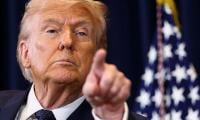
For decades, American foreign policy has oscillated between idealism and realism, often blending the two in carefully calibrated proportions. Military interventions were typically accompanied by invocations of universal values, even when strategic calculations were obvious. What distinguishes the current moment is not the exercise of power itself, but the abandonment of pretence. Under President Donald Trump, influence is presented not as stewardship, but as entitlement.
This worldview is internally consistent. Trump has long treated international relations as a series of transactions rather than a web of shared norms. In his calculus, power exists to be used, assets exist to be leveraged and outcomes are measured in tangible gains. Venezuela, a country endowed with extraordinary oil wealth yet debilitated by years of misrule, sanctions and economic freefall, appeared less like a sovereign state in crisis and more like a geopolitical opportunity waiting to be seized.
From this perspective, removing Nicolas Maduro was a strategic correction. A hostile government was displaced, a vital energy resource brought under effective control, and American leverage in the Western Hemisphere reinforced. To Trump and his supporters, this is not exploitation but something that needed to be done – and it was done efficiently.
Those who support what has happened – like the UK, European Union and others – will say that Maduro’s government presided over the collapse of one of Latin America’s richest economies, oversaw widespread repression and triggered a mass exodus of citizens unparalleled in the region’s modern history. If Venezuelans are better off without him, does it really matter how that outcome was achieved? International politics, after all, has never been governed by innocence.
There is also the inescapable reality of asymmetry. America possesses military, economic and financial instruments that place it in a different category altogether. Its ability to impose sanctions, shape markets and influence political outcomes is demonstrable. The global system has always reflected this imbalance. Those who pretend otherwise confuse aspiration with reality. Yet power does not exist in a vacuum, and its use carries consequences beyond the immediate objective.
The most troubling implication of Washington’s approach lies in what it normalises. Sovereignty, while frequently violated, remains the foundational principle of international order. When a major power openly assumes the right to determine leadership outcomes and administer another country’s resources, it sends a signal that sovereignty is conditional; to be respected only when convenient.
This is not merely a philosophical concern. Smaller states rely on legal norms precisely because they lack coercive power. When the strongest actors erode those norms, vulnerability becomes systemic. Today, it is Venezuela. Tomorrow, the logic may be applied elsewhere by other powers, citing their own security concerns or strategic imperatives.
Precedent, once established, rarely remains isolated. If national interest is a sufficient justification for intervention, then objections to similar behaviour by rival states lose much of their moral force. A world in which every powerful country feels entitled to redraw boundaries or manage weaker states is not one that promises stability.
Equally significant is the question of legitimacy. Political transitions imposed or overseen from abroad often struggle to command durable domestic consent. A post-Maduro government perceived as operating under American supervision risks being viewed as dependent rather than representative. That perception can undermine trust, fuel opposition and complicate governance long after the initial transition is declared complete.
There is also the issue of credibility. By explicitly linking intervention to economic benefit, Washington has made it harder to argue that democracy and human rights are the central motivations. Trump’s candour may appeal to his base, but it deepens cynicism internationally. For countries already sceptical of Western intentions, Venezuela becomes further evidence that values are invoked selectively, while interests remain constant.
At a broader level, these developments reflect a shift in how global order is imagined. The so-called rules-based system has always been imperfect, but it functioned because major powers at least paid lip service to restraint. When rules are treated as optional, uncertainty replaces predictability. Alliances become fragile, trust erodes and the risk of escalation increases.
None of this is to suggest that Venezuela’s previous status quo was acceptable, or that the US should renounce power altogether. The international arena is not governed by moral absolutes. But history repeatedly shows that power exercised without limits tends to generate backlash – sometimes slowly, sometimes violently.
In the near term, Washington may succeed in reshaping Venezuela’s economy and political structure. Oil production may rise, markets may stabilise and a measure of order may return. But the longer-term question is more unsettling: what kind of international environment is being created when strength no longer feels compelled to justify itself?
A world governed openly by hierarchy may appear efficient, even decisive. It is rarely forgiving. And no power, however dominant, remains unchallenged indefinitely.
The writer is a journalist based in Karachi. He tweets/posts @omar_quraishi and can be reached at: [email protected]