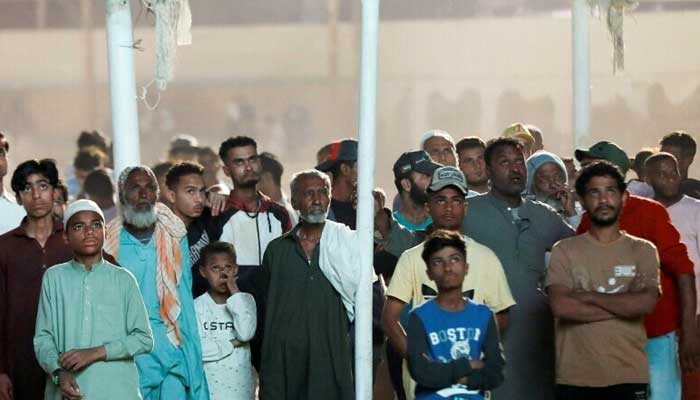
News moves quickly through the tight alleyways of Lyari. Usually, the chatter is about a local football match, a Balochi poetry session or the death of a community elder.
Lately, however, the conversation has shifted to Dhurandhar, a massive Bollywood propaganda film starring big names of cinema. We are told it is a spy thriller set against the backdrop of the Lyari gang wars. Since filming on location wasn't an option, the producers reportedly built a replica in India, reconstructing our Cheel Chowk, our chaotic skyline and our weathered streets on a studio lot.
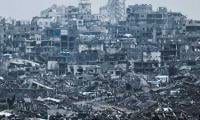
Seeing the various clips available on social media brings on a tired sense of ‘here we go again’. Lyari has once again been flattened into a gritty aesthetic, a convenient backdrop for gunfights. To filmmakers in Mumbai and sadly, to many content creators right here in Pakistan, Lyari isn't a home; it’s a genre. It is treated as the ‘Wild West’ of Karachi, a place where the only narrative worth selling is one of violence.
My family has represented this constituency in parliament for nearly a century, so I see this as more than just a creative failure; it is an erasure of history. My ancestors didn't represent a gangland. They represented a centre of political consciousness and intellect. This is the Lyari that stood as a fortress against dictatorships and fueled the Movement for the Restoration of Democracy (MRD). Reducing this politically astute neighbourhood to a playground for movie gangsters insults the memory of every activist who fought for civil rights on these streets.
If these storytellers actually zoomed out, they would see the Lyari known as ‘Little Brazil’. They would witness the electric energy at People's Stadium, the boxing clubs churning out Olympians and the literary circles keeping progressive philosophy alive. They would see the ‘Lyari Underground’ rappers who built a language of resistance. Instead, by painting the area solely as a den of criminals, the media provides an excuse for state neglect. It stigmatises our youth, making it nearly impossible for them to land corporate jobs simply because of the stigma attached to their address.
But this problem goes deeper than the misrepresentation of one neighbourhood. The production of Dhurandhar exposes a massive gap in Pakistan’s soft power. We cannot expect to change how the world sees us if we let our adversaries write the script. When we fail to document our own reality, others will manufacture a fake one for us, built with plywood sets and prejudiced stereotypes.
The federal government, under Prime Minister Shehbaz Sharif, needs to do more. The recent pledge of Rs1 billion by the chief minister of Sindh for the creative industries is a good start, along with our own produced movie titled ‘Mera Lyari’ coming soon, which will tell the true story of Lyari as the hub of talent and the face of resilience. We have to invest in our own storytellers so that the next time the world looks at a screen, they see a version of Pakistan defined by us, one that celebrates the living pulse of places like Lyari rather than selling tickets on their trauma.
The makers of Dhurandhar might have rebuilt the walls of Lyari, but they missed its soul completely. It is up to us to show the difference. The war for the narrative is officially on. We have stepped into the ring; now we have to learn how to box – and eventually win.
The writer is the spokesperson of the government of Sindh.