As Pakistan commemorates another birth anniversary of Quaid-i-Azam Muhammad Ali Jinnah, it is both timely and necessary to move beyond ritualistic remembrance and re-engage with the deeper substance of his vision, particularly his ideas on economic independence and national prosperity.
Jinnah’s struggle was never confined to the attainment of political sovereignty alone. He envisaged Pakistan as a strong, self-reliant, and welfare-oriented state where economic freedom would serve as the foundation of true independence.
In the context of Pakistan’s persistent economic crises, mounting debt, recurring balance-of-payments challenges, and reliance on external assistance, have become the persistent issues. As recently envisaged by the IMF report on Pakistan Economy, the assessment underscore the urgency of revisiting Quaid-i-Azam’s economic principles in Pakistan’s contemporary context. The IMF’s report on Pakistan’s economy paint a cautiously stabilising yet deeply constrained picture, marked by slow growth forecasts, heavy debt burdens, and weak private investment, even as inflation and external pressures moderate. The Fund has downgraded Pakistan’s projected GDP growth from 3.2 % to 2.6 % reflecting subdued economic activity and structural limitations.
Moreover, the IMF’s Governance and Corruption Diagnostic Assessment explicitly identifies corruption vulnerabilities and governance weaknesses as a major constraint on economic performance. It notes the embedded risks across key sectors, weak institutional accountability, and fragmented regulatory frameworks that deter both domestic and foreign investment. The report argues that these governance short comings, often described as “elite capture” and corrosive corruption, significantly eroded public trust and economic dynamism, costing the country an estimated share of GDP and limiting growth potential.
These findings resonate with Quaid’s insistence on economic equity and self-reliance. Jinnah envisioned an economy freed from structural distortions and anchored in fairness, opportunity, and robust institutions. Today’s economic realities as confirmed by the IMF, show that without addressing corruption, strengthening institutions, and empowering merit-based economic participation, the promise of sustainable prosperity remains elusive. For Pakistan’s youth and policymakers alike, this should serve as both a warning and a call to action: true economic independence requires not just policy prescriptions, but principled leadership and effective governance.
The revisiting Quaid’s economic thought offers more than historical insight. It provides a moral and strategic compass, especially for Pakistan’s youth, who remain the most critical stakeholders in shaping the country’s economic future. It is often argued that the Quaid-i-Azam focused primarily on constitutional and political struggles, leaving behind no formal economic blueprint. While this observation is not entirely incorrect, it overlooks the fact that Jinnah’s economic vision was embedded in his speeches, policy preferences, institutional choices, and lived experiences. Economic freedom, for him, was a cornerstone of nation-building. He was acutely aware that political independence without economic autonomy would leave Pakistan vulnerable to external pressures and internal inequities.
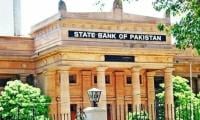
If we look at his inaugural address to the State Bank of Pakistan in July 1948, where he famously warned:
...”the adoption of Western economic theory and practice will not help us in achieving our goal of creating a happy and contented people”, we can better understand his economic vision. It was clearly articulated that there was no rejection of modernity or progress, but a call for indigenous, context-specific economic thinking one that prioritized social justice, equity, and national self-sufficiency over blind imitation.
Jinnah’s exposure to British society during his years of law studies in England deeply shaped his views on economic opportunity and social mobility. What impressed him was not merely industrial advancement, but the relative economic equality, institutional stability, and avenues for upward mobility available to ordinary citizens. He understood that investment in people, (Social Capital) through education, skills, and fair access to opportunity, produced long-term dividends for the state.
Jinnah’s defining objective and a world view was an economic equity. He is often quoted as valuing economic justice more than symbolic technological achievements, famously remarking that ensuring fairness and dignity for citizens mattered more than spectacular but hollow milestones. While the Muslim League did not present a formal economic manifesto, Jinnah’s leadership consistently reflected a commitment to a prosperous, progressive, and inclusive Pakistan.
This explains his emphasis on industrial development and commercial vitality in the early years of the state. Jinnah was keenly interested in the industrialization of Pakistan’s zones and the creation of a robust domestic economy. He wanted Pakistan to move beyond a subsistence-based structure toward productive enterprise, manufacturing, and trade. His vision was of a country where citizens were encouraged to become entrepreneurs and producers, rather than remaining dependent on clerical employment or external aid.
Coming from a business background himself, Jinnah understood the transformative power of commerce and trade. As documented in Quaid-i-Azam Papers edited by Zawar Hussain Zaidi, Jinnah viewed commerce and trade as “the very life-blood of the nation.” He believed that a thriving business environment, supported by strong institutions and ethical governance, was essential for national strength and social stability.
Today, Pakistan’s repeated cycles of borrowing and austerity stand in sharp contrast to this vision. Economic dependence has increasingly constrained policy autonomy and undermined public trust. Reconnecting with Quaid’s emphasis on self-reliance does not imply isolationism; rather, it calls for strengthening domestic capacity, managing resources responsibly, investing in human capital, and fostering innovation.
Jinnah envisioned a Pakistan that produced, industrialised, and innovated rather than one that merely consumed imported goods or relied on foreign assistance. This vision closely aligns with what contemporary political economy identifies as a developmental state approach, one that balances markets with strategic state guidance.
Quaid-i-Azam’s vision of a self-reliant Pakistan was not utopian. It was grounded in economic realism, social justice, and national dignity. Pakistan’s failure to realise this vision reflects not destiny, but choices that can still be revised. The experiences of Malaysia, South Korea, and Vietnam demonstrate that late development is possible when political will, institutional discipline, and productive investment align. For Pakistan, breaking the begging bowl will require confronting elite capture, entrenched interests, prioritising production over consumption, and restoring economic sovereignty through reforms rather than rhetoric.