General Agha Muhammad Yahya Khan (HJ HPk SPk NePi) was not a diplomat. He was not a man shaped by electoral politics. He was not entrusted with a foreign ministry. He was commissioned into the British Army in 1939 and fought in the Second World War in the Mediterranean theatre. He served as the fifth commander-in-chief of the Pakistan Army.
General Agha Muhammad Yahya Khan would go on to play a decisive role in one of the most consequential diplomatic realignments of the 20th century.
In August 1969, President Nixon visited Pakistan and quietly took General Yahya aside with a single extraordinary request: help America find its way back to China. America and China had not spoken in twenty years.
But Pakistan had working relations with both Washington and Beijing — and Nixon knew it.
For two years, through Ambassador Agha Hilaly, messages passed silently between Nixon and Zhou Enlai — entirely outside the knowledge of the US State Department, the cabinet and the world. When Zhou Enlai finally replied that China would receive an American envoy, it was General Yahya who delivered the answer.
Imagine this: among nearly four billion people, General Yahya stood as the only trusted conduit between the Americans and the Chinese. He preserved a confidential record of these exchanges in 49 documents, stored in a loose-leaf folder that his son, Ali Yahya, hid beneath his bed.
General Yahya relied on a tightly held, two-man team — Foreign Secretary Sultan Mohammed Khan and Ambassador Agha Hilaly. In all of Pakistan, only three individuals knew the full secret: a general, a foreign secretary, and an ambassador.
Dr Henry Alfred Kissinger: born in Germany, a Jewish refugee fleeing Nazi persecution, and an immigrant to the US. He served in the US Army during the Second World War. He then rose to become the seventh national security adviser and the 56th US secretary of state under Presidents Richard Nixon and Gerald Ford.
On July 8, 1971, Kissinger arrived in Islamabad along with three aides and two Secret Service escorts, had a 90-minute dinner with General Yahya and feigned illness. General Yahya’s team put out the word that Kissinger had a stomach ailment and was heading to the mountain resort of Nathiagali to recover from a ‘Delhi belly’. General Yahya had a decoy motorcade duly depart with a Secret Service agent, slumped in the back seat, playing the ailing American.
At 3:00am on July 9, 1971, Kissinger expressed apprehension about flying to Beijing alone. At one point, he insisted that President Yahya accompany him as a guarantor of his safety. Yahya declined. Instead, he offered Kissinger a tin hat—and a general. The general was never publicly identified, but a Pakistani military escort was placed on board as Kissinger’s physical security guarantee.
At 3:30am on July 9, 1971, Sultan Mohammed Khan drove Kissinger in his teenage son’s Volkswagen Beetle to Chaklala airport in Rawalpindi.
At 4:00 a.m., Kissinger boarded a PIA Boeing 707, found four Chinese officials already seated and waiting. At 12:15pm, the plane landed at Nanyuan Airport in Beijing followed by 48 hours of talks, 17 hours with Zhou Enlai.
On July 11, 1971, Kissinger returned to Pakistan, drove back via a circuitous route to feign returning from Nathiagali. On July 15, 1971, Nixon announced on American television that he had been invited to visit China.
Red alert: The entire cold war balance of power shifted by a Pakistani general, a Volkswagen Beetle and a PIA Boeing 707.
Imagine this: Fifty-five years later, the architecture is identical.
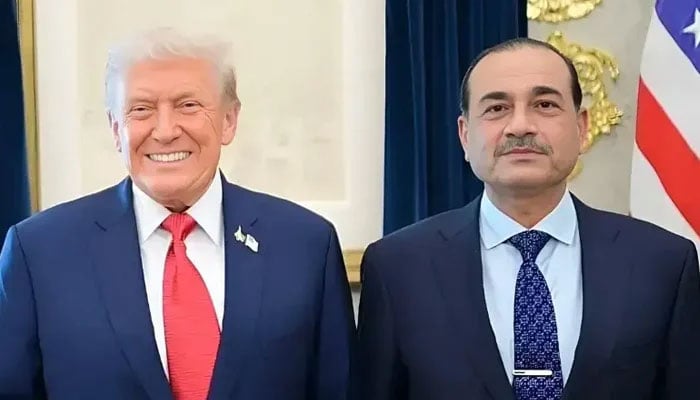
Among eight billion people, COAS-CDF Field Marshal Syed Asim Munir stands as the only trusted conduit between Washington and Tehran. He is not a diplomat. He is a soldier. Like Yahya, he relies on a tightly held team — a foreign minister flying to Beijing on a fractured shoulder and a national security adviser sitting in a room in Islamabad as a principal, not as support staff. Only three people in Pakistan know the full shape of what is being negotiated: a field marshal, a foreign minister and a national security adviser.
In 1971, General Yahya offered Kissinger a tin hat and a nameless general as a security guarantee. In 2026, Field Marshal Asim Munir did not send a general. He called the president of the United States himself.
In 1971, a Volkswagen Beetle and a PIA Boeing 707 changed the world. In 2026, the world is waiting to see what a phone call to Donald Trump will do.