For decades, Pakistan’s security doctrine was neatly, if dangerously, singular: India. Today, that paradigm lies shattered. The nation now faces a perilous triple bind -- simmering tensions on its eastern border with India, a volatile western frontier with Afghanistan that bleeds militancy inward and a domestic sphere riven by political chaos, economic distress and deep-seated ethnic grievances.
This triad is not separate; it is a vicious, reinforcing cycle. Pakistan’s pursuit of stability through militarised borders alone is a failing strategy. True security will only emerge from a fundamental recalibration: one that places internal political and economic stability as the non-negotiable foundation for effective regional diplomacy and, consequently, sustainable border security.
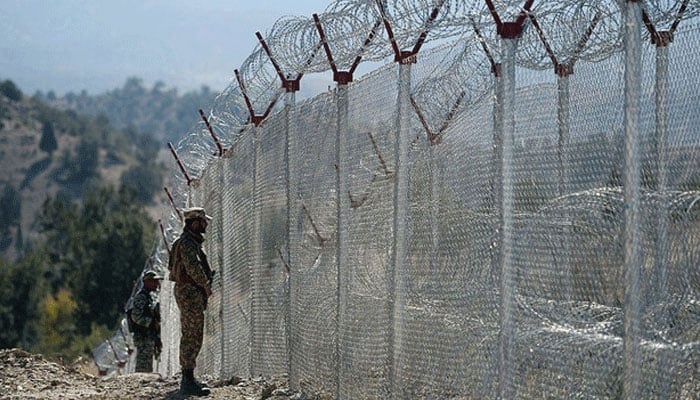
The clearest evidence of this failure is the western frontier with Afghanistan. In December 2022, the banned TTP ended a ceasefire, launching a devastating resurgence of attacks from Afghan soil. Despite investing billions in fencing the 2,600-km Durand Line -- a project called ‘inescapable’ by military officials -- Pakistan saw a 56 per cent year-on-year increase in terror incidents in 2023, predominantly from this border, as recorded by the Pakistan Institute for Conflict and Security Studies (PICS). The fence, a physical symbol of a security-first approach, cannot address the root cause: a fractured diplomatic relationship with the Afghan Taliban.
Pakistan’s policy, historically caught between seeking ‘strategic depth’ and opposing the TTP, now appears contradictory. The diplomatic impasse renders the border fence a costly barrier that stops neither ideology nor determined militants, while alienating cross-border Pashtun tribes whose livelihoods depend on movement. The result is a direct import of violence that destabilises Khyber Pakhtunkhwa and fuels national anxiety.
Simultaneously, the eastern border with India remains a prison of perpetual, costly hostility. The Line of Control (LoC) is one of the world’s most militarised zones, with ceasefire violations a grim routine. This posture consumes a disproportionate share of national resources and institutional attention. The Stockholm International Peace Research Institute (SIPRI) estimates Pakistan’s military expenditure in 2022 at over $10.4 billion, a staggering burden for an economy in crisis.
This rivalry has effectively paralysed Saarc, choking off potential trade routes that could be an economic lifeline. Former foreign minister Hina Rabbani Khar has argued that this “India-centric” posture has “distorted” Pakistan’s foreign policy and stunted its economic potential. The security establishment’s primary focus on the Indian threat inevitably draws attention and resources away from the more immediate, non-conventional threats festering within and from the west.
These border and diplomatic failures are catastrophically magnified by Pakistan’s profound internal fragility. The political arena is characterised by bitter polarisation, undermining any consistent, long-term diplomatic strategy. A government locked in survival mode cannot craft the nuanced, sustained engagement needed with Kabul or New Delhi. More critically, the economic crisis is now the ultimate national security threat. With inflation soaring above 30 per cent, foreign exchange reserves precarious, and the nation locked in a painful $3 billion IMF programme, Pakistan’s sovereignty is compromised not by invasion, but by financial vulnerability.
This weakness is exploited in diplomacy; it reduces leverage and increases dependence on allies like China, Saudi Arabia and the UAE, who provide bailouts with political strings attached.
Nowhere is the nexus of internal grievance, failed diplomacy, and border insecurity more explosive than in Balochistan. The long-running insurgency, fueled by allegations of economic deprivation and political marginalisation, directly targets the crown jewel of Pakistan’s regional diplomacy: the China-Pakistan Economic Corridor (CPEC).
Attacks on Chinese nationals and on Gwadar Port facilities demonstrate how internal instability deters the very foreign investment needed to sustain stability. They also strain the critical relationship with Beijing. When militants with alleged sanctuaries in Afghanistan can strike across the border, as seen in the Pakistan-Iran cross-border exchanges in January 2024, a local grievance instantly becomes a regional diplomatic crisis.
The way out of this triple bind requires a courageous paradigm shift, from a ‘security-state’ to a ‘welfare-state’ mindset.
First, launch a diplomatic surge on the western front. Pakistan must pursue a higher-level, politically-led dialogue with Afghanistan, involving all stakeholders, not just intelligence channels. The goal must be a verifiable, actionable counterterrorism compact. Simultaneously, formalise cross-border trade mechanisms to build interdependency, turning the border from a conflict zone into a connective corridor.
Second, seek tactical de-escalation on the eastern front. A renewed, unwavering commitment to the 2021 LoC ceasefire must be the immediate goal. Pakistan should boldly propose the revival of Saarc, starting with trade in essential commodities like medicines and food. This would deliver tangible economic benefits and build a sliver of trust.
Third, and most importantly, address the internal core. The state must execute a sincere, apolitical National Action Plan against all militant groups. A transformative ‘new deal’ for Balochistan and the erstwhile tribal areas is essential, based on genuine political autonomy, equitable resource sharing and massive job-creating investment.
Finally, Pakistan’s political leadership must forge a sacred Charter of Economy to pull the nation from financial brinkmanship. Economic stability is the bedrock of diplomatic confidence and public trust.
Pakistan’s borders will never be secure if the nation within is fracturing. The fortress mentality has reached its limits. The path to a secure Pakistan runs not through more fencing but through more credible diplomacy and, ultimately, through building a just, inclusive and economically resilient homeland. A prosperous and united citizenry is the most formidable border guard of all.
The writer is a freelance contributor.