ISLAMABAD: At a time when India faces scrutiny for potentially overestimating its GDP growth figures, Pakistani authorities are believed to be underestimating their own GDP growth due to a variety of reasons.
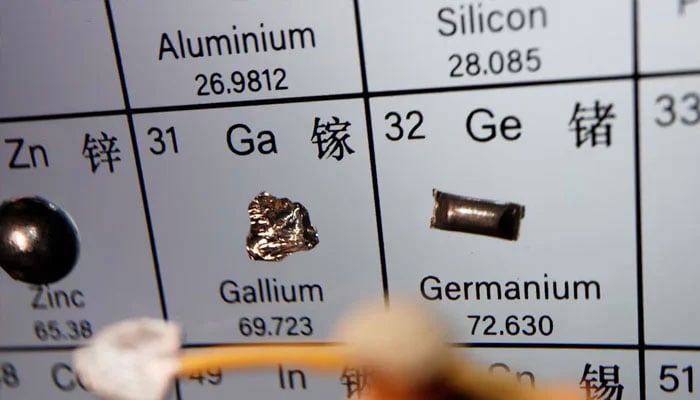
For instance, it has come to light that the Pakistan Bureau of Statistics (PBS) is not fully capturing the contribution of precious metals—including gold, silver and other rare earth metals—in its GDP calculations.
While certain mineral components are included in GDP estimation, specific elements such as gold and silver currently fall outside the official methodology. This issue gains relevance as the National Accounts Committee prepares to calculate the provisional growth rate for the first quarter of the current fiscal year by the end of December 2025, a requirement under International Monetary Fund (IMF) conditions.
The existing list of minerals factored into GDP growth includes natural gas, crude oil, coal, iron ore, copper, bauxite, chromite, magnesite, bentonite, calcite, red oxide, antimony ore, slate stone, soap stone, trona, ebrystone, granite, lime stone, gypsum, dolomite, chalk, fluorite, silica sand, agri clay, shale clay, laterite, china clay, ocher, Fuller’s Earth, ball clay, phosphate, sulphur, barytes, rock salt, sea/ lake salt, feld spar, quartz, serpentine, other mineral total, stone crushing, surface minerals, allied services, and exploration services.
Following the development of Reko-Diq, it has become apparent that the mining and minerals sector is not being fully captured in Pakistan’s GDP growth calculations. Although top officials at the Planning Ministry and the Pakistan Bureau of Statistics (PBS) were contacted repeatedly over several days—and despite this scribe visiting the office of PBS Chief Statistician Dr Naeem Uz Zafar—no official response was received. However, PBS sources indicated that a rebasing of National Accounts is planned to incorporate new sectors into GDP calculations. Data for minerals is provided by provincial departments, and under the current methodology, certain components remain partially uncaptured.
On the other hand, India is under scrutiny for allegedly overestimating its growth trajectory. The IMF recently expressed doubts about the statistical methodologies, inflation measurement and estimates of the informal economy used in reporting India’s GDP under Prime Minister Narendra Modi’s BJP government.
Professor Arun Kumar of Jawaharlal Nehru University supports the IMF’s concerns, estimating that India’s real economy is only about half the officially claimed size. “The economy is almost 50 percent wrong… when the government says it’s $3.8 trillion, my estimate is it is probably still $2.5 trillion,” he told journalist Karan Thapar, citing overestimation of the informal sector.
In its assessment, the IMF gave India’s national accounts a “C” grade, highlighting issues such as an outdated base year (2011–12), discrepancies between production and consumption data, and the use of the Wholesale Price Index instead of a Producer Price Index for deflating many economic activities. A significant source of error is India’s method of estimating the informal economy—which constitutes nearly 45 percent of GDP—by using the formal sector as a proxy. This approach risks overestimation when the two sectors diverge, as witnessed after demonetisation, GST implementation and the pandemic.
When contacted for comment on Monday, PBS high-ups responded: “Please share your knowledge about proven reserves of two precious metals and production because we don’t have any information from sources.”