LAHORE: As Pakistan bids goodbye to 2025, the pharmaceutical industry stands out as one of the few large manufacturing sectors that not only survived economic turbulence but quietly strengthened its foundations.
While the year was marked by high inflation, exchange-rate volatility and constrained consumer purchasing power, the drug industry demonstrated resilience through consolidation, policy adjustment and an expanding export footprint.
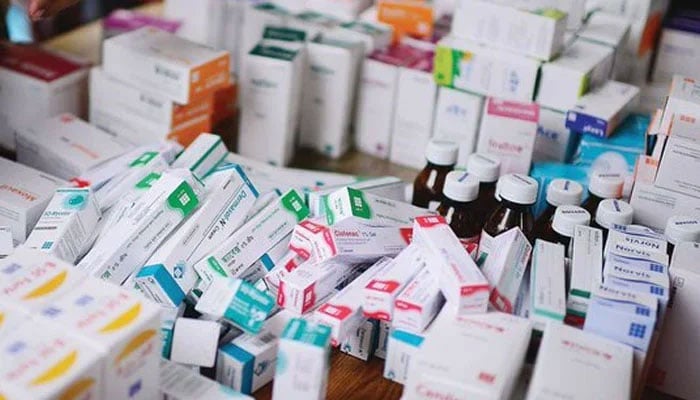
By the end of 2025, Pakistan’s pharmaceutical market crossed the landmark Rs1 trillion annual value, placing it among the largest industrial segments in the country. Importantly, growth was not merely cosmetic. While price adjustments -- after years of suppressed margins -- contributed significantly to value expansion, volumes also stabilised, signalling improved availability of medicines that had earlier faced chronic shortages.
Local manufacturers drove most of this stability. Pakistani firms now command over 70 per cent of the domestic pharmaceutical market by value and an even higher share by volume, reflecting their strength in generics, branded generics and mass-market formulations. Multinational companies, though fewer in number, continue to dominate select therapeutic niches and higher-value molecules, accounting for roughly 30 per cent of market value.
The narrative of multinationals ‘leaving Pakistan’ in 2025 needs nuance rather than alarm. Over the past few years, several global pharma giants rationalised their footprints worldwide, and Pakistan was not an exception. Some international companies exited direct operations, while others merged globally and continued operations locally under consolidated ownership or licensing arrangements.
What is notable is that capacity did not disappear. In most cases, manufacturing plants, product portfolios and skilled workforces were absorbed by Pakistani companies. This transfer has quietly strengthened domestic players, allowing them to scale faster, expand portfolios and adopt better compliance standards. The result is not de-industrialisation but localisation of ownership.
A decisive turning point for the sector came with drug pricing reforms introduced in 2024 and carried through 2025. Partial deregulation of non-essential medicines restored financial viability to manufacturers battered by years of cost escalation in energy, packaging, APIs and compliance.
By 2025, medicine availability improved markedly, and the incidence of discontinued lifesaving drugs declined. While affordability remains a public concern, and rightly so, the year demonstrated that price suppression is not a substitute for policy balance. A viable industry is essential for supply security, investment and quality assurance. Compared to 2024, industry confidence in regulatory continuity improved significantly in 2025.
Perhaps the most encouraging development of 2025 was the strong acceleration in pharmaceutical exports. Pakistan’s pharma exports crossed $450 million, marking one of the fastest growth rates in over two decades. While still modest relative to global players, the trajectory is unmistakably upward.
Pakistani firms expanded exports of generics, APIs, syrups, injectables and OTC products, particularly to Africa, Central Asia, Southeast Asia and parts of the Middle East. More companies entered regulated or semi-regulated markets, investing in WHO-GMP upgrades and dossier development.
Exports to highly regulated markets such as the UK, Japan and the US remain limited, but groundwork is underway. A small number of Pakistani firms are now supplying generics or intermediates through partnerships and contract manufacturing arrangements. These markets demand patience, compliance investment and scale -- areas where Pakistani firms have begun to close the gap.
Global supply chain realignments in 2025 -- particularly scrutiny of over-dependence on a single source country -- created indirect opportunities for Pakistan. While US trade actions against Indian pharmaceuticals did not directly open the American market, they reinforced a broader trend: buyers are seeking alternative, compliant suppliers.
Pakistan’s advantage lies in its cost competitiveness, English-speaking technical workforce, and expanding regulatory maturity. With the right export incentives, regulatory harmonisation and diplomatic support, the sector can realistically double exports within the next five years.
The sector has moved from survival mode to strategic consolidation, from domestic focus to export ambition. If policy consistency continues and export facilitation becomes a national priority, pharmaceuticals could emerge as Pakistan’s next major non-textile export success story — one built not on subsidies, but on science, scale and sustained confidence.