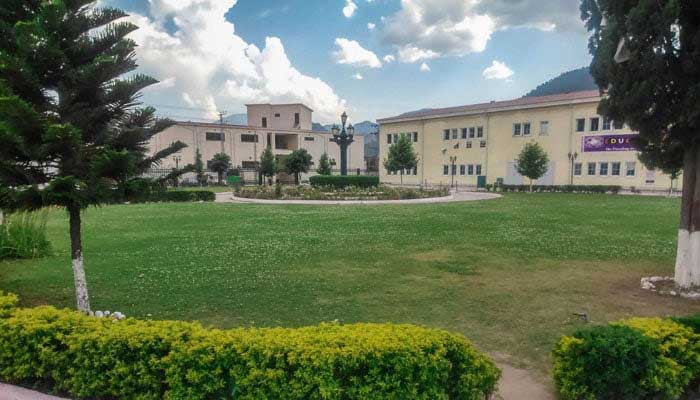
MUZAFFARABAD: The University of Azad Jammu and Kashmir (UAJK), the state’s premier public-sector higher education institution, is facing a severe financial crunch that is increasingly affecting academic continuity and administrative functioning, according to official records and internal sources.
Established in 1980, UAJK currently caters to more than 10,000 students across five campuses, offering undergraduate, postgraduate and research programmes. Over the decades, the university has served as a key source of trained human resource for vital sectors including education, health, agriculture and public administration in Azad Jammu and Kashmir.
University officials attribute the crisis to a combination of structural and policy-driven factors. Following the upgradation of its campuses in Mirpur, Kotli and Rawalakot into separate universities, UAJK continued to shoulder pension and long-term liabilities of former staff while losing s ubstantial recurring revenue. Stagnant government grants and a gradual decline in Higher Education Commission (HEC) funding have further widened the gap between income and expenditure.
Financial documents for FY 2025–26 show the university’s total projected income at Rs1,854.3 million, against expenditures of Rs2,526.8 million, resulting in a deficit of over Rs1 billion. Salaries and pensions account for more than 85 per cent of total spending, leaving limited fiscal space for utilities, maintenance, laboratories, research activities and academic development.
Vice Chancellor Prof Nasir Jamal Khattak told The News that the university had already implemented strict austerity measures, including a hiring freeze, rationalisation of departments with low enrolment, and operational cost-cutting. “Despite these steps, the financial gap continues to widen, primarily due to legacy liabilities and insufficient recurrent funding,” he said.
Amid these challenges, the university’s Academic and Administrative Staff Associations appealed to Prime Minister Shehbaz Sharif, urging urgent intervention by both the federal and AJK governments. The appeal has been made ahead of the Prime Minister’s expected visit to the university on December 23, where he is scheduled to attend the PM Laptop Distribution Scheme.
In their representation, the associations have also pointed out that faculty members and administrative staff have yet to receive their enhanced salary dues, approved under government pay revisions, owing to the university’s strained financial position. Delays in these payments, they warned, are adversely affecting staff morale and institutional stability.
Sources said the associations have sought a bailout package on the pattern of financial support previously extended to institutions such as Quaid-i-Azam University and Gomal University, stressing that timely intervention would help stabilise the institution and prevent disruption to academic activities.
UAJK has also proposed a one-time rescue grant of Rs1,304.5 million, along with the establishment of a Rs2 billion Endowment Fund and a Rs2 billion Pension Fund to ensure long-term financial sustainability. University officials maintain that these measures would gradually reduce dependence on annual grants while securing pensions, scholarships and research funding.
Officials cautioned that prolonged financial uncertainty could undermine the quality of higher education in the region, strain service delivery and damage the university’s national and international standing. “UAJK largely serves students from remote and underprivileged areas who have limited alternatives. Any sustained disruption would have long-term consequences for human capital development in AJK,” an internal official noted.