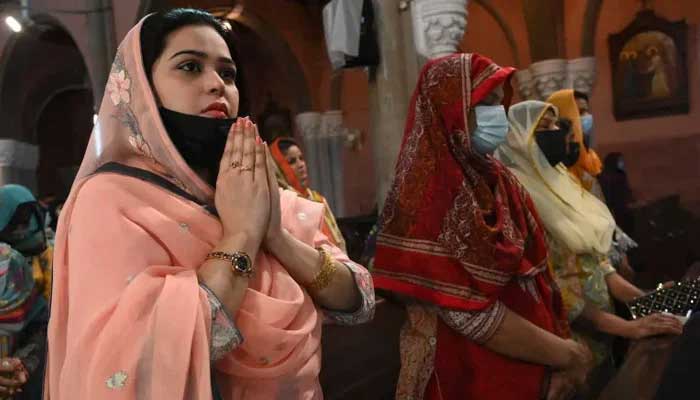
The UN Eighteenth Session of the Forum on Minority Issues, titled ‘The Contribution of Minorities to Diverse, Resilient and Peaceful Societies’, was held in Geneva from November 27 to 28.
The forum discussed three agenda items, with a total of 294 speakers contributing. These agenda items focused on building trust and social cohesion by addressing barriers to peaceful coexistence, recognising the full contributions of minorities to the economic, social, cultural, political and institutional fabric of society, and amplifying minority voices in peacebuilding, accountability and transitional justice processes.
On behalf of Christian Solidarity Worldwide, I was granted the privilege of participating in and speaking about minority issues in Pakistan. The session highlighted the severe conditions faced by religious, cultural and ethnic minorities who experience discrimination and prejudice in different parts of the world.
Following the emergence of neo-liberalism, which has in many contexts drifted into illiberalism under the influence of far-right ideology and an era of populism, majoritarianism has further escalated the marginalisation of minorities globally. Different sessions revealed that in some cases these issues have remained unresolved since the end of colonisation, the illogical demarcation of borders and cold-war rivalries.
In other cases, following the end of the cold war, the nature of ethnic, religious and identity-based insecurities has generated new conflicts. States are unfortunately unwilling to address these long-standing issues, resulting in human tragedy.
It was further revealed that in certain cases, ethnic or religious minorities seeking legitimate identity recognition and a fair share in political and financial domains are not being heard by states and, in some instances, are being persecuted for raising their voices. This has generated multiple levels of conflict, and the world is experiencing renewed turmoil, as seen in the Middle East. The recent uprisings during the Arab Spring and subsequent foreign interventions have created new minority-related chaos, particularly in Syria, Yemen and Iraq, where Yazidis, Kurds, Alevis and other religious minorities are being targeted.
During the conference, one of the most painful aspects highlighted was the double victimisation of women and girls. This situation has been particularly grave in some African countries.
In the case of Pakistan, it was observed that different religious minorities face a hostile environment and feel increasingly insecure. They encounter discrimination and prejudice on many fronts. Primary to tertiary education is unfortunately saturated with content rooted in hate, prejudice and otherness. Despite constitutional guarantees under Articles 20 and 22, religious minorities are exposed to undesirable religious content in curricula against their wishes.
The Cecil & Iris Chaudhry Foundation has addressed these concerns in a recently published report, ‘A Dive into the Education Landscape of Pakistan 2025’, which highlights the imperative to ensure full compliance with Article 22(1) in letter and spirit. Meanwhile, groups of experts comprising academics and human rights activists have called for the effective implementation of this constitutional guarantee at both the provincial and federal levels, as well as Pakistan’s broader obligations under national and international human rights frameworks.
Beyond objectionable curriculum content, minorities are deprived of due representation in services at the federal and provincial levels, despite provisions safeguarding against discrimination in services under Article 21 of the constitution. Increasing religious intolerance has extended from personal lives into the public domain, and religious minorities are bearing its consequences.
Another serious issue faced by minorities is the lodging of fictitious blasphemy allegations on fallacious grounds, sometimes driven by personal grudges or petty financial interests. The accused are often arrested under mob pressure and spend years behind bars, as the lower judiciary rarely extends relief. After decades, higher courts sometimes revisit these cases, provide relief and exonerate the accused. Even then, the lives of acquitted citizens remain under constant threat, forcing many to seek asylum abroad despite their strong desire to remain in their homeland. Conversely, no action is usually taken against those who initially lodge fictitious blasphemy FIRs.
The state has been unable to protect minorities in accordance with the rights guaranteed under Article 36. Religious minorities in Pakistan also face the issue of the forced abduction of minority girls, their religious conversion and underage marriages. It is alarming that in most cases the abducted girls are underage, a fact documented and verified by NADRA records. Despite this, law-enforcement agencies and lower courts sometimes refuse to accept these officially authorised records, forcing victims’ families to run from pillar to post in search of relief. Similarly, certain religious groups declared minorities by the state face severe witch-hunts, mob attacks and targeted killings.
The UN session highlighted that minorities have historically played a constructive role in the development of nations and humanity. In Pakistan, religious minorities have contributed philanthropically and constructively to national development.
Since the creation of Pakistan in 1947, minorities have played a vital role in shaping the judiciary, defence services, education, healthcare, arts, sports and philanthropy, thereby strengthening public institutions. Their contributions have been integral to the nation’s progress, as reflected in the long list of distinguished individuals such as Justice Alvin Robert Cornelius, Justice Dorab Patel, Justice Rana Bhagwandas, Dr Ruth Pfau, Dr Faridoon Setna, Prof Eric Cyprian, Group Captain Cecil Chaudhry, Jamshed Nusserwanjee Mehta, Dr Abdus Salam, Dr Bernadette Louise Dean, Anil Dalpat, Deepak Perwani, Jimmy Engineer, Bishop Anthony Theodore Lobo, Ardeshir Cowasjee, Byram Avari and many others.
Despite these outstanding services, minorities continue to feel insecure, ignored or marginalised, leading to large-scale migration. According to the latest population census, religious minorities constitute only 3.6 per cent of the country’s total population. This migration results in the loss of skilled human resources and financial capital and deprives society of diversity. An inclusive and participatory society is essential for collective well-being. It is time for Pakistan to take practical steps towards building an equitable society where people of all religions are treated as equal citizens, free from fear and discrimination.
The writer is the dean, faculty of education and social sciences, SZABIST University.