LAHORE: The Punjab government has introduced an extensive set of fiscal reforms aimed at stabilising provincial finances, slowing the growth of long-term liabilities and improving the management of public resources.
The multi-pronged strategy covers debt restructuring, pension reforms, institutional strengthening, borrowing discipline and investment governance marking, one of the most consequential financial overhauls in recent years.
A core element of the reforms targets circular commodity debt, which had ballooned to Rs629 billion by June 2022 and was projected to rise to Rs1.15 trillion by June 2024. The government has dismantled the old commodity operations regime, set in motion the elimination of the outstanding stock, and introduced mechanisms to halt future accumulation. A repayment plan of Rs760.77 billion is being executed through FY26, including Rs225 billion in FY23, Rs244 billion in FY24, Rs277.43 billion in FY25 and Rs14.34 billion in FY26. Officials expect the move to significantly reduce mark-up costs, which had reached nearly Rs200 billion during FY24.
To contain the rapidly rising pension burden, considered one of the province’s most serious fiscal challenges, the government has implemented a major policy shift. Annual pension payments increased from Rs36 billion in FY11 to Rs390 billion in FY24, while the accumulated liability stands at Rs11.9 trillion. From January 8, 2024, all new public-sector employees have been placed under a Defined Contribution Pension Scheme through an amendment to the Punjab Civil Servants Act, 1974. Under the new system, both employees and the government contribute to pension accounts that grow through investment until retirement. The province expects to save Rs2.7 trillion over 30 years, while parametric reforms in the legacy scheme are projected to yield annual savings of Rs50 billion. These measures will bring down the long-term pension liability to an estimated Rs5.7 trillion.
The government has also established a Cash Management Fund to ensure that idle provincial surpluses are invested in safe, return-generating instruments. Officials say the policy, regulatory and legal framework for this fund has been completed and will help promote disciplined liquidity management across public-sector bodies.
For fiscal prudence, Punjab has introduced new borrowing parameters focused on concessional financing, long-tenor loans and strict limits on borrowing for budgetary support. With domestic debt fully retired, the province will restrict external borrowing to asset-creating projects with measurable economic impact, avoid non-concessional loans amid global volatility, increase the share of fixed-rate borrowing and maintain debt-servicing ceilings at 5 per cent of the three-year average revenue.
To reduce reliance on external insurers and retain premium spending within the province, the government has established the Punjab Life Insurance Company (PLIC) under the Finance Department. Punjab paid Rs48 billion in life-insurance premiums for Universal Health Insurance during FY24 and Rs1.52 billion for group life insurance in FY23. With PLIC operational, these expenditures will now be channeled back into the provincial economy and will support Punjab’s social protection and welfare programmes.
Another major institutional reform is the establishment of the Punjab Financial Advisory Services (PFAS), a statutory body meant to reduce dependence on private-sector consultancy firms. PFAS will provide integrated financial expertise across government—covering transaction advisory, financial modelling, green financing, corporate governance, public financial management, procurement advisory, revenue and risk management, and performance evaluation. The province expects PFAS to eliminate duplication of consultancy work, reduce costs and build a stable institutional knowledge base.
Punjab has also updated its Public-Private Partnership (PPP) framework after a comprehensive legal and operational review. The newly enacted Punjab Public-Private Partnership Act, 2025 aims to streamline approvals, strengthen transparency and attract private capital for infrastructure and service-delivery projects.
Administrative control has been shifted to the Finance Department to ensure stronger coordination with fiscal and debt management systems.
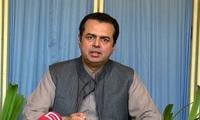
Speaking to Daily Jang, Secretary Finance Punjab Mujahid Sherdil said the reform package represents “a decisive reset of the province’s financial direction,” adding that the measures “will strengthen fiscal stability, rebuild investor confidence and ensure that public resources are managed with discipline, transparency and long-term responsibility.”