Pakistan’s banking system has undergone visible modernisation in recent years, from digital apps to redesigned flagship branches and dedicated premier lounges.
Yet behind this polished exterior lies a widening disconnect between banks and the demographic that now forms the backbone of Pakistan’s emerging economy. Young Pakistanis working in online, freelance or remote sectors continue to face structural discrimination in account opening, income verification, and financial mobility. The irony is clear: Pakistan’s most dynamic economic activity now comes from individuals the banking sector is least prepared to accommodate.
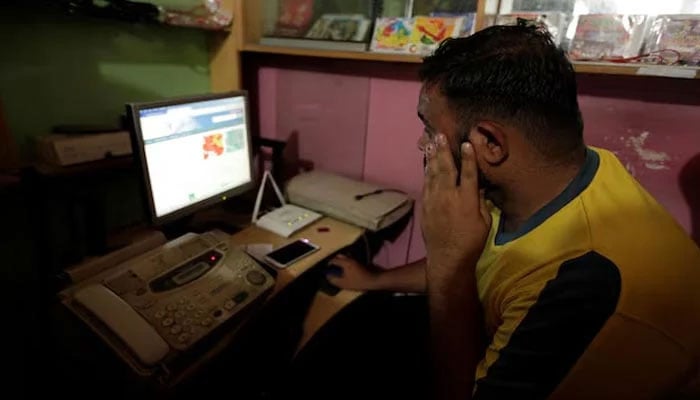
The past decade has seen an unprecedented rise in remote work and digital entrepreneurship. Pakistan crossed 1.5 million registered freelancers in 2024, according to the Pakistan Software Export Board, with estimated annual freelance exports exceeding $400 million. Tens of thousands more earn through global platforms in e-commerce, digital marketing, content creation and software services. Unlike the traditional salaried class, these workers operate with non-linear income flows and rely heavily on digital payments. Yet the very banking infrastructure meant to support economic activity continues to treat them as irregular, risky or unverifiable customers.
This discrimination is embedded not only in the process but in the design too. The proliferation of ‘premier’ and ‘priority’ banking branches across major cities has introduced a new hierarchy in financial access. These branches offer faster service and dedicated staff, but eligibility typically requires maintaining high minimum balances and initial deposits, which can easily surpass Rs3 million.
Such thresholds reflect a narrow understanding of wealth that privileges idle deposits over productive economic activity. In Pakistan’s real economy, the business class circulates its capital, the salaried class lives month to month, and the young digital workforce earns irregularly. Very few have the liquidity to leave large sums parked in an account simply to qualify for functional service.
As a result, the banking experience remains deeply stratified. The salaried class, with predictable monthly inflows, is positioned as the model customer. They are automatically prioritised because their income is easily documented and serviceable. Yet it is the business class and online workforce that drives the country’s transactional economy. Retail traders, freelancers, micro-entrepreneurs, and digital service providers contribute significantly to domestic consumption and foreign exchange earnings but are restricted by account requirements, compliance interviews or documentary hurdles that assume a narrow definition of formal work.
Outdated risk-assessment models compound these structural issues. Pakistan’s banking sector continues to rely heavily on traditional income verification, salary slips and employer letters as the primary evidence of financial credibility. Young people working in remote or global markets often receive income through platforms such as Payoneer, Wise or direct transfers from overseas clients.
Despite the transparency and traceability of these channels, banks frequently flag them as ‘irregular’ or ‘non-traditional’. Instead of modernising risk parameters to reflect contemporary work patterns, institutions have defaulted to policies that exclude the very individuals needed to expand the tax base and digital economy.
The lack of institutional coherence further compounds the problem. While the State Bank of Pakistan has promoted financial inclusion initiatives such as Raast and simplified account opening schemes, commercial banks have responded unevenly. Many front-end staff remain hesitant to open accounts for non-salaried youth due to perceived compliance complications. Others demand documentation beyond regulatory requirements. These inconsistencies undermine the credibility of reforms and reinforce public mistrust in banking institutions.
This exclusion has economic consequences. According to the World Bank’s Global Findex, nearly 60 per cent of Pakistani adults remain outside the formal banking system, one of the highest rates in South Asia. Youth exclusion alone deprives the financial sector of millions of potential depositors, borrowers and long-term customers. Pakistan’s digital services sector cannot scale when its earners cannot seamlessly receive payments, access credit or build financial histories. A modern economy cannot grow if its most productive demographic remains institutionally sidelined.
The situation raises broader questions about the banking model Pakistan seeks to pursue. If premier branches continue to anchor service quality to deposit thresholds that few young workers can meet, financial inclusion will remain aspirational. If risk assessment continues to treat online work as informal, Pakistan’s fastest-growing export sector will remain constrained by bureaucratic scepticism. And if policy reform remains disconnected from front-line practice, institutional gaps will widen rather than narrow.
Modernisation cannot be cosmetic. A truly modern banking system requires numerous structural adjustments. Banks must recalibrate risk models to recognise global income streams, platform-based work and non-linear earning patterns. Minimum balance and premier-service thresholds must reflect economic realities rather than replicate outdated class hierarchies. Staff training must align with State Bank directives to ensure that policy is implemented uniformly rather than selectively.
Pakistan’s economic trajectory depends on integrating the next generation into the financial system. The youth who power the country’s digital economy are not exceptions to be accommodated but central actors in its future. A banking system that fails to recognise this will modernise its buildings and apps, but not its purpose.
The writer is a transnational educational consultant, freelance columnist and policy analyst based in Lahore.