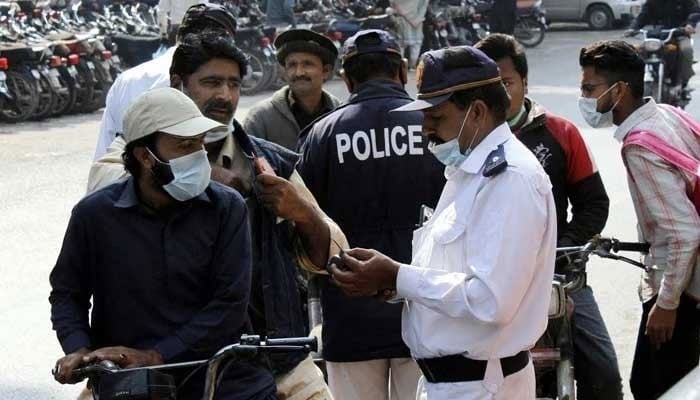
The Sindh Police Department is preparing to introduce “faceless e-ticketing” in other cities of the province. The decision was taken during a review meeting chaired by Sindh IGP Ghulam Nabi Memon on the performance of the faceless e-ticketing system and its expansion to other cities.
Officials said on Wednesday that the DIGs of Traffic Karachi, IT and divisional DIGs have been assigned responsibilities. The IT DIG will review the cameras installed on cities and highways, their recording and storage, internet facilities and other technical resources. The DIG Traffic Karachi will provide necessary information, instructions and guidance to divisional DIGs regarding the establishment of TRACS system and facilitation centres.
The meeting was informed that the ground and aerial scanning is being started to prevent parking lane violations in Karachi. Vehicles on “No Parking” will be issued e-ticket challans through scanners and drones.
IGP Memon said all divisional DIGs should keep the convenience centres in the relevant districts ready and ensure immediate training of the relevant staff. Faceless e-ticketing will be formally launched after a complete review of the preparations.
The meeting held at the Central Police Office Karachi was attended by additional IGs of welfare and training, the DG Safe City Authority, the DIGs of headquarters, Sindh Police Highway Patrol, Establishment, Driving Licence Sindh, Traffic Karachi, IT, Finance, T&T, Training and Admin Karachi, the AIGs in person while divisional DIGs participated through video link.
A detailed briefing was given to the participants of the meeting. The meeting was informed that after the implementation of e-challan in Karachi, more than 23,000 citizens have visited the convenience centres. The number of citizens who have challenged e-challans is less than 200, while 90 percent of e-challans issued so far have been waived. A total of Rs25 million has been collected as fines against 4,000 challans.
The meeting was also informed that in the next phase, ground and aerial surveillance will be launched to prevent parking line violations. Cameras and scanners installed on traffic police cars and drones will be used to issue e-tickets to vehicles parked on “no parking” areas.
Moreover, steps like providing some equipment, immediate training of officers, identification of facility centres and deployment of staff will be taken for issuing faceless e-ticketing in other districts of the province. Divisional DIGs have submitted reports regarding the cameras installed in their respective districts.
The IGP said that after the implementation of faceless e-ticketing in Karachi, it has received a lot of acceptance from the public. With the installation of cameras, not only traffic rules are being followed, but complaints of unnecessary delays during travel have also been greatly reduced.
He added that now the fruits of this modern technology are to be transferred to other cities of the province. Under the Motor Vehicle Act, facilitation centres are to be established in all districts where citizens can approach for their complaints regarding traffic violation challans.
The IT DIG will review the quality of cameras installed in different districts of the province, their recording and storage, internet facilities and other technical resources and submit a report, IGP Memon said in instructions.
The DIG Traffic Karachi will provide necessary information, instructions and guidance to the divisional DIGs regarding the establishment of the TRACS system and facilitation centres.
IGP Memon said all districts will send photos of traffic violations to the centralized “Traffic Regulation and Citation System” established in Karachi.
Moreover, issuance and delivery of e-tickets will be done from the centralized centre. All divisional DIGs should designate facilitation centres and related staff in their districts and notify them. Faceless e-ticketing will be launched in various cities after reviewing the preparations.