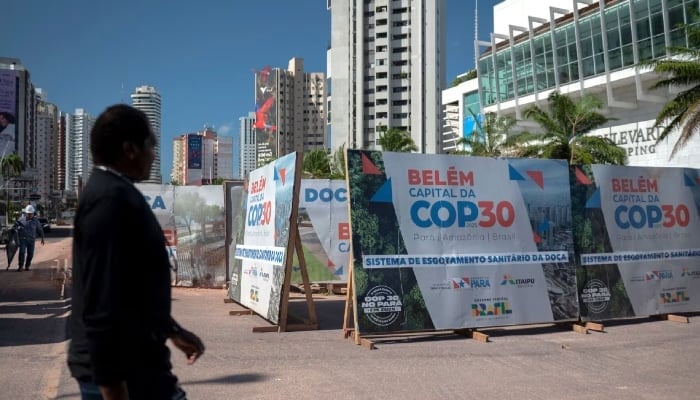
The Belem COP, with all its flaws, provided a unique opportunity to connect with nature in its purest and unadulterated form. The small town was clearly inadequate to handle the logistics of the huge swarm of climate negotiators and activists who landed there in hopes of injecting new energy into the multilateral process.
Also, a very large number, amongst the reported 50000 plus participants, were fossil fuel lobbyists who ensured that the real culprit of rising greenhouse gas emissions, fossil fuels, remained outside of the agreed consensus text. The three previous petro COPs held in Egypt, Dubai and Baku had already created a momentum to ignore this elephant in the room conveniently – and Belem, unfortunately, could not alter that. That was the big failing.
However, the true strength of the gathering did not lie in the temporary structures of the meeting or in the five-star cruise ship hotels hurriedly docked in the harbour to accommodate the participants, but in the natural marvels that surround the city.
Belem is the gateway to the huge Amazon forest, which stretches 842 million hectares across nine adjoining countries, with 78 per cent of it lying in Brazilian territory. These are the lungs of Mother Earth, which exhale 20 per cent of the world’s life-giving oxygen while storing an amount of carbon equivalent to five years of the current global emissions. It happens to be the world’s most diverse biome, encompassing pristine tropical rain forests, wetlands, rivers, lakes, floodable forests, coastal mangroves and tidal greenbelts.
Within its winding waterways, the Amazon Basin accounts for 38 per cent of the freshwater that circulates in the world’s rivers. It is a true wonder of nature and an invaluable gift of God, which cools the whole planet, seeds clouds and regulates global rainfall patterns.
Belem was an invitation to experience it. As President Lula of Brazil remarked in his address that “bringing the COP to the heart of the Amazon was an arduous task, but a necessary one” to ensure that the world understands the reality of the Amazon.
I got the opportunity to break away from the negotiators' den and venture out for a few nights in the Amazon jungle. The stillness of the nights, broken just by the hum and songs of the birds, and the magical sights of the enveloping forest, while floating through the winding waterways at dawn, were both mesmerising and hypnotic. This embrace of nature at Belem was complete and within it was embodied a strong message for not only appreciating its role but also preserving it.
The words from Ryan Gelpke, a famous author and ecologist, capture this experience perfectly: “The Amazon, in all its enigmatic grandeur, embodies the paradoxes of existence. It is a place of untamed beauty and unfathomable complexity, where the fragility and resilience of life intertwine. It is a testament to the boundless wonders of the natural world, a reminder of our interconnectedness with all living beings. Here in the heart of the Amazon, secrets whisper through the rustling leaves, beckoning the curious and the intrepid”.
While 20 per cent of this life-sustaining ecosystem has been burnt or shaved away in the past 40 years, the rest remains in its purest form, untouched by humanity, and that is what needs to be valued, nurtured and conserved. Belem extended an opportunity to comprehend the inescapable interconnectedness between the survival of the Amazon and humanity itself. The newly created ‘TFFF’ (Tropical Forest Forever Facility), with a promised injection of $6.7 billion at Belem, is one achievement which can become a tool to halt the destruction of the Amazon and hand over a priceless asset to the next generation.
The COP was also significant for the lack of VVIPs in attendance. While this diluted the badly needed political focus, it turned out to be a blessing in disguise, as the relaxed security environment enabled greater inclusivity. The people's voice, which could not be heard at the three previous COPs under repressive VVIP arrangements, was loud and clear in the corridors of Belem. The venue was alive with spirited and colourful protests, full of passion and purpose as it turned out to be a real ‘People’s COP’ with diverse and contentious issues ranging from climate reparations to indigenous people’s rights to the need for extracting climate finance to protecting the rights of the Amazonian pythons, all getting attention.
The beauty of the moment lay in the fact that these protests, like previous COPs, did not take place on the streets outside but in the hallways of the negotiating arena. Even though the official processes remained stuck and stalled, one could feel hope revive in these lively corridors led by climate activists, indigenous tribes and, most importantly, the youth.
Science also made a forceful presence at Belem, with data-based evidence of the climate emergency presented at various side events, unfiltered and unfettered. Again, the absence of the largest carbon polluter from the meeting may have provided the space and latitude for this to happen with freedom. One of the most popular caps at the COP was a red one – Trump style – which said, “Make Science Great Again”. That was, in fact, what was happening at Belem.
On the leadership ladder, China stepped up to fill the vacuum with the announcement of its own carbon market and new AI- and digital-based pathways to confront the climate challenge. The Chinese announcements were made to packed audiences in their country pavilion, which remained under public focus.
As I boarded the long flight back, the hopelessness of the weakly agreed text as well as the absence of fossil fuels and the absurdity of unmet climate finance promises, was all somehow overshadowed by the symbolic gains that were not quantifiable but certainly left a positive pulse for the future.
The writer is a former minister of climate change. He tweets/posts @aminattock and can be reached at: [email protected]