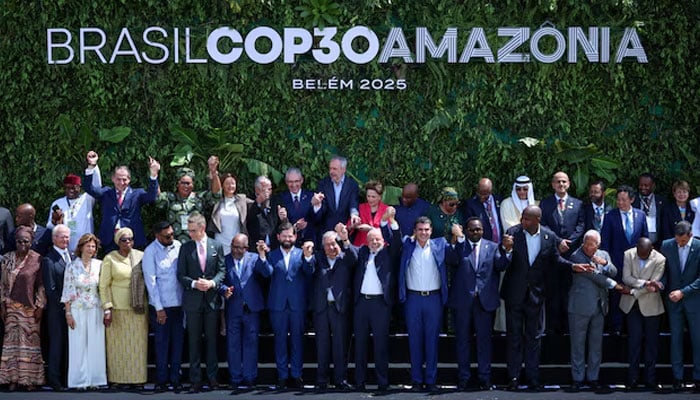
COP30 ended on November 21, 2025, after almost two weeks of negotiations, with both positive and negative outcomes.
This year’s COP also concluded with commitments and declarations, including “to significantly accelerate and scale up climate action worldwide”, but without a concrete roadmap to phase out fossil fuels.
Countries relying on fossil fuels for economic growth blocked any formal agreement to eliminate them. The countries also discussed how trade can be a mechanism for bridging the gap rather than a barrier to fighting climate change. It focuses on economic transitions, highlighting that countries fulfilling their climate commitments will be rewarded with growth, investment, security, competitiveness, and good-paying jobs.
During COP30, indigenous communities participated in large numbers, and their voices and rights were effectively discussed. “The self-determination and right to free, prior, and informed consent of Indigenous Peoples was a key theme in this Amazon COP”. Some important decisions were made related to climate finance, including mobilising $1.3 trillion annually by 2035 for climate action, doubling adaptation finance by 2025 and tripling it by 2035, and moving from design to operationalisation of the Loss & Damage Fund (L&D).
However, the fruits of these decisions on climate finance can only be realised if they are implemented in the true spirit. But the record of rich nations is pessimistic when it comes to complying with such declarations.
Another important area of discussion during COP30 was disinformation and misinformation regarding climate change. According to the UN, “the first-ever Declaration on Information Integrity on Climate Change was signed, pledging to fight back against the flood of false content and protect those on the frontlines of truth: environmental journalists, scientists and researchers”. The aim is to promote evidence-based, ethical journalism on climate change. It will help raise true concerns, amplify genuine voices, and create public awareness.
Despite all the criticisms of this annual gathering of thousands of people from different sectors, including government officials, diplomats, civil society, and the media, it is the largest event focused on climate change. It provides an opportunity to discuss and highlight the impacts of climate change disasters and to remind developed countries of their historical mistakes, including unsustainable practices that have caused the current climate change crisis. It also provides a platform for the most vulnerable groups disproportionately affected by climate change disasters – like women, youth, and Indigenous peoples – to raise their voices, share their concerns, safeguard their rights, and demand climate justice.
As a result of continuous discussions, pressure builds, shaping the direction towards serious negotiations to address their demands and incorporate strategies into agreements and protocols over the years. During this grand annual fair, various companies and businesses operating in the areas of clean energy, green technology, climate finance, etc identify opportunities for investment in countries striving to reach their net-zero targets. With the passage of time, new challenges related to climate change are emerging during the negotiation process, leading to the evolution of new targets and commitments.
After years of negotiations, many fruitful outcomes have emerged, including the Kyoto Protocol, the Paris Agreement, the establishment of the Green Climate Fund and the Loss & Damage Fund. Though the practical journey to reach many targets to combat climate change by limiting global warming to well below 2 C above pre-industrial levels, while aiming for 1.5 C, fell short, the annual climate change conference (COP) is playing a significant role in keeping the momentum to push rich nations to fight climate change.
Similarly, the Green Climate Fund (GCF) never reached its key goal of mobilising $100 billion annually. But the amount collected is still distributed to developing nations for their green projects. Recently, the Green Climate Fund (GCF) approved $250 million for a programme led by the Asian Development Bank (ADB) to strengthen water and agriculture systems in glacier-dependent regions of Pakistan, Central Asia and the South Caucasus.
On the other hand, a lack of accountability mechanisms leads to non-fulfilment of commitments from rich nations. Most agreements and protocols are flexible, which leads to evading commitments and obligations and to prioritising economic interests.
COP30 and previous annual conferences have played an important role in generating discussion and driving significant developments. But the pace of action is far slower than the speed of climate change disasters hitting our planet.
The annual climate change gala needs to shift its approach from moral pledges to strict accountability to fulfil its commitments and obligations. Without a formal mechanism of carrots and sticks for nations, the process to reach the target of keeping global temperature below 2 C is useless.
The writer is a graduate of the University of Oxford in Public Policy. She tweets/posts @zilehumma_1 and can be reached at: [email protected]