PESHAWAR: Despite 12 consecutive years of PTI rule in Khyber Pakhtunkhwa, the province has not been able to reduce its financial dependence on the federal government and continues to suffer from weak service delivery, terrorism and law-and-order challenges.
The federal government claims under the head of war against terrorism alone, it has provided Rs700 billion over the past 15 years. However, neither has terrorism been eliminated from the province, nor has infrastructure and capacity of police and security institutions improved.
The provincial government, rejecting the claim, says it has increased its own revenues by more than 100pc, and the one-percent fund attributed to terrorism is not meant for fighting terrorism but for compensating losses caused by it.
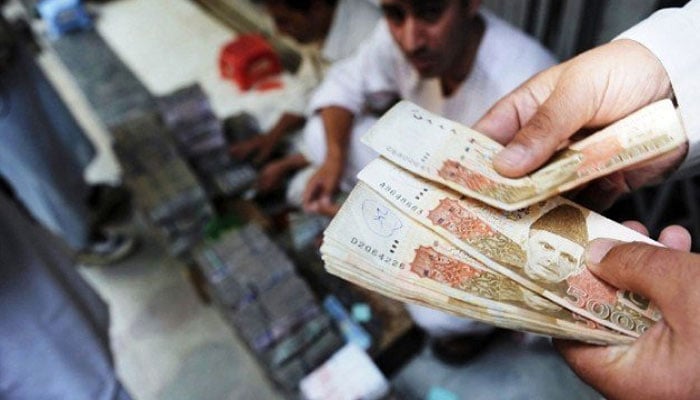
According to official documents, Khyber Pakhtunkhwa is among the provinces most heavily dependent on federal revenues. For fiscal year 2025-26, the province’s total estimated revenue has been set at Rs2,119 billion, of which Rs1,990 billion — 94 pc —will come directly from the federation, while province’s own revenue stands at only Rs129 billion, just 6pc of total income.
Documents reveal apart from the National Finance Commission (NFC) Award, Khyber Pakhtunkhwa also receives one percent of Federal Divisible Pool taxes under war-on-terror head. Under this single category, the provincial government has received nearly Rs700 billion from 2010 to 2025.
However, despite this substantial assistance meant for eliminating terrorism and restoring peace, the province still faces severe insecurity and there has been no satisfactory improvement in policing, public safety or rehabilitation of war-affected areas. No comprehensive audit has been conducted to determine how and where these funds were spent.
According to official records, significant federal funding under other categories is also expected in the current financial year. These include Rs57 billion in direct transfers, Rs58 billion in oil and gas royalty, Rs106 billion in net hydel profit and arrears, and Rs35 billion for rehabilitation and integration of merged districts.
Due to these inflows, per-capita budget of Khyber Pakhtunkhwa has reached Rs52,000, higher than Punjab’s Rs41,800. Yet, performance in key sectors remains unsatisfactory: literacy stands at 55pc, routine vaccination at 71pc, access to clean drinking water at 82pc, and availability of hospital beds is 0.5 per 1,000 population.
In this regard, Khyber Pakhtunkhwa’s Adviser on Finance Muzammil Aslam told The News provincial revenues were around Rs 64 billion last year and have increased to Rs129 billion this year. For the next financial year, target for provincial revenue has been set at 10pc of total income, he added. He said Khyber Pakhtunkhwa is not receiving one percent for the war against terrorism, but rather as compensation for losses caused by terrorism. He said comparatively, five percent of Divisible Pool has been allocated under the head of revenue collection — of which Sindh receives 2.5pc, Punjab 2.3pc, and Balochistan 2.5pc under its share based on area and population. “Yet propaganda is being done only against our one percent,” he concluded.