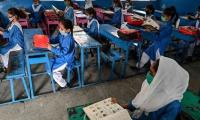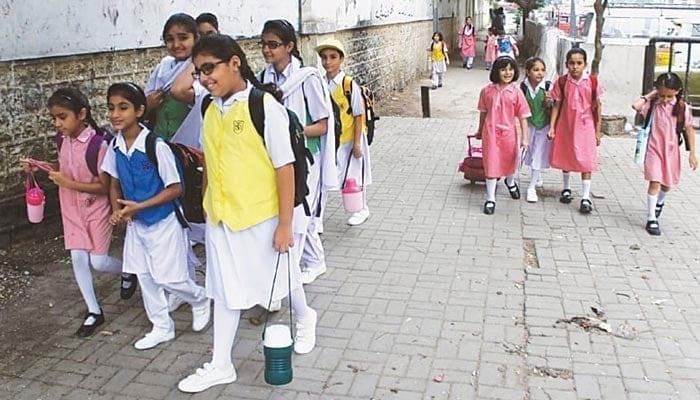
Every morning, millions of children walk into schools across Pakistan with hopes, dreams and a desire to learn. Yet, behind these school walls, many face risks that threaten not only their education but their safety, dignity, and emotional well-being. Safeguarding our children in educational institutions is no longer just a policy debate; it is a moral obligation that demands urgent national attention.
Article 25-A guarantees a child’s right to education. But education without safety is incomplete and unjust. Schools must be safe spaces where children feel valued, protected and free from fear. Unfortunately, for thousands of children, this promise remains unrealised.
Safeguarding is not limited to protecting children from obvious harm; it includes preventing corporal punishment, bullying, harassment, emotional abuse, discrimination and neglect. It also includes ensuring safety during travel to and from school, in classrooms, on playgrounds, in washrooms and on all school premises.
Pakistan has made progress in enrollment, but safeguarding remains one of the weakest pillars of our education system. Public and private sector schools face several recurring issues. Corporal punishment continues despite legal prohibitions, bullying, especially against weaker or marginalised children, goes unreported, girls face harassment risks due to unsafe premises or lack of female staff and mental health concerns among students remain undiagnosed and unsupported.
These issues are often ignored, not because teachers or administrators do not care, but because systems and protocols simply do not exist.
Almost 90 per cent of schools lack basic facilities that support child safety, including broken or incomplete boundary walls, the absence of safe, secure, separate toilets for girls, damaged buildings and unsafe classrooms, inadequate monitoring by security cameras, insufficient lighting, and insecure playgrounds, unsafe drinking water and unhygienic conditions.
If we talk about girls, the absence of proper toilets is a direct barrier to attendance. For young children, damaged buildings pose physical danger. In both cases, safeguarding begins with making schools physically secure.
To ensure safe learning environments for every child, Pakistan has introduced several legal frameworks prohibiting violence and corporal punishment across the country. At the federal level, the Islamabad Capital Territory Prohibition of Corporal Punishment Act, 2021 sets a strong precedent by banning corporal punishment in all educational and childcare institutions.
Sindh leads the provinces with the explicit Sindh Prohibition of Corporal Punishment Act, 2016, while other provinces rely on broader child-protection laws that indirectly cover physical abuse. These include the Punjab Destitute and Neglected Children Act, 2004 and the Punjab Free and Compulsory Education Act, 2014, the Khyber Pakhtunkhwa Child Protection and Welfare Act, 2010, the Balochistan Child Protection Act, 2016, the Gilgit-Baltistan Child Protection Act, 2016 and the AJK Child Protection Act, 2018, all of which define violence against children as a punishable offence.
Provincial education departments in Punjab, KP and Balochistan have issued formal notifications banning corporal punishment in schools. Together, these laws form an essential safeguarding framework, reinforcing the national commitment to protect children from abuse and ensure their dignity and safety in educational institutions.
However, these laws are unevenly implemented, and most school staff remain unaware of their responsibilities. District-level monitoring is weak, and complaint mechanisms are almost non-existent. A law without implementation does not protect children.
Teachers directly interact with children for several hours a day, making them the first responders to safeguarding concerns. Although education departments provide different relevant training courses on the subject, without proper implementation, teachers cannot be expected to manage safeguarding issues effectively. Mandatory safeguarding training or at least orientation must become a core requirement for all teaching and non-teaching staff.
Girls face unique vulnerabilities in schools, like unsafe routes to school, lack of security and privacy in toilets, harassment risks from outsiders due to insecure boundaries and social pressures discouraging them from reporting incidents. Ensuring safe, gender-responsive school environments is essential for retaining children, especially girls, in education and promoting equal opportunities.
Children today face increasing pressures from poverty, domestic stress and academic expectations. Without trained counsellors or basic mental health support, students internalise trauma, leading to anxiety, withdrawal or behavioural issues. A single student counsellor or psychologist per school cluster could transform the child-protection landscape.
Pakistan is already using digital innovations in education. Similar progress can be made for safeguarding by improvement of digital complaint and reporting systems, an anonymous helpline for students, GPS-enabled transport monitoring, school-level WhatsApp groups for rapid reporting and CCTV monitoring linked to the district law enforcement department. These solutions are low-cost and high-impact, making them ideal for schools.
Many parents remain unaware of safeguarding standards. Revitalising School Management Committees (SMCs) and Parent Teacher Councils can also create stronger accountability between the school and the community. Parents must be empowered to report concerns without fear. Community engagement also helps to identify local risks such as unsafe routes, suspicious individuals or recurring safety incidents.
Pakistan is disaster-prone. floods, earthquakes, fires and extreme heat threaten countries, so we also need to create awareness and prepare children and teachers for emergencies.
To improve safeguarding in schools and madrassas, we need a coordinated, long-term approach. Establish or strengthen Child Protection Units in all districts and link them with social welfare, police and child protection bureaus with proper monitoring.
Education departments should ensure that all schools appoint trained Safeguarding Focal Persons to report, monitor and follow up. Schools should conduct annual safety audits of school infrastructure with public access to reports. There should be mandatory safeguarding training for teachers and staff with gender and disability-sensitive approaches. We should also strengthen confidential reporting mechanisms.
The government should ensure improvements in boundary walls, toilets, lighting, and secure classrooms, with a focus on girls’ safety. Education departments should add safeguarding into the curriculum and co-curricular activities, so children understand their rights and can identify risks.
According to the Unicef 2021 Report, globally, one in 10 children has a disability, which represents approximately 240 million children, or 10 per cent of the world’s child population. And if we talk about Pakistan with same source of Unicef / Washington Group Estimates, about 12–15 per cent of Pakistan’s population has some form of disability and among children (under 18), disability prevalence is around 7–8 per cent. So, keeping the above-mentioned information in mind, we should not forget our children with disabilities.
Ensuring accessibility for children with disabilities is also essential for an inclusive education system. The government must ensure that all schools have ramps, accessible toilets, assistive learning devices, trained support staff and safe classroom mobility. Without these basic facilities, thousands of children with physical, visual, or hearing impairments remain excluded from learning opportunities and equal participation.
Safeguarding is not just a school responsibility. It is a collective national responsibility. Government, educators, communities and parents must work together to build schools where every child is safe, respected and able to learn without fear.
The writer is affiliated with the Systems Research Group unit at the Sustainable Development Policy Institute (SDPI). The views expressed are solely his own and do not necessarily reflect the official position of the SDPI.