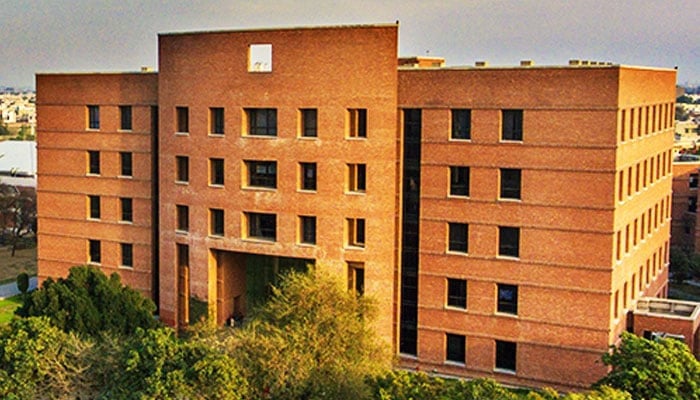
KARACHI: The LUMS Energy Institute (LEI), in collaboration with the Alliance for Climate Justice and Clean Energy (ACJCE) and the Pakistan Renewable Energy Coalition (PREC), will hold the second edition of the Asia Energy Transition Summit 2025 on December 6-7 at the Lahore University of Management Sciences (LUMS).
The two-day summit will bring together policymakers, climate and energy experts, academics and civil society leaders from across Asia to deliberate on emerging ideas, challenges and financing pathways for the region’s clean energy transition.
The focus of this year’s summit is to explore new and innovative ideas to finance Asia’s transition away from fossil fuels and towards renewable sources of energy. Over the two days of its proceedings, speakers and panellists will discuss a large number of topics related to its main theme, including but not limited to existing energy finance mechanisms such as the Just Energy Transition Partnerships (JETPs), the Asian Development Bank’s Energy Transition Mechanism (ETM), and the Coal-to-Clean Credit Initiatives being promoted by some philanthropic foundations.
Other topics to be taken up at the event will be the need for a just energy transition, with a focus on making energy accessible and affordable for everyone across the Asian subcontinent while also making it sustainable through a shift to wind and solar as its main sources.
The discussions will highlight regional success stories, examine the effectiveness of existing financing tools and the need for developing new, non-debt-creating, people-centred financial approaches, and assess the risks associated with ‘false solutions’ that will harm rather than help a just energy transition. The programme of the summit includes plenary sessions to be addressed by prominent personalities from various parts of Asia, including ministers, parliamentarians, researchers and activists.
Dr Fiaz Chaudhry, senior adviser at the LEI, appreciated the efforts of all collaborators, ACJCE and PREC, and expressed his hope for meaningful outcomes that will advance the shared objectives of a just, equitable, and sustainable energy transition for the region.
The summit will conclude with a regional roadmap outlining innovative approaches to financing Asia’s energy transition, strengthening collaboration among civil society, academia and policymakers, and facilitating people-to-people exchanges of ideas, information and experiences. It will also produce actionable recommendations to accelerate the deployment of renewable energy and support a just and orderly phase-out of fossil fuels.