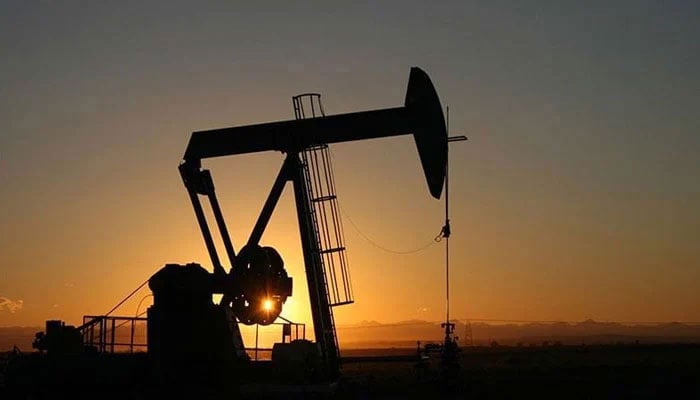
KARACHI: The oil industry has sought an implementable and financially viable cost-recovery mechanism for the digitalisation of Pakistan’s oil supply chain, including the installation of auto tank gauging (ATG) at retail outlets, and has expressed its inability to proceed without a cost-sharing framework from the regulator due to the substantial expense involved.
“The industry fully supports the digitisation initiative and remains committed to the successful implementation of digitalisation,” the Oil Companies Advisory Council (OCAC) stated in a letter to the chairperson of the Oil and Gas Regulatory Authority (Ogra) on Tuesday.
However, it pointed out that during an online meeting organised by Ogra with the CEOs of OMCs on December 1, 2025, the discussion proceeded largely as a monologue by Ogra. “Despite multiple attempts by the OCAC to present the industry’s position, our repeated requests to speak were disregarded,” the oil body said.
The OCAC said it has repeatedly requested a phased implementation timeline for retail outlet digitisation and ATG installation, supported by a viable cost-recovery mechanism to be finalised by Ogra. “Given the scale of the task and the total number of retail outlets nationwide, the industry requires a realistic implementation window of at least five years to execute this transition effectively,” the letter stated.
It reiterated that the ATG system is a capital-intensive, high-complexity initiative. Each ATG unit is custom-built according to specific tank configurations and requires substantial lead time for procurement, installation, integration and calibration. To put matters into perspective, the cost of a single digital dispenser is approximately Rs2.5 million, while an ATG system costs up to Rs5 million per outlet with two storage tanks. The expected exposure across the industry is estimated to exceed Rs50 billion.
“Imposing obligations of this magnitude without a cost-recovery mechanism is not only impractical but also unsustainable and risks destabilising the downstream petroleum sector. This challenge is further compounded by the fact that OMC margins have remained stagnant for the past two years, severely limiting the industry’s capacity to absorb additional financial burdens,” it said.
It highlighted that the industry has already paid millions of rupees towards the track and trace system (Phase II) under the leadership of the PITB. Yet there remains no update, no completion timeline, and no demonstrable outcome from this expensive exercise.
At the same time, the industry is being directed towards multiple new compliance initiatives without any coherent implementation roadmap, it said.The OCAC strongly urged Ogra to take up the matter in its complete scope and to immediately finalise a clear, implementable and financially viable cost-recovery mechanism. “Without a confirmed cost-recovery framework, OMCs will remain unable to commit to such large-scale financial exposure,” it said.It asked Ogra to share the cost-recovery framework at the earliest and schedule a dedicated meeting to hear the industry’s viewpoint and operational constraints.