Pakistan’s natural endowments, its young human resource and its strategic geography create a high-dividend investment environment. But hostile narrative-shaping campaigns, often known as grey-zone tactics, deliberately target these opportunities as they thrive on uncertainty, negative media framing, mistrust, perceptions of instability and confusion about national priorities.
Spreading anti-FDI information and portraying Pakistan as an unsuitable destination for investment has been a common trend among naysayers. In a volatile yet high-potential environment, perception becomes as critical as incentives and policies, especially when foreign investment inflows remain constrained in FY26. This is why shaping a strong and credible national narrative on the benefits of investment is fundamentally an economic imperative, not a political choice.
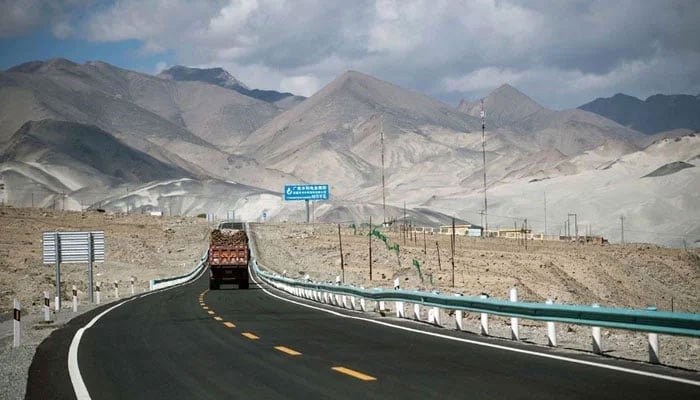
A country with high risks but high natural endowment must win the battle of perception as much as the battle of policy. When a country showcases its completed energy projects, operational motorways, hydropower progress, and successful partnerships with overseas investors, it directly counters misinformation and signals predictability, continuity, and strategic intent, the three things investors value more than the absence of risk.
A clear narrative reassures partners that Pakistan has a long-term vision and a functioning delivery mechanism even in challenging conditions. Ultimately, FDI follows success stories, not empty invitations, as all investors care about is predictability.
Narrative building for CPEC has remained a persistent challenge, especially amid sustained false narrative campaigns, and some frequently asked questions from 2013 remain unaddressed. If communicated effectively, these clarifications can send strong signals to friendly countries and global investors that Pakistan is open for business, trusted by major partners, and capable of delivering complex infrastructure even under difficult conditions. The progress of CPEC Phase I and the commitment to Phase II can provide assurance to investors, especially from the Middle East, Turkiye and Central Asia, that, through a strong monitoring mechanism and top-down commitment, investment worth billions can be attracted in five years.
A strong CPEC narrative can also attract FDI from China because it shows that Pakistan offers high returns rooted in natural endowments, energy corridors, minerals, agriculture and coastal assets and that large-scale investments can succeed here. Investors follow success, and by continuously highlighting government-led reforms, one-window facilitation, security frameworks and co-investment opportunities, Pakistan can convert its strategic geography into a competitive economic advantage. Strengthening the national narrative is therefore central to overcoming grey-zone tactics against Pakistan, reducing perceived risks and positioning Pakistan as a credible, high-opportunity destination.
We must also remember that grey-zone tactics by naysayers and enemies thrive in environments of confusion, weak communication and fragmented state responses. Research on FDI has shown that a successful international investment pitch requires one core message but different communication styles depending on the audience. Contextualising it in the West and China context, we find they have fundamentally different investment cultures, risk perceptions, and decision-making processes, so Pakistan must tailor its pitch accordingly. The investment attraction strategy must therefore highlight Pakistan’s progress on governance reforms, SEZs regulatory frameworks and focus on sectors investors care about, including green energy potential, huge mining sector possibilities, tech-enabled logistics and responsible tourism, while meeting global sustainability standards.
European investors respond to predictability and de-risking mechanisms rather than political statements. Therefore, the pitch tone must be analytical, data-driven, regulatory, and sustainability-focused. Chinese investors, on the other hand, operate on a state-to-state strategic partnership model, valuing political trust, speed of execution, and alignment with long-term initiatives like the Belt and Road Initiative and the GDI.
Our pitch for China should emphasise Pakistan’s strategic geography and also the success stories of existing Chinese investments, Gwadar’s expansion, SEZ incentives and partnership-driven mega projects. Chinese companies prioritise government-backed assurances, facilitation and fast-track problem solving, so the message must emphasise strong political commitment, SIFC support, security guarantees and streamlined approvals. The tone should be partnership-oriented, future-looking and opportunity-driven, stressing Pakistan–China joint growth.
In this pursuit, investment promotion agencies must leverage the information space through transparency and strategic communication. Precise data on debt sustainability, periodic progress reports and rapid rebuttals from credible institutions reduce the oxygen available for misinformation. Countries like Vietnam and Indonesia have used this model to counter grey-zone pressure while continuing to attract Chinese and Western FDI.
Pakistan too needs dedicated investment-related communication desks under SIFC, BOI, the Ministry of Foreign Affairs and the planning ministry, to provide facts before disinformation spreads. Second, institutional coherence is the strongest shield against misinformation and disinformation. When policies remain consistent across political transitions, narratives of instability lose weight. Strengthening delivery capacity through a whole-of-government approach, protecting long-term projects from political disruption, and ensuring uniform messaging from the military, government and bureaucracy sends a powerful signal that Pakistan is predictable. Third, investors believe results – and every delivered milestone increases investor confidence.
Finally, Pakistan should expand its partnership ecosystem. When Saudi Arabia, UAE, Turkiye, the Central Asian States and multilateral agencies co-invest with China, naysayers lose the ability to spread misinformation. Third-party engagement in CPEC, which has been discussed for many years, should be prioritised, as it mitigates many risks and sends a signal that Pakistan is not vulnerable but strategically valuable.
The time to attract third-party participation is now and cannot be delayed. Thus, Pakistan must prepare two versions of the same narrative, one grounded in sustainability and regulatory confidence and the other grounded in strategic partnership and economic acceleration, with both showcasing Pakistan’s high-return potential, its natural endowments and its improved investor facilitation system but delivered in a language each investor ecosystem trusts.
As momentum builds around CPEC Phase II, particularly in the industrial cooperation domain, it is important to recognise that, in the present geopolitical environment, major investors are far more sensitive to reputational and long-term risk factors. Our narrative must therefore emphasise risk mitigation and continuity.
Unlike Phase I – where Chinese investment was largely government-to-government (G2G) or state-backed, with a focus on strategic partnership, infrastructure delivery and long-term bilateral cooperation – Phase II requires a different approach. For business-to-business (B2B) collaboration, our messaging to Chinese investors should highlight policy consistency, the incentives offered in operational SEZs and the reliability and capacity of Pakistan’s private-sector partners for sustained, long-term partnership.
The role of the FPCCI and other business chambers will be critical as we are already late in the industrial cooperation of CPEC, but we can make up for lost time by just focusing on three SEZs and making them most attractive for private sector joint investment.
The big foreign investors know our strengths, but they are also aware of our weaknesses. They know that Pakistan is a classic frontier market, where its location, demographics, connectivity, resource endowments and rising regional integration make a strong case, but they also know our bureaucratic and political challenges. So we must make a pitch that makes investors view Pakistan through a strategic opportunity lens rather than a short-term risk lens, and assess Pakistan by examining the continuity of major economic corridors like CPEC, which anchors on continuity regardless of political cycles.
Email: [email protected]
The writer is a project management specialist and is a faculty member at various institutes/universities, while also having served as a diplomat in China and Vietnam.