KARACHI: The Sindh government has initiated the ground-level execution of its “Surrender Policy” for dacoits operating in the Katcha (riverine) belt of Sukkur and Larkana Divisions.
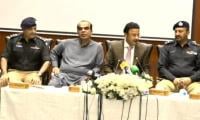
According to data, 71 outlaws in the first phase had surrendered along with 209 weapons. The first meeting of the Implementation Committee, held on November 13, 2025, at the Sindh Secretariat, was chaired by Additional Chief Secretary (Home) Iqbal Memon and attended by senior civil administration officers, Rangers officials, divisional commissioners, deputy commissioners, and representatives of social development institutions.
According to the minutes of the meeting, the Chair stressed that the success of the policy depends on “effective ground-level implementation by field formations” and the timely delivery of development and welfare commitments promised to surrendered groups.
DIG Larkana informed the forum that 71 dacoits had formally surrendered so far, most from Garhi Tegho in District Shikarpur, while hundreds more had registered interest in joining upcoming phases. The official warned the revival of basic health services and primary schooling must be executed “urgently”, starting with the operationalisation of the Basic Health Unit (BHU) in Garhi Tegho and the deployment of ambulances on a regular basis. Separately, Commissioner Larkana confirmed that rehabilitation efforts are underway with support from the Benazir Income Support Programme (BISP), Benazir Bhutto Shaheed Youth Development Programme (BBSYDP), and relevant NGOs.
Commissioner Larkana said development schemes for the affected areas had been identified and estimates forwarded to the Planning and Development Department. These schemes, focused on health, education, and connectivity, are projected to cost more than Rs 4 billion. Officials also noted separate CSR (Corporate Social Responsibility) allocations from local industry in Ghotki district, to be used for the rehabilitation of schools, bridges, and other essential infrastructure.
In addition, DC Shikarpur informed the committee that the Assistant Commissioner Khanpur would act as focal person for local grievances, including widespread issues with CNICs such as non-issuance, duplication, and ID blocks — problems cited as major barriers preventing surrendered individuals and their families from enrolling in welfare schemes.
A senior officer from Sachal Rangers disclosed that, while 71 dacoits have surrendered, many more are waiting for government actions to materialise before surrendering. “The pace of future surrenders depends on timely implementation of responsibilities as stated in the Surrender Policy,” the official warned, highlighting that hundreds may be deprived of welfare access due to unresolved identity documentation.
The SSP Ghotki, meanwhile, reported that arrangements are being finalised for the surrender of around 50 more dacoits by December 2025, but warned that community trust could be damaged if commitments are delayed. The Director IB Sukkur stated that individuals who surrender but later commit crimes will be dealt with “strictly as per law”, a view endorsed by DIG Larkana, who confirmed that such cases are already being handled without leniency.
The Chair appreciated the coordination among agencies but directed that decisions must be executed “urgently to sustain peace and reinforce confidence among local communities.”
After deliberations, the committee approved the following measures: conducting regular divisional and district-level committee meetings to oversee implementation and report progress to the Home Department; immediate deployment of ambulances and activation of BHU Garhi Tegho, even temporarily; immediate reopening of schools, starting from Garhi Tegho; CNIC resolution and welfare enrolment for surrendered families through NADRA and district administrations; development of bridges and connectivity infrastructure in Katcha zones among others; and finalising future surrender arrangements through Rangers, police, and divisional authorities.
The Implementation Committee was formally notified on September 3, 2025, based on decisions taken during a high-level meeting chaired by the Sindh Chief Minister on August 19, 2025.
The meeting concluded with a directive that all departments finalise their tasks at the earliest and present detailed progress reports in subsequent
sessions.