ISLAMABAD: The Foreign Office Friday said trade with Afghanistan was only possible if the Taliban regime took a clear action against the anti-Pakistan elements operating from its soil, as the value of human lives surpassed the value of any trade conducted.
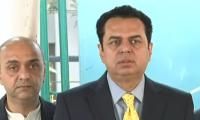
Speaking at the weekly briefing here, the Foreign Office Spokesperson Tahir Hussain Andrabi said the Afghan Taliban regime had not reciprocated Pakistan’s positive gestures and continued to harbor and actively support the elements that were perpetrating terrorism against Pakistan while using the Afghan soil. So, given this scenario, trade and transit with Afghanistan are only possible if the Taliban regime takes clear steps against anti-Pakistan elements operating from its soil.
Andrabi blasted the Indian Ministry of External Affairs and ridiculed the Indian media for blaming Pakistan for the recent explosions near the Red Fort in New Delhi.
“India is, indeed, much obsessed with Pakistan on the issue and the bogey of terrorism, which the Indian leadership uses to divert attention from its own internal challenges that are mounting day by day. However, the Indian public is waking up to the false promises of its leadership, and now the movie of terrorism has again been summoned to calm the masses,” he said.
He pointed out that Pakistan saw relationship between the terror incident and political activity in India like elections.
“It is a very familiar playbook; whenever such an incident occurs, the Indian side comes up with the names of Muslims, flashing them on their screens. It gives an impression of a witch-hunt against Muslims with particular focus on the Kashmiri people from the Indian Illegally Occupied Jammu and Kashmir,” he said.
This issue, he pointed out, needs to be viewed from the prism of law-and-order, instead of linking it with politics of the region and politics of Hindutva that the Indian leadership espouses in a knee-jerk femoris.
“The Indian side, after a blast, can come up with any amount of conjecturing, fairytales, war-mongering and in that blame a third country. Frankly, on these issues, the credibility of the Indian media, and other segments of the Indian society leaves a lot to be desired,” he said.
When asked about some Muslim Kashmiris who have been linked with the Delhi blasts and charged with terrorism, Andrabi said this was a very familiar Indian playbook.
“We do not know who these people are. Generally, it is very convenient to flash Muslim names on Indian media screens whenever an untoward incidents taken place there. So, I am not able to comment, and I do not think that India has shared any details with us,” he said. Commenting on the Indian external affairs ministry’s statements, the spokesperson said he categorically rejected the same as baseless, misleading and highly irresponsible, as India was clearly habitual of such diversionary tactics aimed at concealing subversive activities within the region and beyond.
“India’s track record of sponsoring terrorism and violence in Pakistan is well-documented and internationally recognized from orchestrated attacks on civilian infrastructures, including school buses, passenger trains and other public spaces, to sabotage and operations, and hosting of terrorists from across the regions. India very maliciously, has been exposed,” he pointed out.
He gave the example of India’s intelligence operative serving commander Kulbhushan Yadev, apprehended in Pakistan and found guilty of espionage and terrorism, as an undeniable proof of India’s destabilizing designs.
“So, India must reflect on its own actions inspired by the violent Hindutva ideology that has come to dominate India’s domestic and foreign policy. This extremist mindset funds regional instability, promotes hatred and undermines peace across South Asia, so no amount of propaganda or diversions as done by the Indian spokesperson is going to mask India’s own bleak track record. And we will continue to expose these activities and stand resolutely against any attempts by India to destabilize the region,” he assured.
Responding to a volley of queries on Afghanistan, the spokesperson said the Taliban regime was constantly trying to misrepresent the issue of terrorists hiding in Afghanistan as a humanitarian issue. The Taliban regime is also trying to portray the TTP/FaK and BLA/FaH elements as refugees in Afghanistan. This is not a humanitarian or a refugee crisis, but a ploy to frame terrorists as refugees.
“Pakistan is ready to receive any Pakistani living in Afghanistan and their families, provided they are handed over at the border crossings of Torkham or Chaman and not hurled across the border, fully equipped with sophisticated weapons and equipment,” he said.
Pakistan has never eschewed dialogue with any government in Kabul; however, the country would not hold dialogue with any terrorist group, be it TTP/FaK or BLA/FaH.
“Among the Afghan Taliban, there are people who do not want confrontation with Pakistan. But there is a strong lobby, with monetary support from foreign actors that has been tasked with stoking tensions. These elements have engaged in abuses and outrageous allegations against Pakistan. By doing so, they are fast eroding whatever goodwill they had within Pakistan,” he added.
Pakistan remains committed to the resolution of bilateral differences through dialogue. However, Pakistan’s core concern, i.e. terrorism emanating from Afghanistan needs to be addressed first and foremost. Pakistan’s armed forces and its people are well-determined to eliminate terrorism from their soil and take action against its supporters, abettors and financiers.
To a query, Andrabi said he did not think the Afghan Taliban regime could say that they were helpless in front of TTP.
“This is not something that we can believe in, because, after all, the Taliban regime claims to have control over all of its territory. So, the argument that they are helpless against the TTP is not tenable,” he said.
When asked about reports and a video circulating on the social media, the spokesperson said he had not seen the report or any information on a meeting of the advisor to the prime minister or any public figure with an Israeli representative.
“I can assure you that if such a meeting or interaction took place, it was, certainly, without authorization by the government. However, I would like to point out that we need to, first of all, confirm if such interaction actually took place,” he said.
To a question, he said no decision had been taken yet on Pakistan’s participation, and the exact role or mandate of the International Stabilization Force itself was under discussion at the UN Security Council.
“I do not think a decision has been taken by the Security Council yet. So, this is an evolving process. We are engaged with it in a sense that Pakistan is a non-permanent member of the UN Security Council, and is undertaking these negotiations as the Security Council member. So, we await the Security Council’s decision. And as indicated earlier Pakistan’s participation in the stabilization force will be decided at the highest level, including through participation of the Parliament,” he said.
The spokesperson said Jordanian King Abdullah II would undertake a visit to Pakistan on November 15.
“This high-level visit is reflective of the longstanding, fraternal relations between Pakistan and Jordan. It would serve to fortify the strategic tone of Pakistan-Jordan relations and place it on a higher trajectory, encompassing comprehensive and broad-based partnership including in political, economic and cultural spheres,” said the spokesperson.