LAHORE: The Pakistan government has done well to steady the ship in rough seas. Its diplomatic-investment offensive, macro-stabilisation and explicit linkage of security and economic strategy are all positive. But success is not assured.
Unless the country can lock in political stability, deepen reforms, reassure investors and maintain security, the risk of back-sliding remains real. The next 12-24 months should prove decisive. If Pakistan can demonstrate measurable progress on the harder structural front, the stage will be set for a positive trajectory. If not, the current window of opportunity may start to close. The gamble is worth watching -- and worth supporting -- but it must be executed with discipline, unity and speed.
As the world staggers under rising geopolitical tensions, economic turbulence and a resurgence of open conflict, Pakistan finds itself walking a narrow path -- balancing foreign diplomacy, domestic reform and a spike in security threats. On balance, the government’s strategy over the past four years shows real promise, but the strong tailwinds it has collected risk being overwhelmed by structural headwinds unless a number of critical factors align.
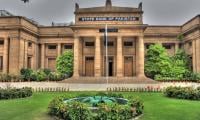
The government has earned broadly positive marks for stabilising the macro-economy in a highly difficult environment. It has secured multiple lifelines from the International Monetary Fund (IMF) and other multilateral lenders, reflecting improved external confidence in Pakistan’s policy framework.
The authorities’ emphasis on fiscal discipline, debt rollover and external reserve cushioning appears to have helped avert a full-blown default scenario. On the investment front, there are clear signals of traction. Pakistan’s outreach to the Gulf, China and other friendly states is paying dividends in terms of memoranda of understanding (MoUs), enhanced diplomatic goodwill and tentative flows of foreign direct investment (FDI).
On the security front, the government has publicly tied the imperative of investor confidence and sustainable growth to the restoration of stability and the suppression of terrorist threats. In diplomatic terms, Islamabad is playing an active game -- the prime minister is visibly abroad, courting investors, lining up strategic partnerships and attempting to re-position Pakistan as a regionally credible and resilient state. That diplomatic offensive in a time of global economic unease deserves credit.
Here the picture becomes more challenging. First, the link between political stability and economic progress remains fragile. Local business groups continue to warn that rising domestic political uncertainty is undermining investor confidence. Any uptick in street politics, institutional paralysis or security flare-ups quickly eats into the reform momentum.
Second, while macro-indicators may be improving, structural reform remains only partially implemented. Tax-base expansion, energy-sector reform, public-private partnership rollouts and institutional strengthening still demand consistent follow-through. Without such structural depth, the stabilisation achieved may remain shallow and susceptible to shocks (global rate hikes, export shortfalls, regional conflict).
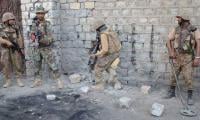
Third, the security environment is deteriorating in certain dimensions. Rising terrorist incidents, cross-border incursions, and recurring insurgency along the western frontier undermine the notion of a stable and secure investment climate. When military threats loom, investor risk premia rise -- and that can choke the very flows of capital Pakistan is trying to attract.
Fourth, international externalities matter. In a world of tightening global financing, war risks in the region, inflation and trade disruptions, Pakistan’s room for manoeuvre is narrow. Success is therefore contingent not only on internal performance but on external context.
Pakistan has laid many of the building blocks of recovery and reform, and the international community (and capital markets) appear cautiously supportive. That is a very good starting position. But the journey ahead is long, the margin for error small, and the risk of reversal non-trivial.
Because the “easy” gains of stabilisation are largely behind us. The real challenge now is the harder stage of transforming stabilisation into sustainable growth, institutional robustness and diversified investment flows in a very competitive global environment. Success will require coherence across fiscal policy, security policy, diplomacy and economic strategy. And it will require maintaining credibility, the world will be watching.