Khyber Pakhtunkhwa has always been a frontier. For centuries, it stood at the intersection of empires and ideas. The Silk Road wound its way through its mountains, carrying merchants, scholars and mystics between Central Asia and the subcontinent.
In the mid-20th century, Abdul Ghaffar Khan, known as Bacha Khan, championed a politics of non-violence here, aligning Pashtun identity with democratic ideals. Even in the 1960s and 70s, Peshawar was a stop on the famed Hippie Trail, a resting place for travellers who saw in KP a region of hospitality and history.
That cosmopolitan legacy feels increasingly distant. Today, KP is more often associated with security challenges, coupled with economic fragility and institutional underdevelopment, rather than with its historic role as a gateway of trade and culture. Yet the province’s strategic location and natural resources still carry enormous potential. The question is whether KP can reimagine itself in a way that translates history into development, autonomy into growth and geography into opportunity.
KP today accounts for around 11 per cent of Pakistan’s GDP, despite being home to nearly 18 per cent of the country’s population. The province’s growth rate lags behind Punjab and Sindh, with lower levels of industrialisation and private sector investment. Unemployment and underemployment remain pressing issues, particularly among the youth, where rates are among the highest in the country.
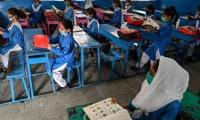
Development indicators underscore the challenge. KP’s literacy rate is estimated at 55 per cent, compared with Punjab’s 66 per cent. Access to healthcare is constrained. Doctor-to-patient ratios remain significantly below the national average, with entire districts underserved. Infrastructure gaps persist in energy and transport, further limiting investment prospects. While the province has pioneered some welfare initiatives, such as the Sehat Card Plus health insurance scheme, institutional capacity often struggles to sustain such programmes at scale.
The 18th Amendment to the constitution devolved significant powers to provinces, theoretically giving KP greater control over policy and resources. In practice, however, provincial budgets remain heavily dependent on federal transfers under the National Finance Commission (NFC) Award. For FY2025-26, more than 80 per cent of KP’s budgetary resources are expected to come from the federal divisible pool.
This creates both opportunities and vulnerabilities. On one hand, autonomy has allowed the province to innovate in social services and experiment with local governance models. On the other, fiscal dependence limits the ability to plan long-term infrastructure and industrial development. The mismatch between autonomy and resources risks leaving KPK caught between ambition and constraint.
Yet the province’s assets are formidable. Hydropower potential alone is estimated at around 30,000. However, only a fraction has been developed. Mineral resources, including marble, limestone and precious stones, remain underexploited due to limited investment in extraction technology and value-added processing.
Tourism, long constrained by security concerns, has shown signs of revival. Swat Valley, Kumrat and Chitral are attracting domestic visitors in growing numbers, and KP’s position as the western gateway to the China–Pakistan Economic Corridor (CPEC) gives it a natural advantage in connecting with Central Asian markets.
Geopolitics has long shaped KP’s trajectory. The province shares a 1,100 km border with Afghanistan, making it pivotal in regional trade and stability. Historically, Peshawar was a hub of connectivity linking South Asia with Central Asia. Today, border trade through Torkham and other crossings continues but remains limited by infrastructure bottlenecks and policy uncertainty. If stabilised, cross-border commerce could generate substantial revenue and reposition KP as a trade hub rather than merely a transit point.
Domestically, political instability has compounded challenges. A separate provincial government has often operated with strained relations with the federal centre, complicating coordination on large-scale development projects. While provincial autonomy is constitutionally protected, effective governance requires collaboration across tiers. Without this, the risk is that KP remains administratively isolated, unable to fully leverage national programmes or foreign investment.
The question for KP is whether it can reclaim its role as a frontier of opportunity rather than a site of conflict. History shows that the province has always been shaped by external flows of trade, people and ideas. The Silk Road and the Hippie Trail are reminders that KP’s identity has never been inward-looking. Its strength lies in connectivity.
Today, that means integrating with regional trade through CPEC, revitalising tourism as a driver of local economies and harnessing hydropower and mineral resources responsibly. It means balancing welfare innovation with institutional strengthening, and provincial autonomy with federal cooperation. None of this is simple, but the province’s demographic and geographic profile suggests it is possible.
Khyber Pakhtunkhwa’s story has always been one of crossroads. From Bacha Khan’s politics of principle to the merchants of the Silk Road, from the travellers of the Hippie Trail to the entrepreneurs of today, the province has been shaped by exchange. The challenge now is to ensure that exchange translates into development.
KP can either remain defined by its struggles or step into a new identity as a frontier of growth. The choice is not abstract; it is economic, social and generational.
The writer is a transnational educational consultant, freelance columnist and policy analyst based in Lahore.