ISLAMABAD: While the Indo-Pak international borders and the Line of Control remain calm, the war of words has shifted to the United Nations.
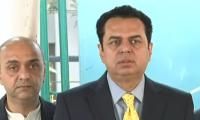
During the Fourth Committee Meeting on Decolonization, Minister Asif Khan exercised Pakistan’s right of reply to counter India’s allegations. “India’s claim to be the world’s largest democracy rings hollow. In reality, it has become a hub of disinformation and intolerance. The ruling RSS-BJP ideology has institutionalised Islamophobia and made the persecution of minorities a state policy. Numerous international human rights organisations continue to document India’s systematic abuses,” he stated.
Setting the record straight, Minister Khan felt compelled to address the disinformation-laden remarks of India’s representative. “Each year, India arrives at this esteemed UN forum with a recycled script of distortions,” he said. “The United Nations has not only the right but the obligation to discuss the Jammu and Kashmir dispute. Jammu and Kashmir is not, and has never been, an integral part of India. It is an internationally recognised disputed territory, and its final status must be determined through a free and impartial plebiscite under UN auspices, as prescribed in multiple Security Council resolutions.”
Pointing to the situation in occupied Jammu and Kashmir, Khan noted that India maintains one of the densest military occupations globally, deploying nearly 900,000 troops against an unarmed civilian population. “India has long promoted a false narrative, branding the legitimate struggle of the Kashmiri people as terrorism. India should reflect on the true causes of mass resistance in the occupied territory,” he urged.
Addressing decolonization, Khan explained that the 1960 Declaration grants all peoples under foreign subjugation the right to self-determination, a principle enshrined in Article 1 of the UN Charter, the International Covenant on Economic, Social and Cultural Rights, and the International Covenant on Civil and Political Rights.
Khan highlighted India’s historical role in bringing the matter to the Security Council, noting its current refusal to honour commitments under international law and the UN Charter. He condemned India’s backtracking from UN Security Council resolutions, accusing it of denying Kashmiris their fundamental rights through extrajudicial killings, enforced disappearances, mass incarcerations, sexual violence, and demographic engineering. Since August 2019, he said, India has accelerated its settler-colonial project, violating the Fourth Geneva Convention.
Responding to allegations of terrorism, Khan accused India of deflecting attention from its own actions. “While posing as a victim, India is a principal sponsor of state terrorism in the region, with a record of extraterritorial assassinations. It has financed and directed terrorist groups such as TTP, BLA, and the Majeed Brigade, responsible for killing thousands of innocent civilians in Pakistan,” he stated.
Without naming Operation Sindoor, Khan alluded to India’s “reckless behaviour,” which endangered regional peace by targeting civilians, including women and children. “Pakistan exercised its inherent right to self-defence under Article 51 of the UN Charter, responding proportionately to military targets. India suffered significant losses, including multiple downed aircraft. Pakistan’s responsible stance, supported by international facilitation, prevented dangerous escalation,” he concluded.